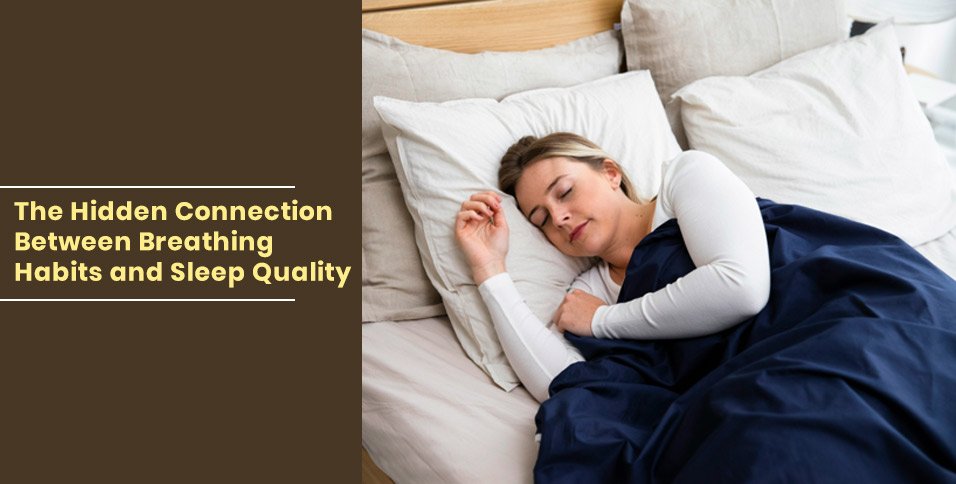
Breathing is almost always automatic. You don’t even have to think about it. But how you breathe during the day and before bed forms habits you carry into sleep. If you stay consistent and develop good sleep habits, sleep quality improves.
How Breathing Habits Affect Sleep Quality
The muscles that keep your airway open relax when you sleep. That makes you more likely to mouth-breathe, pause in breathing, and get up to go to the bathroom.
Mouth Breathing Raises Your Risk of Breathing Pauses and Dental Issues
In a study in the European Respiratory Journal, 12 healthy adults breathed only through their mouths for a night in a sleep lab. Their breathing events (moments when breathing stops or becomes shallow for 10 seconds or more) jumped from 1.5 per hour, which is normal, to 43 per hour, which doctors call severe sleep apnea.
A blocked nose has a similar effect. A 2026 review of the research found that nasal obstruction adds about 14 breathing events an hour. Mouth breathing also dries out your mouth. With less saliva to rinse away bacteria and acid, you’re more prone to bad breath, gum problems, and cavities.
Breathing Pauses Put Your Body on Alert
Breathing pauses occur when airways close. Each pause lowers oxygen and raises carbon dioxide levels. This signals your brain to trigger a fight-or-flight response. And if you wake up at the end of those pauses, it adds to that response.
Night after night, the stress adds up. The American Heart Association’s 2021 statement on sleep apnea names this stress response and the repeated drops in oxygen as ways the condition strains the heart. Sleep apnea affects 30% to 50% of people with high blood pressure.
Nighttime Bathroom Trips Can Be a Warning Sign
Blocked breaths create strong suction in your chest. Your heart responds by releasing a hormone that tells your kidneys to make more urine. Up to half of people with sleep apnea wake up to pee at night. If you get up two or more times a night, ask your doctor about a sleep study.
Physical Habits for Nighttime
How you sleep and how often you mouth-breathe affect sleep quality. Sleeping on your side has strong evidence for improving sleep. Mouth taping helps with nose breathing too, but it needs to be taken with consideration, especially if you have chronic congestion.
Sleep on Your Side
When you’re on your back, your tongue and soft palate can fall into your airway. For 20% to 75% of people with sleep apnea, breathing events decrease by at least half when they roll onto their side. Hug a body pillow or try a positional aid to keep you on your side.
Mouth Taping (With Caution)
Taping your mouth forces you to breathe through your nose. That helps prevent mouth breathing but poses an issue for people with chronic congestion, a deviated septum, or potential sleep apnea.
If you want to try mouth tapes, ensure your nose is clear first. Don’t use household tape for this. It will irritate your skin and be painful to pull off. Instead, use a skin-safe product like Sleep Karma mouth tape.
What Breathing Habits Improve Sleep Quality
While most breathing is automatic, there are habits we can develop consciously that improve sleep quality at night. The goal here is to improve nose breathing and ensure you catch breathing issues while sleeping.
Breathe Through Your Nose
Breathing consistently through your nose is what we want to achieve. Nose breathing keeps breathing events at 1.5 per hour.
If your nose is always stuffy, try saline rinses or look into ways of treating your allergies. It might be the environment you’re in. Chronic congestion or a deviated septum needs a doctor.
Slow Down and Breathe From Your Belly
Breathing slower than 10 breaths a minute is linked to more activity in your body’s calming system. A 2025 review of six studies found that deep belly breathing improved sleep quality scores in groups from nurses to cancer patients.
Watch for Breathing Issues at Night
Some breathing issues only surface when you sleep. Common signs to watch for include loud snoring, gasping, choking, or waking up with a dry mouth or a headache. If you have any of these issues, mouth and throat exercises can help.
Pressing your tongue to the roof of your mouth or sliding it backward along your palate trains the muscles that hold your airway open. When done 10 minutes a day for about 3 months, it reduced breathing events and daytime sleepiness in people with sleep apnea.