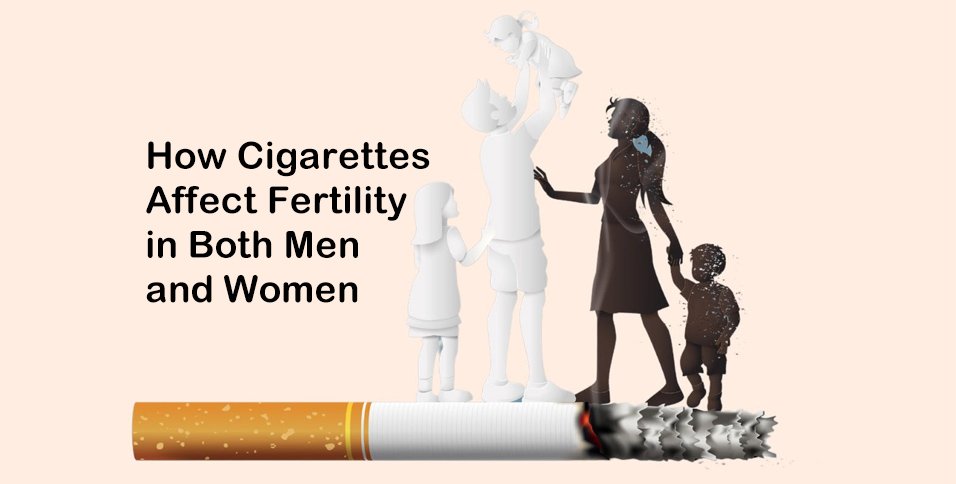
Cigarette smoking’s effect on fertility is one of the more well-documented lifestyle factors in reproductive medicine, and the evidence covers both men and women, though the mechanisms differ.
What the Research Shows in Women
Smoking’s effect on female fertility is well established across multiple lines of evidence.
Faster Decline in Ovarian Reserve
According to the American Society for Reproductive Medicine’s 2024 committee opinion, one community study found AMH levels, a marker of ovarian reserve, were 44% lower in current smokers compared with women who never smoked. A separate longitudinal study found AMH levels declined 21% faster per year in smokers than in non-smokers, suggesting smoking doesn’t just lower reserve but speeds up its decline over time.
Reduced Success With Fertility Treatment
Women who smoke require higher doses of fertility medication during IVF stimulation and, according to ASRM’s review of the evidence, generally need close to twice as many IVF attempts to conceive compared with non-smokers.
Increased Pregnancy Loss Risk
ASRM’s committee opinion describes good evidence linking tobacco use to impaired fecundity and increased risk of spontaneous abortion and ectopic pregnancy. Smoking may also advance the timing of menopause by one to four years.
What the Research Shows in Men
The picture for male fertility is somewhat less conclusive but still points toward measurable harm.
Semen Parameters
ASRM describes fair evidence that semen parameters and sperm function test results are lower in men who smoke compared with non-smokers, with effects that appear dose-dependent, meaning heavier smoking correlates with greater impact. A 2015 study published in the Journal of Clinical and Diagnostic Research found cigarette smoking had a detrimental effect on both sperm motility and sperm count, with the effect on motility more pronounced than the effect on count.
Why Male Effects Are Harder to Isolate
Unlike the female data, cigarette smoking hasn’t been conclusively shown to reduce overall male fertility outcomes in the same definitive way. ASRM notes this is partly a research design challenge, since isolating smoking’s specific contribution from other lifestyle factors in male infertility studies is genuinely difficult. What is clearer is that smoking appears to increase the risk of pregnancy loss when a male partner smokes, even when direct fertility impact is harder to measure.
The Case for Quitting Before Trying to Conceive
Whatever the precise mechanism, the direction of the evidence points the same way for both partners.
- Smoking cessation for at least two months before starting IVF has been shown to meaningfully improve chances of conception
- The Oxford Family Planning Association study found smoking’s negative effect on fecundity was reversible, with ex-smokers returning to normal fertility levels
- Secondhand smoke exposure has also been linked to reproductive harm in non-smoking partners, meaning a household with one smoker can still affect fertility for a non-smoking partner trying to conceive
Why This Matters Before Starting Treatment
For couples already navigating a fertility diagnosis, smoking is one of the few contributing factors that’s genuinely modifiable before treatment begins. Understanding how do cigarettes affect fertility for both partners, not just whichever one smokes, gives couples a clearer picture of where a lifestyle change might meaningfully improve their odds before committing to a treatment protocol.
The reversibility of much of the damage is arguably the most important part of the research. Unlike some risk factors tied to age or underlying medical conditions, this is one area where the evidence suggests real improvement is possible within a matter of months.
Practical Steps for Couples Trying to Quit Before Treatment
Knowing smoking affects fertility is one thing. Actually quitting before a fertility appointment or treatment cycle is a different challenge entirely.
Timing Matters
Since research points to meaningful improvement after roughly two months of cessation, couples planning ahead for a fertility consultation have a real window to make this change before treatment begins, rather than trying to quit mid-cycle when stress levels are already high.
Both Partners, Not Just One
Because secondhand smoke exposure carries its own reproductive risks, quitting works best as a shared commitment rather than something asked of only the partner who smokes. A household where one partner continues smoking around the other partner during a fertility journey undermines some of the benefit of the other partner’s own cessation.
Support Resources Worth Using
- Nicotine replacement therapy and prescription cessation aids are generally considered safer than continued smoking during a fertility journey, though this is worth discussing directly with a physician
- Many provincial smoking cessation programs offer free counselling and support specifically for people trying to quit before a planned medical procedure
- Fertility clinics themselves often have experience counselling patients on this exact issue and can provide guidance tailored to a couple’s specific treatment timeline
Weighing This Against Other Fertility Factors
Smoking is one of several modifiable lifestyle factors that intersect with fertility, alongside things like alcohol use, body weight, and certain environmental exposures. It stands out because the evidence base is unusually strong and consistent across both male and female outcomes, and because the timeline for improvement, roughly two months, is short relative to how long many couples spend in the broader fertility treatment process.
For couples already facing a fertility diagnosis that involves factors outside their control, addressing smoking is one of the few variables where meaningful change is genuinely achievable before treatment even begins.