Learn what affects dental implant pricing, how treatment compares with other tooth-replacement options, and what to consider before moving forward.
Missing teeth can affect more than appearance. They may influence how comfortably you eat, how clearly you speak, and how confident you feel in professional and social settings. For working adults, the decision to replace a missing tooth often comes down to balancing cost, treatment time, long-term value, and day-to-day convenience.
Dental implants are one option for replacing missing teeth, but treatment is not identical for every patient. Understanding what affects the process can make it easier to compare recommendations and decide which questions to ask before committing to care.
Why Dental Implant Costs Can Vary
One of the most common questions patients ask is how much dental implants cost. The challenge is that advertised prices do not always include the same services.
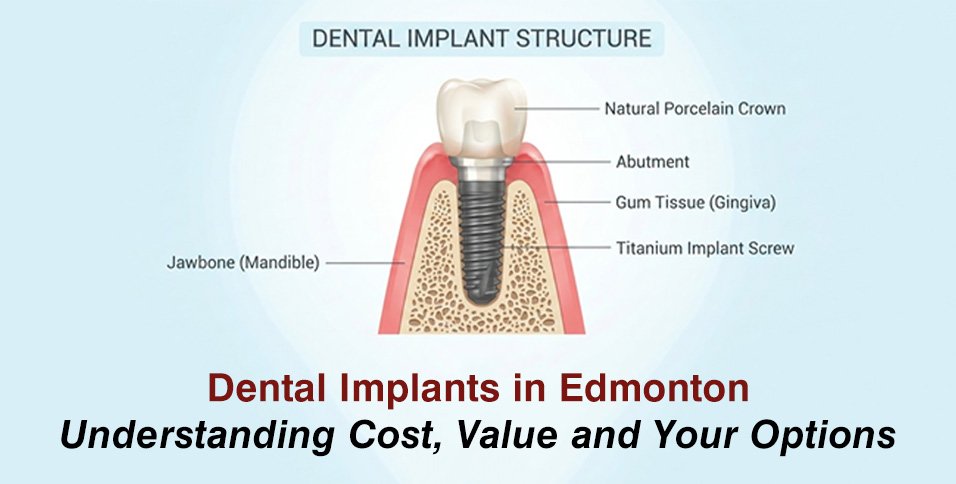
A dental implant treatment plan may involve several components, including the implant itself, an abutment, the final crown or restoration, imaging, consultations, and follow-up care. Some patients may also require additional procedures, such as bone grafting, before an implant can be placed.
Because of these variables, comparing prices based on a single advertised number can be misleading. A more useful approach is to request a written treatment plan that clearly explains what is included.
Patients researching dental implants Edmonton should consider asking whether the proposed fee includes imaging, surgical placement, the final restoration, follow-up appointments, and any anticipated preparatory treatment.
A transparent breakdown makes it easier to compare treatment plans on more than price alone.
Consider Long-Term Value, Not Just Initial Cost
Dental implants often involve a larger upfront investment than some other tooth-replacement options. That makes long-term value an important part of the decision.
Rather than asking only, “What does this cost today?” it can be helpful to consider:
- How long is the restoration expected to remain functional?
- What ongoing maintenance may be required?
- Will neighbouring teeth need to be altered?
- Could replacement or repair be necessary in the future?
- How does each option fit your lifestyle and oral health needs?
For example, a dental bridge may require support from neighbouring teeth, while a removable denture has different maintenance and stability considerations. Dental implants function differently because they are supported by an implant placed in the jawbone.
No single solution is appropriate for every patient. The goal is to understand the trade-offs and choose an option based on clinical suitability, personal priorities, and long-term expectations.
Are You a Candidate for Dental Implants?
Some patients assume they cannot receive implants because they have been missing teeth for several years or have experienced bone loss.
In reality, candidacy is determined individually.
A dentist may evaluate factors such as jawbone volume, gum health, medical history, oral hygiene, bite forces, and the condition of surrounding teeth. Diagnostic imaging may also be used to assess the area where an implant is being considered.
In some cases, additional treatment may be recommended before implant placement. Bone grafting, for example, may be discussed when there is not enough bone to support an implant.
An assessment is therefore important because it helps determine not only whether an implant is possible, but also what the overall treatment process could involve.
If you are considering tooth replacement, an implant assessment can help clarify candidacy, treatment stages, expected costs, and available alternatives before you make a decision.
What About Recovery and Time Away From Work?
For professionals, treatment logistics can be just as important as clinical considerations.
Dental implant treatment usually involves multiple stages rather than a single appointment. After implant placement, time is generally required for the implant to integrate with the surrounding bone before the final restoration is completed.
The longer healing period does not necessarily mean being away from work for that entire time. Initial recovery after the surgical appointment and the overall treatment timeline are two different things.
Your dentist can explain what to expect based on the complexity of your procedure, your health, and the type of work you perform. Patients with physically demanding jobs may receive different guidance than those working in an office environment.
Planning appointments in advance and understanding the expected recovery period can help reduce disruption to meetings, travel, presentations, and other professional commitments.
Questions to Ask Before Moving Forward
A consultation should give you enough information to understand both the clinical recommendation and the financial commitment.
Consider asking:
- What is included in the quoted treatment cost?
- Are additional procedures likely to be required?
- How long could the complete treatment process take?
- What should I expect during initial recovery?
- What alternatives should I consider?
- What maintenance will be required after treatment?
- How will my progress be monitored?
Clear answers can help you compare options with greater confidence and avoid making a decision based solely on price or advertising.
Making an Informed Tooth-Replacement Decision
Choosing how to replace a missing tooth is a personal healthcare decision with financial, functional, and lifestyle implications.
For many working adults, the most useful first step is not deciding immediately whether to proceed with an implant. It is obtaining enough information to understand cost, candidacy, recovery, alternatives, and long-term maintenance.
A detailed consultation and treatment plan can provide the context needed to make a decision that fits both your oral health needs and your everyday life.
If you are weighing implants against other tooth-replacement approaches, speak with a dental professional about your individual needs. A personalized assessment can help you understand the available options, expected timeline, and financial considerations before moving forward.
Additional Resources
For more information about treatment considerations, candidacy, and local implant care, visit this resource on Edmonton dental implants.