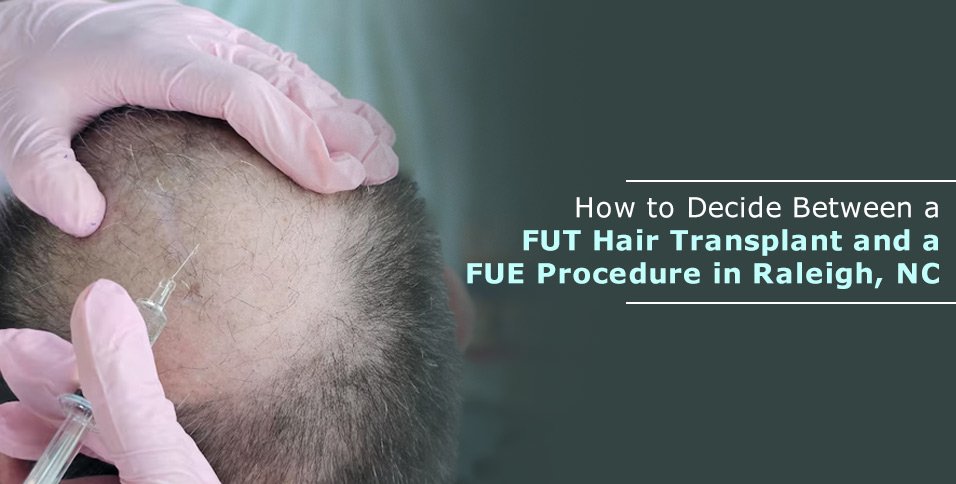
Hair loss affects millions of men and women, often impacting self-confidence and personal style. If you are researching restorative options, scheduling a FUT hair transplant in Raleigh, NC offers a proven pathway to regaining a dense, natural-looking hairline. Modern hair restoration techniques have advanced significantly, leaving patients with two primary choices: Follicular Unit Transplantation (FUT) and Follicular Unit Extraction (FUE). Selecting the right approach depends on your individual hair loss pattern, donor area quality, lifestyle preferences, and long-term restoration goals. Understanding how these procedures differ in technique, recovery, and results will help you make an informed decision alongside a qualified hair restoration specialist.
Understanding Follicular Unit Transplantation (FUT)
Follicular Unit Transplantation, commonly known as the strip method, involves harvesting a thin strip of scalp from the permanent donor zone at the back or sides of the head. Surgical technicians then dissect this strip under high-powered microscopes into individual follicular units containing one to four hairs. These individual grafts are carefully implanted into tiny recipient sites created in the thinning areas of the scalp.
Key Benefits of the FUT Technique
One primary advantage of this approach is graft yield. Because technicians extract the tissue in a single strip, the roots remain protected inside the original surrounding tissue during harvest. This minimizes trauma to the hair follicles and typically results in higher graft survival rates, making it ideal for patients requiring extensive coverage. A FUT hair transplant in Raleigh, NC also allows surgeons to collect a large number of grafts in a single session, maximizing density for advanced hair loss stages.
Additionally, FUT procedures generally cost less per graft compared to extraction methods because the harvesting process takes less time for the surgeon. However, FUT leaves a fine linear scar across the donor site. While hair surrounding the area easily covers this scar when kept at moderate lengths, individuals who prefer extremely short buzz cuts might find this linear mark visible.
Understanding Follicular Unit Extraction (FUE)
Follicular Unit Extraction offers a modern alternative that bypasses the need for donor strip removal. During an FUE hair transplant in Raleigh, a surgeon uses a specialized micro-punch tool—ranging from 0.7 to 1.0 millimeters in diameter—to individually extract hair follicles directly from the donor area. These extracted grafts are harvested one by one across a broader area of the scalp before placement into the target areas.
Advantages and Considerations of FUE
The main attraction of FUE is the absence of a linear donor scar. Instead, the micro-punch creates tiny, circular point scars scattered throughout the back of the head. Once healed, these microscopic dots remain virtually imperceptible, even if you wear your hair short or faded. Patients who choose an FUE hair transplant in Raleigh often experience shorter overall healing times and less physical discomfort during the initial days after surgery, as there are no deep incisions or sutures in the donor site.
However, FUE is a meticulous, labor-intensive process. Sessions take longer, which increases the operational time and overall cost per graft. Furthermore, because individual extraction thins out the donor area uniformly, harvesting thousands of grafts via FUE requires a dense donor region to avoid visible thinning across the back of the head.
Comparing Recovery and Healing Timelines
Recovery schedules differ notably between the two surgical approaches. Following a strip procedure, patients must manage care around a linear donor wound secured with sutures or staples. Dissolvable or removable stitches remain in place for roughly 10 to 14 days. During this period, patients must avoid strenuous exercise, heavy lifting, or bending over to prevent tension on the healing incision. Swelling around the forehead and eyes may occur during the first week, though discomfort usually subsides quickly with standard prescribed medications.
Post-Operative Care for Extraction Procedures
Conversely, recovery from individual punch harvesting proceeds somewhat faster. The tiny dot wounds left behind typically close up and form small scabs within 48 to 72 hours. Most patients resume light daily activities within three days, though heavy workout routines should still pause for about two weeks to protect the newly placed grafts in the recipient area.
Regardless of which method you select, both techniques follow similar timelines for hair regrowth. Newly implanted hair shafts shed within two to four weeks post-surgery, which is a normal part of the hair cycle known as shock loss. New hair growth begins around month three or four, with full cosmetic density visible between 12 and 15 months after your procedure.
Density, Coverage, and Long-Term Graft Management
Evaluating long-term goals requires calculating how many total grafts you need to achieve your desired hair density. For patients experiencing severe male pattern baldness—Norwood Scale Stage 5, 6, or 7—achieving adequate coverage often demands 3,000 to 4,000 grafts or more. In these cases, opting for a FUT hair transplant in Raleigh, NC preserves donor hair efficiency across multiple sessions over a lifetime.
Preserving the Donor Zone
The donor area contains a finite supply of permanent hair follicles. Strip harvesting preserves surrounding donor hair density because it removes a concentrated strip while leaving the upper and lower donor areas intact for future harvest if hair loss progresses later in life. In contrast, over-harvesting with individual punch techniques can over-thin the donor zone, creating a moth-eaten appearance and leaving fewer viable options for subsequent procedures.
Conversely, for patients needing minor hairline lowering, temporal filling, or eyebrow restoration requiring fewer than 2,000 grafts, micro-punch extraction easily provides adequate density without subjecting the donor site to a linear incision. A thorough evaluation by a qualified specialist determines your donor hair capacity and helps project your future hair loss patterns accurately.
Cost Factors and Lifestyle Considerations
Financial investments and daily lifestyle habits heavily influence which restoration technique fits best. Because strip surgery requires less total operative time from the medical team, clinics typically charge lower rates per graft. For patients requiring large graft quantities to address extensive hair loss, this price difference can amount to several thousand dollars in total savings.
Matching Procedure to Lifestyle
Your personal styling choices play an equally significant role. If you plan to wear a fade, buzz cut, or shaved hairstyle, an FUE hair transplant in Raleigh provides the freedom to maintain short hairstyles without revealing a surgical line. Active athletes, especially those involved in contact sports, often prefer individual extraction because it avoids tension on donor tissue and permits a quicker return to intense training regimes.
On the other hand, if you regularly wear your hair longer than half an inch, a linear strip scar remains entirely hidden under surrounding growth. Patients who prioritize maximum hair density and cost efficiency over short hairstyle flexibility frequently select strip harvesting. Discussing your daily routines and hairstyle preferences with your hair surgeon ensures your chosen method aligns with your long-term aesthetic expectations.
Conclusion
Choosing between Follicular Unit Transplantation and Follicular Unit Extraction ultimately comes down to your personal priorities, degree of hair loss, budget, and preferred hairstyle. Strip harvesting offers maximum graft yield and cost efficiency for significant hair loss, while individual extraction delivers flexible styling without linear scarring. Consulting with an experienced hair restoration surgeon in North Carolina allows you to evaluate your donor region, assess long-term stability, and map out a personalized restoration plan tailored to your goals. With the right technique and professional care, achieving a full, healthy hairline is well within reach.