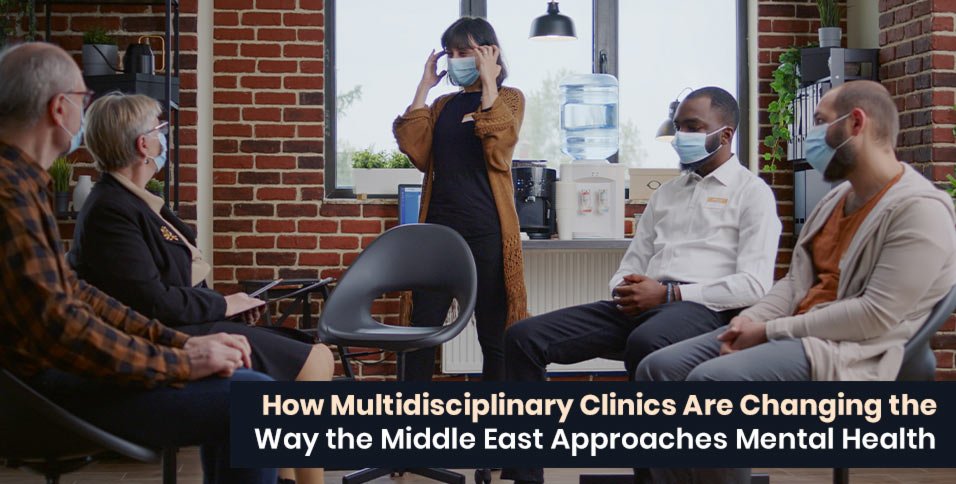
Mental health care in the Middle East has historically been delivered through fragmented, single specialty channels: a psychiatrist for medication, a separate referral for therapy, often with little coordination between the two, and frequently no clear path at all to a psychologist in Dubai or elsewhere who could properly assess where treatment should begin. That model is shifting. Across the region, and particularly in the Gulf, a more integrated, multidisciplinary approach is emerging as the dominant direction of travel, with implications for both patient outcomes and how healthcare systems plan for future demand.
The Scale of Regional Investment
The UAE, Saudi Arabia, and Qatar are leading this shift, driven by substantial healthcare infrastructure investment and explicit government strategy. The UAE implemented a national mental health strategy in 2023, including a budget allocation of AED 100 million specifically directed at enhancing mental health facilities and public awareness campaigns. Saudi Arabia’s Vision 2030 has positioned mental health reform as a core pillar of its broader healthcare reform agenda.
In February 2025, Emirates Health Services launched 15 specialised mental health clinics across six emirates, a significant expansion of dedicated psychiatric and psychological infrastructure within a single initiative. This kind of coordinated, government backed expansion reflects a broader regional pattern: mental health is no longer being treated as a peripheral health concern but as core healthcare infrastructure requiring deliberate, well resourced planning.
Why Multidisciplinary Models Are Gaining Ground
The case for integrated, multidisciplinary mental health care is increasingly well evidenced internationally. The World Health Organization has documented Iran’s SERAJ programme, a three tier framework integrating primary care, specialised outpatient clinics, and community based social support, as a model worth studying globally. Within SERAJ’s specialised centres, each multidisciplinary team includes a psychiatrist, a physician, a psychologist, and a dedicated case manager working in coordination, rather than as separate, disconnected referral points.
The underlying logic is straightforward. Most patients presenting with mental health concerns do not fit neatly into a single specialty. Someone experiencing depression may need psychological therapy, may benefit from psychiatric medication, and may have an underlying physical health factor worth investigating simultaneously. A model that requires the patient to manage these as separate appointments with separate providers, often without shared records, creates friction that measurably reduces the likelihood of consistent treatment engagement.
The Scale of the Underlying Need
Regional data underscores why this infrastructure shift matters. Research on the burden of major depressive disorder across the Middle East and North Africa region found a significant and sustained disease burden between 1990 and 2019, with depressive and anxiety related disorders consistently representing the majority of diagnoses among patients accessing care. A retrospective study of outpatient psychiatry attendees in Dubai specifically found depressive and anxiety disorders accounted for the highest frequency of diagnoses, with the 21 to 40 age group representing the largest share of patients.
This demographic concentration, working age adults experiencing depression and anxiety at the highest rates, aligns closely with the population multidisciplinary clinics are best equipped to serve, since this group frequently benefits from a combination of therapeutic and, where appropriate, pharmacological intervention delivered through coordinated care rather than disconnected specialists.
What Integrated Care Looks Like in Practice
In the Gulf specifically, multidisciplinary clinics are increasingly structured to bring psychology, psychiatry, and neuroscience together within a single practice, allowing a patient’s care to move fluidly between specialists as their needs evolve, with shared clinical records supporting continuity rather than requiring patients to repeat their history at every transition.
The Cultural Dimension of Integrated Care
Mental health stigma, while declining across the region, remains a genuine factor in care seeking behaviour. A growing body of regional research on culturally informed mental health frameworks emphasises the value of approaches that account for sociocultural context rather than applying Western clinical models without adaptation. Multidisciplinary clinics, particularly those serving the Gulf’s large and diverse expatriate population, are well positioned to address this directly, offering multilingual specialists and culturally aware care models within the same coordinated structure that handles clinical complexity.
This matters in practical terms. A patient navigating mental health care for the first time, uncertain whether they need a psychologist or a psychiatrist, benefits considerably from a clinic structure where that determination can be made internally by a coordinated team, rather than requiring the patient to self diagnose the correct specialty before even booking an appointment.
Where This Trend Is Heading
The trajectory across the region points toward continued consolidation of mental health services into integrated, multidisciplinary structures, supported by sustained government investment and a growing evidence base for coordinated care models. The Middle East mental health clinics market is projected to continue expanding through 2030, with the UAE, Saudi Arabia, and Qatar remaining the primary drivers of growth, underpinned by ongoing infrastructure investment and rising public demand for accessible, well coordinated care.
For healthcare planners and patients alike, the shift toward multidisciplinary models represents a meaningful maturation of how mental health care is delivered in the region, moving away from fragmented, single specialty access points toward structures built around how patients actually present and how their needs genuinely evolve over the course of treatment. Clinics such as the German Neuroscience Center Dubai reflect exactly this kind of integrated structure, and are likely to represent the regional standard rather than the exception in the years ahead.