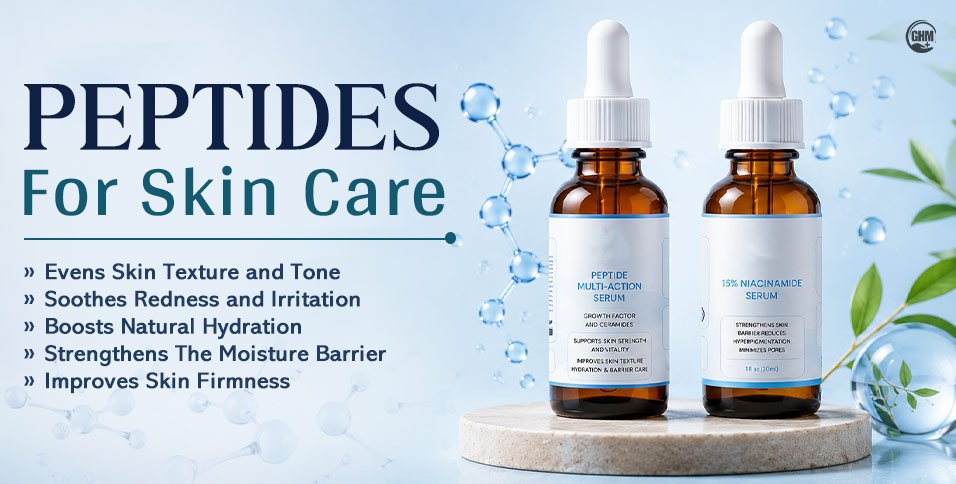
As we age, our body’s natural collagen production drops by about 1% every year. This subtle shift eventually leads to fine lines, loss of firmness, and a duller complexion. We all search for a skincare ingredient that delivers real anti-aging results without causing any more damage to the skin. This is when peptides for skin care can be a game-changer, the gentle powerhouse ingredient sweeping the beauty world. Unlike harsh chemical treatments, peptides work with the skin’s natural repair systems to rebuild structural support from the inside out.
In this guide, learn exactly what peptides are, how they transform skin texture, and how to layer them into the daily routine for maximum glow.
What Are Peptides in Skin Care?
Peptides are short chains of amino acids, which serve as the fundamental building blocks for essential skin proteins like collagen, elastin, and keratin.
To understand how peptides for skin care work, it helps to look at their structure:
- Amino Acids: Individual units that link together like beads on a string.
- Peptides: Short chains containing anywhere from 2 to 50 amino acids.
- Proteins: Complex, long chains made of 50 or more amino acids.
Because peptides have a low molecular weight compared to full proteins, they penetrate the outer layers of the skin far more effectively. Once inside, these skincare peptides act as cellular messengers. They signal the skin cells, specifically specialized cells called fibroblasts, to generate fresh collagen and repair damaged tissue.
While the body naturally creates peptides, high-performance skincare formulas utilize scientifically stabilized synthetic or plant-derived peptides to deliver targeted benefits directly to the skin complexion.
How Do Peptides For Skin Care Work?
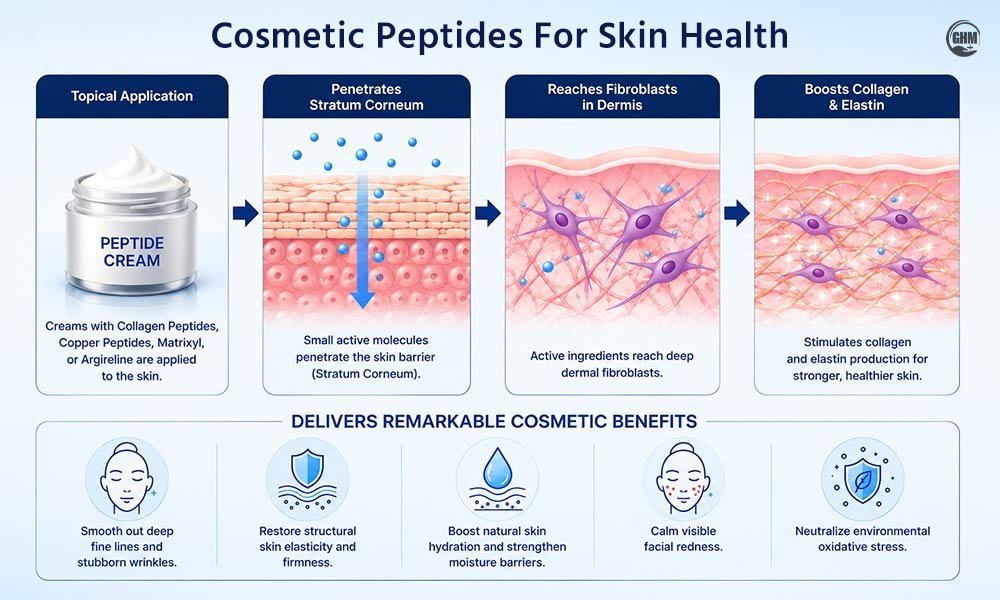
The human skin relies on an intricate communication network to stay healthy and resilient. When collagen breaks down naturally over time, it leaves behind tiny protein fragments. The skin recognizes these fragments as a sign of injury and immediately triggers repair processes.
Topical skincare peptides mimic this exact signal. Applying a peptide serum sends a clear message to the fibroblasts to build new collagen.
Peptide for skin care delivers significant long-term structural support:
- Collagen Stimulation: Encourages fresh collagen production to plump up fine lines.
- Elastin Support: Protects springy elastin fibers so the skin bounces back faster.
- Barrier Enhancement: Reinforces the outer skin barrier to lock in essential moisture.
- Active Protection: Blocks harmful enzymes that break down existing structural proteins.
Peptides work gradually by training the cells to function more youthfully, meaning steady daily application yields the best outcome over time. Consistency is the absolute key to seeing results from skincare peptides.
Different Types of Peptides for Skin Care To Know
Not all peptides perform the same task. Formulators use four primary categories of peptides for skin health to address different aging concerns.
1. Signal Peptides
Signal peptides act as direct messengers to stimulate collagen and elastin production. They help firm sagging areas, improve overall elasticity, and reduce wrinkle depth over time.
Common Examples: Matrixyl (Palmitoyl Pentapeptide-4), Palmitoyl Tripeptide, Palmitoyl Tetrapeptide.
2. Carrier Peptides
Carrier peptides deliver trace minerals, such as copper and magnesium, deep into skin cells. They promote rapid wound healing, boost antioxidant defenses, and stimulate protein synthesis.
Common Examples: Copper Tripeptide-1 (GHK-Cu), Manganese Tripeptide-1
3. Neurotransmitter Peptides
Often called “Botox in a bottle,” Neurotransmitter peptides are specialized neuropeptides that temporarily soften muscle contractions beneath expression lines. They gently relax tension around the eyes and forehead to smooth out dynamic wrinkles.
Common Example: Argireline (Acetyl Hexapeptide-8).
4. Enzyme Inhibitor Peptides
Enzyme inhibitors work defensively by blocking matrix metalloproteinases (MMPs), the natural enzymes that break down existing collagen as we age.
Common Example: Tetrapeptide-30, Trifluoroacetyl Tripeptide-2
Key Benefits of Peptides for Skin Care
Adding targeted peptides for skin care to the routine unlocks a wide array of visible improvements:
- Improves Skin Firmness: Rebuilds structural density to lift sagging areas.
- Reduces Fine Lines: Smooths out stubborn crow’s feet and smile lines.
- Strengthens the Moisture Barrier: A stronger barrier locks in hydration and repels irritants.
- Boosts Natural Hydration: Enhances the skin’s ability to hold onto water for a plumper appearance.
- Soothes Redness and Irritation: Calm, anti-inflammatory properties soothe sensitive complexions.
- Evens Skin Texture and Tone: Accelerates subtle surface cell turnover to reveal radiant skin.
Side Effects of Peptides for Skin Care
Topical peptides are exceptionally gentle and well-tolerated by almost all skin types. Because they mimic compounds already present in human tissue, allergic reactions remain rare. However, mild irritation can occasionally occur if a product contains heavy emulsifiers, synthetic fragrances, or essential oils.
If you have oily or acne-prone skin, opt for lightweight, non-comedogenic serums rather than rich, heavy creams to avoid clogged pores.
Patch testing: Always perform a simple patch test on the inner arm before applying any new skincare formula directly to the face.
Who Should Use Skincare Peptides?
Because peptides for skin care support basic cellular function without forcing aggressive exfoliation, practically anyone can benefit from using them:
- Aging or Mature Skin: Helps smooth established wrinkles and restore firmness.
- Preventive Skincare (Mid-20s Onward): Preserves natural collagen levels before visible aging accelerates.
- Sensitive Skin Types: Provides powerful anti-aging support without triggering redness or peeling.
- Dry and Dehydrated Skin: Works synergistically with moisturizing lipids to repair barrier function.
- Beginners: Offers a simple, fail-safe entry point into active anti-aging ingredients.
How to Create a Peptide Skincare Routine?
To get maximum benefits from the peptide skincare routine, apply skincare products in order of consistency, from thinnest to thickest.
Morning Routine
- Cleanser: Wash with a gentle, hydrating cleanser.
- Toner/Essence: Apply a lightweight hydrating mist.
- Peptide Serum: Press a few drops of the peptide serum onto clean, slightly damp skin.
- Moisturizer: Lock in the active ingredients with a hydrating cream.
- Sunscreen: Apply broad-spectrum SPF 30 or higher every single morning.
Night Routine
- Cleanser: Double cleanse to thoroughly remove makeup and daily pollutants.
- Peptide Serum: Apply the chosen multi-peptide formula.
- Night Cream: Finish with a lipid-rich night cream to support overnight repair.
Pro Tip: Apply leave-on products like serums, eye creams, and moisturizers rather than rinse-off cleansers. Leave-on formulas give active peptides adequate time to absorb completely into the skin.
What Ingredients Can You Use with Peptides For Skin Care?
Peptides play exceptionally well with most active ingredients. Mixing complementary actives elevates overall results of healthy skincare.
- Hyaluronic Acid: Combines deep surface hydration with structural collagen support for ultimate plumping.
- Niacinamide: Works alongside peptides to soothe redness, refine enlarged pores, and restore barrier health.
- Retinol: Speeds up surface cell turnover while peptides rebuild deeper structural layers. (Tip: Use a peptide moisturizer over the retinol to soothe potential irritation!)
- Ceramides: Reinforces the lipids in the skin barrier to prevent transepidermal water loss.
- Vitamin C: Provides powerful morning antioxidant defense while supporting collagen synthesis.
Which Skincare Ingredients To Avoid Mixing with Peptides?
While peptides are extremely versatile, avoid pairing them with strong exfoliants in the exact same application layer.
High concentrations of Direct Acids feature a very low-pH environment, such as
This acidic environment triggers a chemical reaction on skin called hydrolysis. Hydrolysis breaks the delicate bonds linking amino acid chains together, rendering your peptide product far less effective.
To prevent this, use AHA/BHA exfoliants during the evening skincare routine and save peptide serums for morning use.
(Note: Products specifically pre-formulated by manufacturers with balanced pH levels are a safe exception to this rule).
How to Choose the Right Skincare Peptide Product
With dozens of options lining beauty aisles, picking the right product comes down to a few key factors:
- Product Format: Choose leave-on serums and lightweight creams over rinse-off cleansers to allow optimal absorption time.
- Ingredient Placement: Check the product label. Active peptides (such as Matrixyl, Copper Peptides, or Argireline) should appear near the middle or top of the ingredient list rather than dead last.
- Multi-Peptide Blends: Look for formulas combining multiple peptide types to target line softening, firming, and barrier repair simultaneously.
- Protective Packaging: Select opaque bottles with airless pumps or dropper dispensers. Clear jars expose formulas to light and air, degrading active ingredients over time.
Build Your Best Skincare Routine Today
Peptides for skin care offer a scientifically backed, gentle method for achieving firm, radiant, and healthy-looking skin. By communicating directly with the skin cells, these smart amino acid chains help rebuild collagen, strengthen the moisture barrier, and smooth fine lines without causing irritation.
Remember that skincare requires patience. Focus on consistent daily application, pair the peptides with complementary ingredients like Hyaluronic Acid, and protect the skin daily with broad-spectrum sunscreen.
Start integrating a high-quality peptide serum into your daily routine today to nourish the skin barrier and unlock long-lasting youthful vitality!
Frequently Asked Questions
- Can I use peptides every day?
Absolutely. Peptides can be used every day. Peptides are non-irritating and gentle enough for daily use, both morning and night.
- Are peptides better than retinol?
Neither peptides nor retinol is inherently better. They simply work differently. Retinol accelerates cell renewal but can cause peeling. Peptides gently signal collagen repair without irritation, making them a fantastic alternative for sensitive skin.
- How long do peptides take to show results?
After peptide treatment on the skin, most users notice improved skin hydration and smoothness within 1 to 2 weeks. Deeper structural changes, such as increased firmness and reduced wrinkle depth, typically take 8 to 12 weeks of consistent daily use.
- Can peptides be used on sensitive skin?
Yes, peptides are one of the safest anti-aging choices for sensitive, reactive, or rosacea-prone skin types.