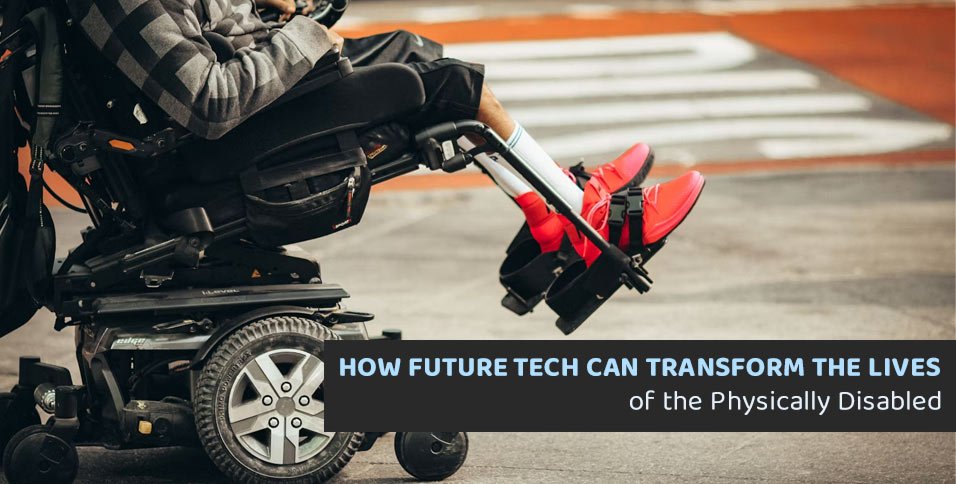
Physical disability has the potential to change the course of a person’s life in many ways. While some people are born with physical limitations, others acquire them through illness, injury, or accidents that happen unexpectedly.
According to updated data from the CDC’s Disability and Health Data System, approximately 28.7% of U.S. adults live with a functional disability. That represents roughly 70 million individuals.
These people likely face a range of challenges in daily life that technology has the potential to address. In this article, let’s find out how cutting-edge technology can help transform the lives of people with disabilities.
Technology Could Change What Physical Independence Looks Like
A lot of people don’t realize just how easy it is to become disabled. We rarely stop to consider how vulnerable the human body actually is. A single spinal injury, for instance, can be enough to permanently take away a person’s ability to walk.
Such situations are so common given the frequency of incidents like car accidents. Just recently, three people were injured in a serious multi-vehicle crash in Toledo, Ohio, and needed hospitalization.
If one of those people suffered a spinal injury, they could face permanent physical limitations that affect virtually every part of their life. The consequences could extend to their ability to work, leaving everyday living expenses far more difficult to manage.
In such circumstances, speaking with a car accident attorney in Toledo, Ohio could help the injured person understand whether they may be entitled to compensation and what legal options are available to them. If a claim is successful, a settlement can be enough to cover medical bills and future living costs.
As Zoll & Kranz, LLC explains, a lawyer can help people understand their legal options after an accident. But what about the other aspects of life, particularly those that become apparent years or even decades later? This is where technology could be transformative.
Mobility technology is already moving beyond conventional wheelchairs and walking aids, with researchers developing systems designed to support or restore movement. Robotic exoskeletons are among the most promising examples. These wearable machines can provide mechanical assistance to the legs and help some people with impaired mobility stand or walk during rehabilitation.
One multicenter randomized controlled trial evaluated the EKSO-GT robotic exoskeleton for gait rehabilitation in patients with motor-incomplete spinal cord injuries. It found that participants achieved a meaningful milestone, demonstrating a 10% or greater improvement in walking speed.
Exoskeletons have already allowed paralyzed individuals to walk again. In the future, the models could become lighter, more responsive, and better able to adjust to individual users.
Technology Could Make Everyday Life More Accessible
Mobility is only one part of independent living. Everyday activities such as opening doors, preparing food, and retrieving objects can become difficult when someone has limited strength or movement. Future smart homes could reduce some of these barriers by allowing residents to control their surroundings through voice commands or other accessible interfaces.
Artificial intelligence also has the potential to make existing systems more adaptable. Instead of requiring a person to operate each appliance individually, an AI assistant could learn routines and respond to more complex instructions.
The smartphone is also likely to remain an important part of this accessibility ecosystem. According to WebAIM’s 10th Screen Reader User Survey, preference for mobile apps over desktop websites among screen reader users rose significantly to 58% in 2024. This notable increase from 51.8% in 2021 reflects a growing reliance on mobile digital experiences for accessibility.
In the future, phones could increasingly function as central control systems, allowing several forms of assistive technology to work together through one accessible interface.
Future Technology Could Help Protect Economic Independence
Physical disability can have major consequences for employment, particularly when workplaces, transportation systems, or job duties are difficult to navigate. Data released by the U.S. Bureau of Labor Statistics highlights a significant ongoing employment disparity. Only 22.7% of working-age Americans with a disability were employed in 2024, compared to 65.5% of those without one. This underscores a stark 42.8-percentage-point gap in national workforce participation.
Technology could help narrow this gap by removing physical barriers that prevent people from entering or remaining in the workforce. Remote work is one obvious example. Accessible communication software, eye tracking, adaptive keyboards, and AI assistants can allow people with disabilities to still work a job.
Robotics could also change how physically demanding jobs are structured. Collaborative robots may eventually handle lifting, repetitive movement, or other physically strenuous tasks. Human workers could then focus on decision-making, supervision, creativity, and specialized knowledge. This could make certain positions accessible to people who might otherwise be excluded because of physical requirements.
It’s worth remembering that someone who acquires a disability early in adulthood may still have decades of professional knowledge and experience to contribute. With accessible digital tools, that person could potentially continue consulting, teaching, managing a business, creating products, or working remotely.
Frequently Asked Questions
Can brain-computer interfaces restore movement for paralyzed people?
Brain-computer interfaces may eventually help some people with paralysis regain control over robotic limbs or other devices. These systems detect electrical activity in the brain and convert those signals into commands. While the technology is still developing, early research suggests it could provide new ways to communicate and move.
What are the main challenges associated with assistive technology?
Cost, accessibility, reliability, and availability remain major challenges for assistive technology. Advanced devices can be expensive, while insurance coverage may be limited. Some systems also require training or regular maintenance. Making these technologies affordable, dependable, and easier to use will be essential for wider adoption.
How is AI being used in rehabilitation?
AI is increasingly being used to personalize rehabilitation by analyzing movement, tracking progress, and helping therapists adjust exercises. It can also work alongside robotic rehabilitation devices to determine how much assistance a patient needs. Over time, AI could make therapy more adaptive and responsive to individual recovery patterns.
Key Numbers & Facts at a Glance
| U.S. adults reporting a functional disability | 28.7% |
| Americans with a disability who were employed in 2024 | 22.7% |
| Employment gap between Americans with and without disabilities | 43 percentage points |
| Increase in mobile-app preference among screen reader users | 6.2% from 2021 to 2024 |
For many people, losing physical ability can feel like a permanent narrowing of the choices available to them. The longer-term promise of emerging technology is that some of those choices may be opened up again. Of course, there will still be practical and financial barriers. Advanced prosthetics, exoskeletons, robotics, and accessible smart-home systems are unlikely to become equally available to everyone overnight.
That said, just like tech use in other areas, accessibility will gradually improve with time. Eventually, what currently requires specialized equipment or extensive assistance could become as common as a smartphone or other everyday devices.