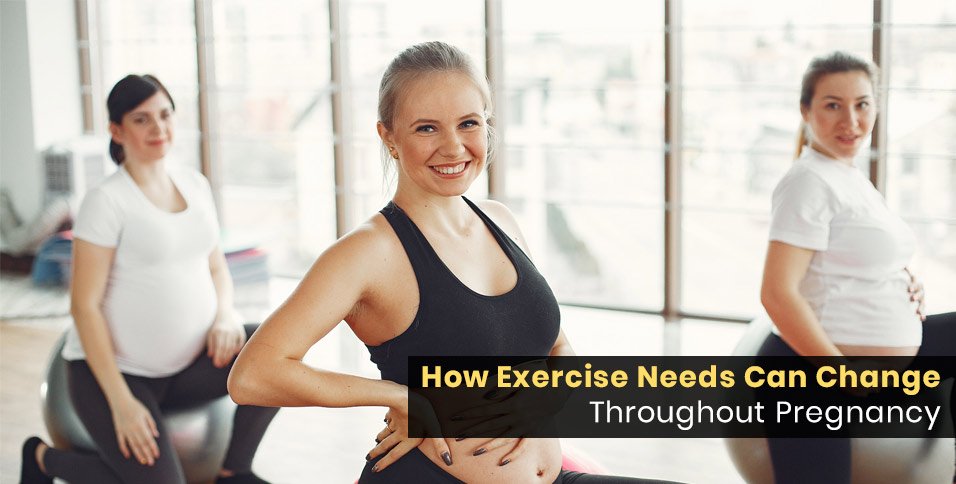
Staying active during pregnancy can look different from one week to the next as your body changes. However, regular physical activity can offer important benefits for both you and your baby.
In fact, a massive national study tracking over 190,000 pregnancies found that engaging in regular physical activity, even just twice a week, significantly lowers the odds of key complications. It helps reduce risks like preterm birth, high blood pressure, preeclampsia, and gestational diabetes, all without raising safety concerns.
While these findings are encouraging, your exercise routine may need to change as your pregnancy progresses. You might need more rest during the first trimester if fatigue sets in, while later stages may call for adjustments to accommodate changes in balance, mobility, and comfort.
Understanding how your exercise needs evolve can help you stay active in ways that suit your body and your stage of pregnancy.
Why Exercise Needs Can Change During Pregnancy
Pregnancy affects posture, joint mobility, body weight distribution, and the way everyday movements feel. As the abdomen grows, the body’s center of mass shifts, which can influence balance and stability. Some people may also notice changes in flexibility, fatigue, or comfort when standing, sitting, or lying in certain positions.
These changes do not happen at the same rate for everyone. Someone who exercises regularly before pregnancy may find it easier to maintain some activities, while another person may need to start with gentler movements and build gradually. Even the same person may experience different needs from one week to the next.
For this reason, exercise during pregnancy should be flexible rather than based on a rigid set of expectations. A familiar routine can still be useful, but movements, intensity, duration, and rest periods may need to change. Paying attention to comfort and discussing any concerns with a qualified healthcare provider can help guide those decisions.
Adapting Exercise Across the Three Trimesters
Exercise needs can change throughout pregnancy, and the right routine depends on how you feel and how your pregnancy progresses.
During the first trimester, you may be able to continue familiar activities, but nausea and fatigue can make workouts harder. Shorter sessions, gentler movements, and extra rest may help on difficult days. In the second trimester, your growing belly may affect balance and comfort, so you may need to modify certain movements and avoid positions that feel uncomfortable.
By the third trimester, your growing belly and shifting center of gravity may make some movements more difficult. WebMD recommends adjusting activities to your comfort level as your pregnancy advances. Low-impact exercises, supported positions, and shorter sessions may help you stay active without unnecessary strain.
Avoid prolonged periods lying flat on your back after the first trimester, and check with your healthcare provider if you are unsure which movements are suitable.
Adjusting Balance, Stability, and Mobility
Changes in balance and stability can affect more than formal workouts. Everyday activities such as climbing stairs, getting out of a chair, reaching for something, or walking on uneven surfaces may feel different as pregnancy progresses.
Exercise choices can reflect these changes. For example, someone who previously enjoyed single-leg exercises may prefer a wider stance or a supported position. Movements that require sudden direction changes may be replaced with slower, more controlled alternatives. Using a wall, chair, or other suitable support can also make certain activities feel more manageable.
Mobility exercises can help maintain comfortable movement as the body changes. Gentle movements for the hips, shoulders, and upper back may be useful when stiffness or postural changes make everyday activities less comfortable. However, pregnancy is not a time to force stretches or pursue greater flexibility simply for the sake of it.
Choosing Lower-Impact Exercise and Adjusting Resistance
Lower-impact activities can be useful during pregnancy, particularly when high-impact movements become uncomfortable or difficult to manage. Depending on individual circumstances, options may include walking, swimming, stationary cycling, and appropriately modified strength training.
Lower impact does not necessarily mean low effort. Strength exercises can still provide a meaningful challenge when resistance, repetitions, rest periods, and movement choices are appropriate. The important consideration is whether the activity feels manageable and can be performed with control.
Resistance may need to change as pregnancy progresses. Someone who previously lifted heavier weights might benefit from lighter resistance, fewer repetitions, or additional recovery time. Another person may be able to continue familiar strength exercises with relatively minor adjustments.
Positioning also matters. An exercise that feels comfortable while seated may be less comfortable when performed lying down or standing. Avoiding positions that cause discomfort and following professional guidance on appropriate modifications can help make sessions more manageable.
How Strength and Mobility Work Support Everyday Movement
Exercise during pregnancy does not need to revolve around performance goals or increasingly difficult workouts. For many people, maintaining comfortable movement through everyday activities is a more practical priority.
Appropriately selected strength exercises can help you practice standing up, carrying everyday items, and changing positions with control. Gentle mobility exercises can support comfortable movement, while supported standing and controlled weight shifts can help you adapt to changes in balance.
Research into exercise during pregnancy has historically been limited, leading to conservative recommendations based partly on theoretical safety concerns. Margie Davenport, PhD, of the University of Alberta, notes that researchers are now working to determine which concerns are supported by evidence.
Christina Prevett, PT, PhD, also highlights how newer research is helping experts develop more individualized exercise recommendations. This means your routine can be tailored to your fitness level, comfort, and medical circumstances rather than following rigid rules.
However, certain complications or pelvic rest instructions may require specific modifications, so consult your healthcare provider before changing your routine.
Why Individualized Programming Can Be Helpful
A fixed workout routine may not account for the changes that occur during pregnancy. Energy levels can fluctuate, certain positions may become uncomfortable, and movements that felt manageable one week may need adjustment the next.
Individualized programming allows an exercise professional to consider a person’s previous activity level, current comfort, goals, and available movement options. Sessions can then be adjusted by changing the exercise, reducing resistance, shortening the workout, or allowing more recovery time.
As pregnancy progresses, some people may benefit from exercise formats that allow positioning, resistance, and movement choices to be adjusted more easily. Prenatal Pilates Reformer is one option that can be adapted around changing comfort, stability, and movement needs throughout pregnancy.
The Pilates Circuit offers individualized prenatal Pilates sessions tailored to different needs and comfort levels. Sessions can be adapted to suit changing mobility, stability, and exercise requirements as pregnancy progresses.
Individualized sessions are not essential for everyone, but they may be worth considering when a person wants more guidance than a general group class can provide.
What to Know About Prenatal Reformer Pilates
Reformer Pilates uses a moving carriage, springs, straps, and other components to provide adjustable resistance and support. Depending on the exercise and equipment setup, this can offer different ways to practice controlled movement without relying exclusively on body weight.
During pregnancy, a trained instructor may be able to modify spring resistance, select more comfortable positions, and choose exercises that suit the individual’s current abilities. Some movements may be replaced or omitted as balance, comfort, or positioning needs change.
However, the Reformer is not automatically suitable for every pregnant person or every stage of pregnancy. Equipment-based exercise still requires appropriate instruction, and modifications should reflect individual circumstances. People considering prenatal Pilates should ask about the instructor’s relevant experience and whether the proposed activities align with their healthcare provider’s advice.
Other lower-impact activities may work just as well for someone’s preferences and circumstances. The best option is one that feels manageable, meets personal goals, and can be adjusted when needed.
Communicating With Healthcare and Exercise Professionals
Before starting an exercise program during pregnancy, discuss physical activity with a qualified healthcare provider, particularly if there are pregnancy complications or concerns about exercise safety. Recommendations can differ depending on individual circumstances.
A qualified instructor with prenatal exercise training can help adapt movements, explain exercise techniques, and recognize when a session should be modified or stopped. Sharing relevant changes in comfort, energy, balance, or symptoms helps the instructor make better-informed decisions about the session.
Stop exercising and contact your healthcare provider immediately if you notice any warning signs. These include vaginal bleeding, chest pain, fluid leakage, dizziness or feeling faint, shortness of breath before starting physical activity, or painful, regular contractions. Follow your healthcare provider’s guidance about when and how to resume activity.
Frequently Asked Questions
Is it safe to exercise throughout pregnancy?
For many people with uncomplicated pregnancies, regular physical activity is beneficial. However, suitable exercises and intensity levels depend on individual health, fitness, and pregnancy-related circumstances. Consult your healthcare provider before starting or changing a routine.
How should exercise change during each trimester?
During the first trimester, fatigue and nausea may call for shorter workouts and more rest. In the second trimester, changes in balance and comfort may require movement modifications. During the third trimester, lower-impact activities, supported positions, and shorter sessions may feel more manageable.
Is Reformer Pilates suitable during pregnancy?
Prenatal Reformer Pilates may be an option for some people when sessions are adapted to their needs and led by an appropriately trained instructor. Consult your healthcare provider before starting or continuing a program, and choose an instructor with relevant prenatal exercise experience.
Key Statistics and Insights on Exercise During Pregnancy
| Pregnancies included in the national study | More than 190,000 |
| Frequency used to define regular physical activity | At least twice a week throughout pregnancy |
| Exercise needs across pregnancy | Adjust it across all three trimesters to accommodate changes in energy, balance, mobility, and comfort. |
| Individualized exercise | Exercises, resistance, workout duration, and recovery time can be adjusted to suit individual needs. |
| Prenatal exercise options | Walking, swimming, stationary cycling, modified strength training, and prenatal Reformer Pilates are discussed as exercise options. |
Exercise needs can change throughout pregnancy as comfort, balance, mobility, and energy levels shift. Adjusting intensity, resistance, positioning, and exercise selection can help people maintain a routine that reflects their changing circumstances.
Lower-impact activities, strength work, and gentle mobility exercises may all have a place, depending on individual needs and professional guidance.
Rather than trying to follow the same routine throughout all three trimesters, focus on flexibility, comfort, and realistic goals. Working with qualified healthcare and exercise professionals can help you make informed choices and adapt your activities as pregnancy progresses.