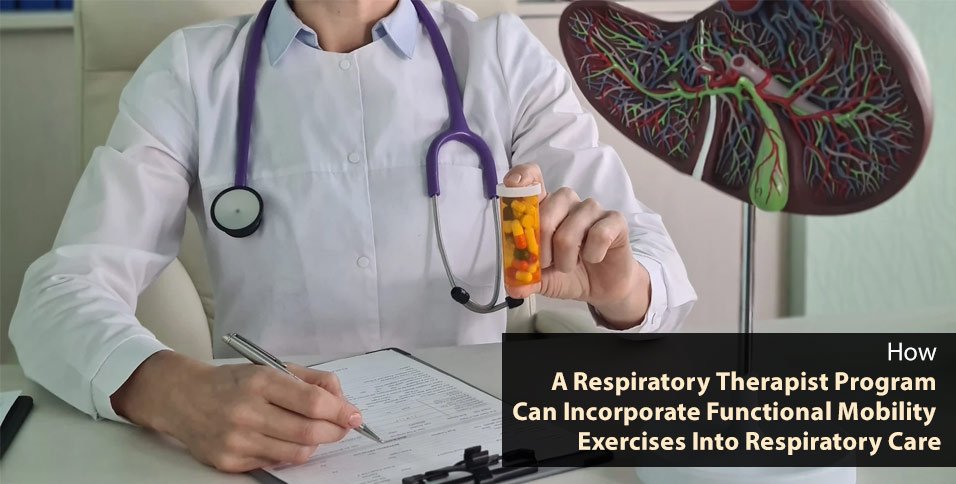
A respiratory therapist program can prepare future clinicians to look beyond breathing treatments alone and understand how movement, posture, endurance, and respiratory function often influence one another.
A patient recovering from pneumonia, for example, may have improving oxygen levels while still becoming breathless after walking from the hospital bed to the bathroom.
Learning how respiratory care interacts with safe functional movement can help students recognize these practical challenges and contribute more effectively to interdisciplinary patient care.
Students interested in developing a broader understanding of respiratory assessment, cardiopulmonary care, and patient-centered clinical practice can explore a respiratory therapist program as part of their educational planning.
Why Functional Mobility Matters in Respiratory Care
Functional mobility refers to the movements people need to perform everyday activities, including sitting up, standing, transferring between surfaces, walking, and climbing stairs.
For patients with respiratory conditions, these seemingly ordinary activities can place significant demands on the cardiopulmonary system.
Someone with chronic obstructive pulmonary disease may breathe comfortably while sitting but experience substantial shortness of breath after walking down a hallway.
Similarly, a patient recovering from prolonged mechanical ventilation may have adequate oxygenation at rest yet lack the strength and endurance required to stand independently.
These situations demonstrate why respiratory care cannot always be considered separately from physical activity.
Students who learn to observe respiratory responses during functional mobility exercises can develop a more complete picture of how a patient’s condition affects everyday function.
Connecting Breathing With Movement
Breathing mechanics change as the body moves, making functional activity a useful context for understanding respiratory physiology.
When a person stands from a chair, walks, or climbs stairs, working muscles require more oxygen and produce more carbon dioxide.
Ventilation and heart rate increase to meet that demand.
For a healthy person, these adjustments may happen almost unnoticed.
For someone with compromised pulmonary function, however, even modest activity can produce dyspnea, fatigue, rapid breathing, or oxygen desaturation.
Teaching Students to Observe Activity Tolerance
Respiratory therapy education can introduce mobility-based scenarios that encourage students to monitor how patients respond before, during, and after activity.
Students might record respiratory rate, heart rate, oxygen saturation, perceived exertion, and reported breathlessness while a simulated patient moves from sitting to standing.
The goal is not to turn respiratory therapy students into physical therapists but to help them recognize clinically meaningful changes during movement and understand when collaboration with other professionals is appropriate.
A student who notices that oxygen saturation remains stable at rest but declines during a short walk has identified information that could influence respiratory management and the broader care plan.
Functional Exercises That Can Support Respiratory Education
Mobility activities incorporated into respiratory education should reflect realistic clinical situations rather than complicated exercise routines.
Simple movements often reveal the most useful information because they resemble activities patients need to perform after leaving the hospital.
Sit-to-Stand Practice
Moving from a chair to a standing position requires lower-body strength, balance, coordination, and increased cardiopulmonary effort.
Students can observe breathing patterns before and after several controlled repetitions while learning how posture and exertion affect ventilation.
A patient who becomes noticeably breathless after three repetitions, for instance, may require additional assessment even if resting measurements initially appeared reassuring.
Short-Distance Walking
Walking is another practical way to connect pulmonary assessment with everyday function.
A classroom simulation might involve monitoring a patient’s oxygen saturation and respiratory rate during a short hallway walk while also asking about perceived breathlessness.
This teaches students that numbers on a monitor are only part of the assessment.
A patient whose oxygen saturation appears acceptable may still report significant chest tightness, fatigue, dizziness, or difficulty recovering after exertion.
Upper-Body Functional Movements
Everyday activities frequently involve the arms, whether someone is getting dressed, reaching into a cupboard, washing their hair, or carrying groceries.
Upper-body activity can be particularly demanding for some people with chronic respiratory disease because accessory respiratory muscles may simultaneously contribute to breathing and arm movement.
Educational exercises involving controlled reaching or light functional tasks can demonstrate this relationship in a practical way.
Teaching Breathing Strategies During Activity
Functional mobility training also gives students opportunities to understand how breathing techniques may be applied during daily activities.
Pursed-lip breathing, for example, is commonly associated with management of breathlessness in people with obstructive lung conditions.
Instead of teaching the technique only while a patient sits quietly, instructors can demonstrate how breathing strategies may accompany activities such as standing or walking.
Students can then see why timing and pacing matter.
A patient who rushes through an activity while holding their breath may become uncomfortable much faster than someone who moves steadily and maintains controlled breathing.
Recognizing the Importance of Pacing
Pacing is particularly relevant for people whose respiratory limitations make routine tasks exhausting.
Consider someone who becomes breathless while getting ready in the morning and repeatedly stops between dressing, walking to the kitchen, and preparing breakfast.
Rather than viewing these activities separately, students can learn to consider how cumulative exertion affects respiratory symptoms throughout the day.
That perspective encourages more realistic conversations about energy conservation and symptom management.
Using Simulation to Build Clinical Judgment
Simulation can help connect classroom knowledge with the unpredictable nature of patient care.
An instructor might create a scenario involving a patient recovering from an acute respiratory illness who has been largely confined to bed for several days.
At rest, the patient’s vital signs could appear relatively stable.
Once the patient stands and begins walking, however, respiratory rate could rise quickly while oxygen saturation falls and breathlessness increases.
Students would then need to decide what information matters, when activity should stop, what respiratory interventions may be appropriate, and when another healthcare professional should become involved.
These scenarios develop clinical reasoning because students must interpret several signals rather than simply memorize normal ranges.
Building Interprofessional Awareness
Functional mobility is rarely managed by one healthcare profession alone.
Respiratory therapists may work alongside nurses, physicians, physical therapists, occupational therapists, and other clinicians when caring for patients with complex cardiopulmonary needs.
Education should therefore make professional boundaries clear while also teaching students how their respiratory expertise contributes to shared decisions.
A physical therapist may lead mobility progression while a respiratory therapist evaluates oxygen requirements, ventilatory response, airway clearance needs, or tolerance of respiratory support during activity.
Understanding these complementary responsibilities can make collaboration more efficient and patient care more coordinated.
Connecting Mobility to Discharge Readiness
One of the most practical reasons to consider mobility during respiratory care is that patients ultimately need to function outside a clinical environment.
Resting comfortably in a hospital bed does not necessarily mean someone is prepared to manage daily life at home.
A patient may need to walk to the bathroom, prepare food, shower, climb several stairs, or move around without immediate access to clinical staff.
Respiratory therapy students can learn to consider how respiratory symptoms change during these ordinary activities and communicate relevant findings to the care team.
This helps shift attention from whether a patient’s numbers look acceptable at rest to whether respiratory function supports meaningful daily activity.
Bringing Respiratory Care Into Everyday Life
Respiratory therapy education becomes more clinically relevant when students understand what breathing limitations actually look like during ordinary movement.
Functional exercises provide a practical setting for observing oxygenation, ventilation, breathlessness, fatigue, recovery, and activity tolerance.
They also reinforce an important principle: successful respiratory care is not only about improving measurements but also about helping patients function safely within the limits of their condition.
By integrating appropriate mobility concepts, simulation, breathing strategies, and interprofessional collaboration into training, future respiratory therapists can develop a more complete understanding of how cardiopulmonary health affects the way patients live and move.