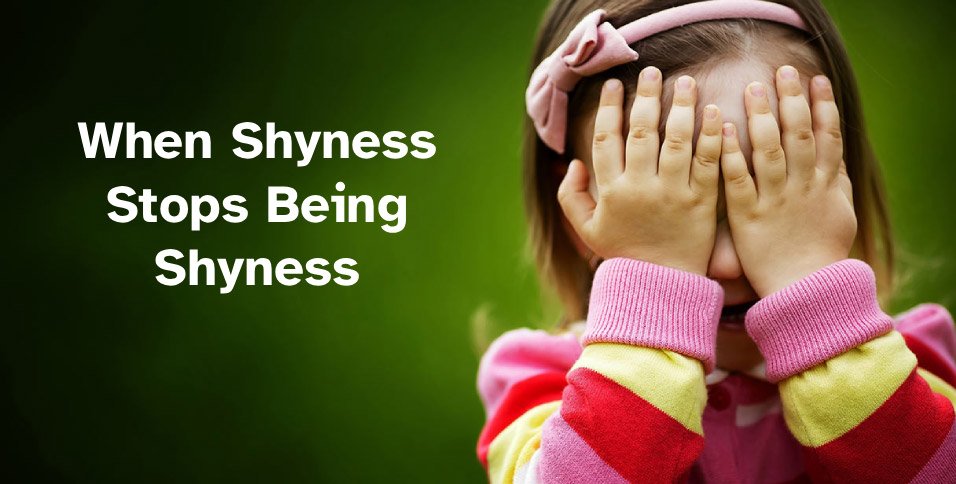
Almost every teenager is self-conscious. That is not a sign of anything wrong; it is a predictable result of a brain that has recently become very good at imagining what other people are thinking. The difficulty is that social anxiety hides comfortably inside that normal range, and families often spend years describing something clinical in the language of personality. He is just quiet. She has always been shy. They will grow out of it.
Sometimes that is accurate. Often it is not, and the cost of the mistake is that an adolescent spends the years when social confidence is built practising avoidance instead. The question worth asking is not whether a teenager is shy but whether the shyness is costing them things they actually want, and that is also the question that tends to prompt families to look into anxiety therapy for teens in San Francisco rather than waiting another year to see what happens.
The Line Between Quiet and Stuck
Shyness is a temperament. A shy teenager takes longer to warm up, prefers smaller groups, and finds large gatherings tiring rather than energising. They still go. They still have friends. The discomfort fades once they are in the room.
Social anxiety is different in a specific way: the fear does not fade with exposure, because the exposure never really happens. The teenager finds a way out. They do the group project alone. They sit at the back and never speak, so no one calls on them. They stop going to the thing they were invited to, and after a while they stop being invited. The anxiety never gets disconfirmed, because nothing is ever tested.
A useful question for a parent is not how the teenager feels but what the feeling has removed. If the list is getting longer each year, the problem is not temperament.
Why Avoidance Looks Like Preference
This is the part families miss most often, and it is not a failure of attention. Avoidance genuinely disguises itself as choice, and teenagers are unusually good at the disguise because they believe it themselves.
A fifteen-year-old who says they do not like parties is reporting something true. Parties feel terrible to them. What is missing from that account is that the feeling is anxiety rather than distaste, and that it would change if the anxiety were treated. The same pattern turns up as not caring about the team, not being interested in a part-time job, not wanting a driving licence yet, and not bothering with a class where participation is graded. Each one is defensible on its own. Together they describe a life quietly contracting.
Specific situations tend to recur across families:
- Speaking in class, asking a teacher a question, or reading aloud
- Eating in front of other people, including the school cafeteria
- Phone calls, including ordering food or calling about a job
- Unstructured social time, which is harder than structured activities
- Being photographed, recorded, or watched while doing something
- Meeting new people without a script for what to say
Why Adolescence Raises the Stakes
Social anxiety at any age is worth treating. In adolescence there is an additional problem of timing. These are the years in which a person learns, by repetition, that they can walk into a room where they know nobody and come out fine. That learning is built from hundreds of small, mildly uncomfortable experiences, and a teenager who avoids all of them arrives at adulthood without it.
The academic consequences compound in the same way. Participation grades, group work, presentations and asking for help are all social tasks wearing academic clothing. A capable student can underperform for years for reasons that have nothing to do with the material.
The Severe End, Which Is Often Misread
School Refusal and Avoidance
When mornings become a daily battle and stomach aches arrive reliably on school days and vanish at weekends, the common interpretation is defiance or manipulation. It is usually neither. It is anxiety producing real physical symptoms, and treating it as a discipline problem makes it worse by adding conflict to a situation the teenager already cannot control.
Selective Mutism
A young person who speaks normally at home and cannot speak at all in certain settings is not being stubborn or rude. This is an anxiety presentation with a specific treatment approach, and it responds poorly to pressure and well to graduated, supported practice.
Test Anxiety
Often filed under study skills when it belongs with anxiety. A student who knows the material in the kitchen and loses it in the exam hall does not need more revision. They need the anxiety addressed directly.
The Accommodation Trap
Parents of anxious teenagers almost always end up accommodating, and they do it for good reasons. You make the phone call because watching your child panic is unbearable. You email the teacher. You accept the excuse about the party. Each decision reduces distress in the moment.
The difficulty is that accommodation is how avoidance becomes permanent. Every time an adult removes the feared situation, the message delivered is that the teenager could not have handled it. Repeated over years, that message becomes the teenager’s own view of themselves.
This is why serious treatment for young people works with parents as well as with the adolescent. Parent coaching and structured approaches that focus on reducing family accommodation address the part of the problem that sits outside the therapy room, and they are among the more effective things available, particularly for younger teenagers or for those who are reluctant to engage directly.
What Treatment Actually Does
The approaches used for social anxiety in young people are well established rather than experimental. According to the American Psychological Association, effective practice involves integrating the best available research with clinical expertise in the context of a patient’s characteristics, culture and preferences, which in practice means a small set of proven methods adapted to the individual rather than a single protocol applied uniformly.
Cognitive Behavioural Therapy, Adapted for Young People
The same core method used with adults, delivered in a form that suits an adolescent. The work involves identifying the predictions the anxiety makes, testing them, and noticing what actually happens. Teenagers tend to be good at this once the framing avoids anything that sounds like being lectured.
Exposure, Done Gradually
Exposure and response prevention is the component that does most of the heavy lifting, and it is also the one families worry about. It is not about forcing a teenager into their worst scenario. It is a graded sequence, agreed in advance, starting with something manageable and building. The point is to accumulate evidence that the feared outcome either does not occur or is survivable when it does.
Work That Includes the Family
Parent-focused work runs alongside the individual sessions rather than replacing them. Practices offering anxiety treatment in the Bay Area and elsewhere increasingly treat parent coaching as a standard component for this age group, because the accommodation patterns described above are usually where the gains either hold or quietly unravel.
What Tends Not to Help
Worth naming, because well-intentioned responses can entrench the problem:
- Telling a teenager to stop worrying about what people think, which they already know and cannot act on
- Large, unstructured social exposure with no preparation, which usually confirms the fear
- Treating school avoidance as purely a behavioural issue
- Waiting it out on the assumption that confidence arrives with age
A Practical Starting Point
Specialist practices working with children and adolescents commonly offer a brief introductory consultation at no cost, used to understand the situation and match a family with an appropriate clinician. Telehealth has also made a real difference here, both for scheduling around school and for teenagers who find a first session easier from their own room than in an unfamiliar waiting area.
Before any of that, a parent can usefully spend a fortnight simply noticing: what gets declined, what gets handled by someone else, and whether the list is growing. That record is more useful in a first appointment than any description of how a teenager seems.
Before Avoidance Becomes the Shape of a Life
Social anxiety in adolescence is highly treatable, and it is treatable with methods that have been tested properly rather than assembled from intuition. What makes it worth acting on now is not that it is dangerous but that it is quietly expensive. Every year of avoidance narrows the range of things a young person believes they can do, and that narrowing has a way of being mistaken for personality by the time they reach their twenties. The teenager who learns at sixteen that a difficult conversation can be survived carries that knowledge into every decade afterwards, which is a reasonable return on asking a few questions now.