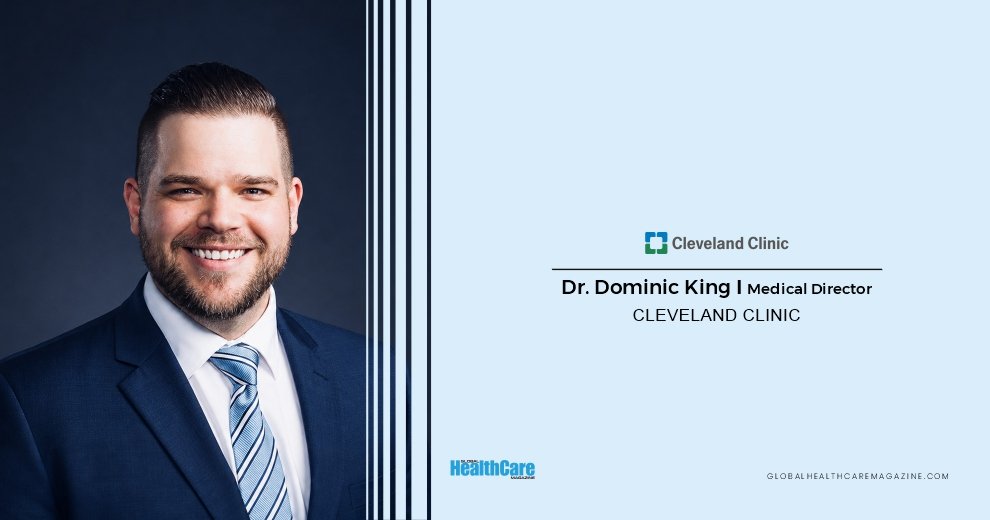
The glow of the monitor is rarely associated with the physical exhaustion of traditional athletics. Yet, in the dimly lit arenas of competitive gaming, a new breed of athlete pushes their neurocognitive and psychomotor skills to breathtaking extremes. The physical toll is often less visible, manifesting in chronic neck strain, visual fatigue, and overuse injuries affecting the hands, wrists, neck, and back. Dr. Dominic King recognized this emerging reality early in the growth of organized esports, positioning himself at the forefront of a new area of sports medicine.
Dr. King is an engaging advocate for athlete health, joint preservation, and modern care delivery, a physician who understands that the definition of sport is rapidly evolving. “Esports is a sport, not a fad, and these gamers are athletes,” he has said, advocating for the legitimacy of a population that has often been overlooked by conventional sports-medicine models.
From Osteopathy to Esports
His clinical foundation is deeply rooted in osteopathic principles. A 2011 graduate of the West Virginia School of Osteopathic Medicine (WVSOM), he completed his Family Medicine residency at Cleveland Clinic South Pointe Hospital in 2014, before completing a Sports Medicine fellowship there in 2015. His training prepared him to approach musculoskeletal conditions through a primary-care lens while developing expertise in sports medicine, including concussion care, musculoskeletal ultrasound, and non-operative orthopaedic treatment.
In 2015, he joined the Cleveland Clinic as a Sports Medicine physician, a role he continues to hold. As of September 2026, that represents more than 11 years at the institution, not the 15 years stated in the original draft. He later became a central figure in Cleveland Clinic’s emerging Esports Medicine program, which he now leads as Director of the Esports Medicine Program.
He is the founder of the eSports Medicine Institute (ESMI) and helped develop the highly influential ‘Gamer’s Health Guide,’ a comprehensive clinical framework published in Current Sports Medicine Reports. The guide addresses the management and prevention of common health hazards in esports while incorporating health promotion and performance optimization.
The Cleveland Clinic program itself takes a multidisciplinary approach, bringing together sports medicine, rehabilitation, psychology, chiropractic care, athletic training, ergonomics, vision care, and injury prevention. Its research agenda also examines injury rates, training demands, neurocognitive performance, and the individualized needs of esports athletes.
The Informatics Evolution
Beyond the treatment room, Dr. King has a profound interest in the digital machinery of healthcare itself. By 2020, he was serving as Manager of Orthopaedic Informatics and Director of Clinical Transformation for Cleveland Clinic’s Orthopaedic & Rheumatologic Institute. In these roles, he worked on the digital transformation of musculoskeletal care, including virtual care, access, triage, workflow, and clinical processes.
His ability to navigate complex systems led to his involvement in initiatives that rethought how patients enter and move through orthopaedic care. Cleveland Clinic’s work during the pandemic included developing virtual musculoskeletal care models and an Orthopaedic Informatics Working Group designed to coordinate technology, clinical, and administrative stakeholders.
In 2022, Cleveland Clinic highlighted his role in improving access by using structured data to connect patients with the right provider, location, time, and clinical preparation. His work reflected an expanding understanding of access itself as a component of healthcare quality.
Transforming Access at the Cleveland Clinic
That systems-oriented work eventually expanded across the organization. Dr. King currently serves as Medical Director of Clinical Access and Virtual Health at Cleveland Clinic, while continuing his clinical work in sports medicine and his leadership of the Esports Medicine Program.
In this role, he focuses on improving how patients connect with specialized care, including virtual second opinions, provider matching, and broader access strategies. Cleveland Clinic’s current virtual second-opinion program gives patients access to thousands of physicians across hundreds of subspecialties, with the care team helping gather records and connect patients with the appropriate expertise.
His philosophy is straightforward: access is not merely a scheduling function. It is part of the clinical experience. Cleveland Clinic has described his work as treating access challenges as healthcare problems that require the same kind of structured thinking applied to diagnosis and treatment.
Since July 2026, he has also served as Chief Clinical Advisor for the Patient Access Collaborative, bringing his clinical and operational perspective to a broader conversation about connecting patients with care. The organization announced his appointment in September 2026.
The Digital Athlete as a Patient
Dr. King’s esports work is not based simply on the idea that gaming should be called a sport. It is grounded in the recognition that intensive competitive gaming produces its own medical environment.
Esports athletes can experience neck and back pain, wrist and hand problems, vision fatigue, and other overuse conditions, while also facing questions around nutrition, sleep, psychological well-being, physical activity, and performance. Cleveland Clinic’s approach therefore extends beyond treating the immediate musculoskeletal complaint to considering the athlete’s overall health and performance.
The 2020 Gamer’s Health Guide helped formalize this approach by outlining a three-part framework: understanding and managing common health hazards, creating opportunities for health promotion, and supporting performance optimization.
The work has continued to evolve. Cleveland Clinic’s current Esports Medicine program includes research into neurocognitive performance and new technologies designed to assess and enhance the skills of esports athletes, while also exploring ways to reduce injuries associated with competitive gaming.
From Virtual Athletes to Virtual Care
The connection between these two sides of Dr. King’s career is more than coincidental. Both esports medicine and virtual healthcare ask the same underlying question: how can technology be used without losing sight of the human being on the other side of it?
In sports medicine, technology can help clinicians understand movement, assess performance, support rehabilitation, and monitor the demands placed on athletes. In healthcare delivery, it can help patients reach the appropriate clinician more efficiently and make specialty care available across distance.
He has worked at both ends of that equation. His career has moved from musculoskeletal diagnosis and treatment to esports health, clinical informatics, virtual care, and enterprise-level patient access, creating a professional identity that sits at the intersection of medicine and technology.
A Voice Beyond the Clinic
His influence also extends into public communication. Dr. King delivered two TEDx talks in 2018, including Social Opioids at TEDxAkron and Physician Suicide: What Medical Students Need to Know at TEDxCaseWesternReserve University.
He has also appeared as a medical expert in national and regional media, including SELF, Reader’s Digest, Men’s Journal, Dr. Oz’s The Good Life Magazine, and WKYC, among others.
His public voice reflects the same curiosity that runs through his professional work. Whether discussing joint preservation, digital health, esports, virtual care, or physician well-being, he approaches medicine as a field that must continue adapting to the way people actually live.
Expanding the Definition of Sport and Care
Dr. King’s career has followed two parallel transformations. The first is the changing definition of the athlete. The second is the changing definition of access to medicine.
He has helped establish esports as a legitimate area of medical practice while contributing to the development of clinical systems that make specialized care easier to reach. He has worked with traditional athletes, digital athletes, and patients navigating increasingly virtual healthcare environments, yet the underlying objective remains consistent: understand the individual, identify what they need, and build a care pathway around that need.
His work with the Cleveland Clinic Esports Medicine Program demonstrates how sports medicine can move into previously unfamiliar territory. His work in clinical access demonstrates how healthcare itself can move beyond the traditional boundaries of the clinic.
“From our standpoint in sports medicine, it is our duty to provide comprehensive care to these athletes to improve their health, wellness, and performance,” he said.
That principle extends beyond esports. The modern sports-medicine physician may be a clinician, educator, researcher, technologist, systems designer, and advocate simultaneously.
For Dr. King, the future of sports medicine is not waiting on the sidelines. It is already playing on the screen, moving through the cloud, and redefining what it means to connect an athlete or any patient with the right care.