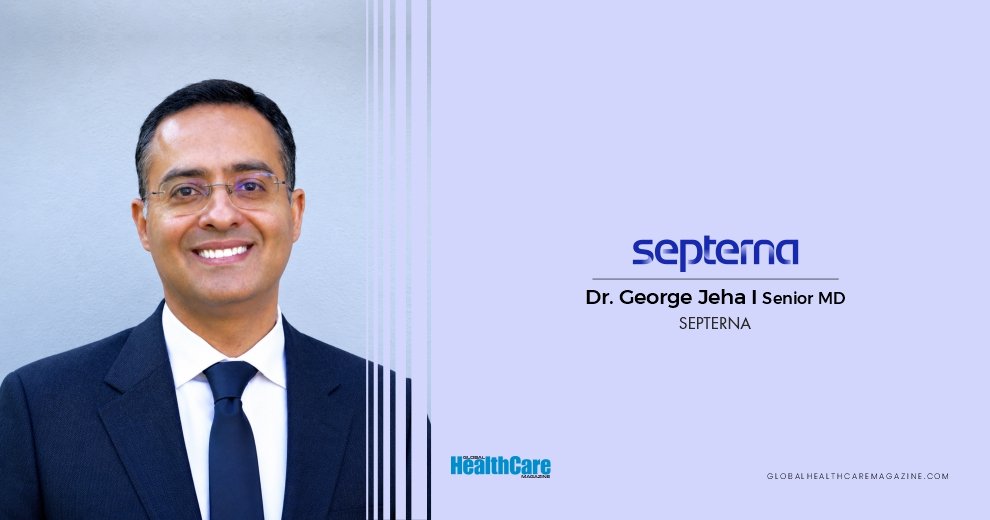
Congenital hyperinsulinism is the kind of disease that most physicians will never encounter in an entire career. It is rare enough that caring for and studying patients with the condition requires highly specialized expertise and sustained attention, a willingness to stay with a small population of very sick children long after a less committed clinician might have moved on to more common ground. Dr. George Jeha developed substantial expertise in this area during his academic career, and then, rather than settling into academic life permanently, he took that same focus on rare disease into industry, where he has spent more than a decade helping to shepherd drugs from clinical development toward regulatory milestones.
Today, he is the Senior Medical Director at Septerna, based in the San Francisco Bay Area. His LinkedIn profile currently identifies Septerna as his employer, although the publicly visible profile does not provide a start date or title for the Septerna position.
A Pediatrician’s Foundation
Dr. Jeha’s academic training was in pediatric endocrinology and metabolism, and his early career was built almost entirely within one institution. From July 2006 to January 2022, an extraordinary fifteen years and seven months, he held an appointment as Assistant Professor at Baylor College of Medicine, where his research focused on the pathway of development and differentiation of fat cells, and in particular on the effects of nuclear receptors on those pathways. During that same tenure, he served as Associate Program Director and Director of Education, and his professional background also includes leadership in the Pediatric Endocrinology training program and work with patients with congenital hyperinsulinism at Texas Children’s Hospital. His published work confirms his involvement in congenital hyperinsulinism research and pediatric endocrinology at Baylor.
That combination — translational research, training program leadership, and specialized rare-disease clinical work — gave him a foundation few pharmaceutical medical directors can claim. He arrived in industry already fluent in the language of endocrine and metabolic rare disease, not as a newcomer learning the terrain but as someone who had spent years studying and treating patients in that field.
The Move to BioMarin
Dr. Jeha’s industry career began in August 2017, while he was still holding his Baylor appointment, when he joined BioMarin Pharmaceutical Inc. as Medical Director, Rare Disease, based in San Rafael, California. He remained there for four years and six months, until January 2022. His work at BioMarin included medical oversight of clinical development programs, including vosoritide studies in achondroplasia.
BioMarin has long specialized in therapies for rare genetic conditions, and the fit with his academic background in metabolic and endocrine disease was a natural one.
Neurocrine and the Move to Executive Rank
In January 2022, Dr. Jeha stepped into a considerably larger role, joining Neurocrine Biosciences as Executive Medical Director, working remotely from the San Francisco Bay Area. He held that position for four years and one month, until February 2026, according to the available employment record.
The role represented a significant progression from his earlier Medical Director position, placing him in executive medical leadership at a company with a substantial neuroscience and endocrine portfolio. During his Neurocrine tenure, he was also associated with clinical development work on crinecerfont for congenital adrenal hyperplasia, with his role acknowledged in the publication of the Phase 3 adult trial.
A Year of Rapid Movement
What followed was a striking run of transitions in 2026. Available employment records identify him as joining Soleno Therapeutics as Senior Medical Director in February 2026, while his current LinkedIn profile identifies Septerna as his current employer. The publicly visible LinkedIn information does not establish the exact transition date between the two companies.
That movement places him among a group of senior medical leaders whose expertise is increasingly portable across specialized biotechnology companies. His background combines pediatric endocrinology, rare-disease medicine, clinical development, and experience within both large rare-disease organizations and specialized biotechnology companies.
The broader point is less about the speed of the transitions than about the consistency of the scientific territory he has occupied. As biotechnology companies continue developing therapies for genetically defined and metabolically driven diseases, physicians with experience spanning clinical care, rare-disease research, and drug development can bring valuable continuity between scientific strategy and clinical execution.
The Throughline
What connects Dr. Jeha’s stops at BioMarin, Neurocrine, Soleno, and now Septerna is not simply job title but subject matter. Soleno Therapeutics focuses on rare diseases and metabolic conditions, while Neurocrine has developed therapies across neuroscience and endocrine-related disorders. Septerna, his current company, is focused on GPCR-targeted medicines and drug discovery, giving him a new setting in which to apply his broader clinical-development and translational experience.
In other words, this is not a career of lateral moves for their own sake. It is a career that has stayed closely connected to specialized drug development and complex biological diseases, even as the company names on his business card have changed.
Business Development as a Second Language
Dr. Jeha’s official biography describes him as an experienced clinical drug developer with additional work experience in business development, early discovery, medical affairs, and commercial functions. That range matters. A Senior Medical Director who understands not just clinical trial design but also how a compound is discovered, positioned commercially, and evaluated for business development brings a kind of fluency across the entire drug development lifecycle that is valuable within biotechnology organizations.
Few physicians move comfortably between a laboratory research environment, a pediatric endocrinology clinic, and the commercial realities of drug development. Dr. Jeha has spent more than a decade building experience across those settings.
A Rare Disease Specialist, Still
For all the movement across companies in 2026, the constant in Dr. Jeha’s career has never really changed. It began with research into fat cells and nuclear receptors in a Baylor laboratory. It continued through his clinical and research work in pediatric endocrine and rare diseases, including congenital hyperinsulinism. It then moved into industry, where his work expanded into clinical development and medical leadership across rare and endocrine diseases.
“My research focus is the pathway of development and differentiation of fat cells, particularly the effects of nuclear receptors on those pathways.”
Nearly two decades later, that research focus has not so much changed as it has become one part of a broader career in pediatric endocrinology, rare disease, clinical development, and medical leadership.