The cardiac operating theatre, with its choreographed precision and brilliant lighting, falls quiet when the day ends. The surgeons, having done everything humanly possible to repair the heart, close the chest and hand the patient to the ICU team, much like entrusting the most valuable gift for delivery to a loved one whose life depends on its safe arrival.
The operation is the gift. The post-operative care is the journey. The ICU itself is never quiet: nurses, intensivists, and resident surgeons doing their attentive, skilled work to ensure the gift arrives safely. Most journeys end well. Yet even after a technically perfect operation, recovery can encounter preventable complications, and the most useful question is not who erred, but what was missed and what could have been seen sooner.
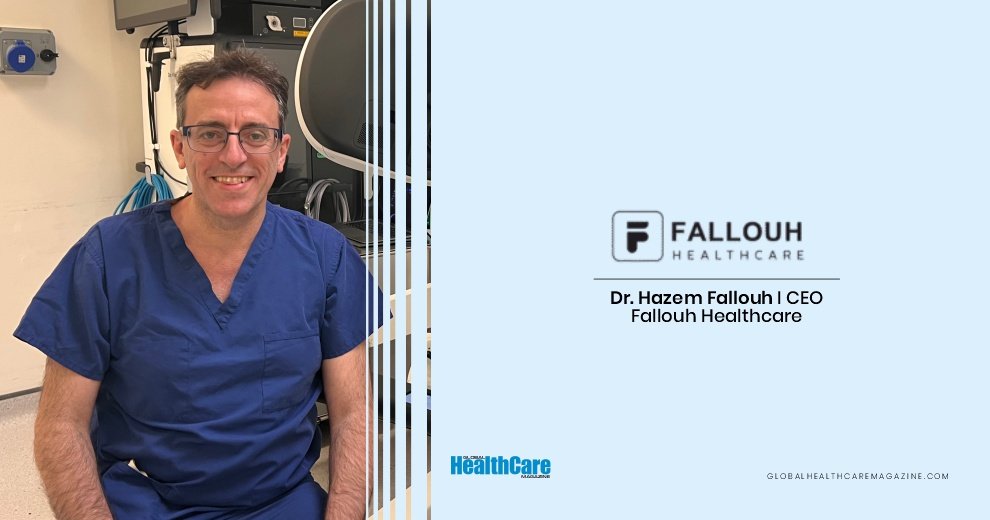
Dr. Hazem Fallouh was there for those nights. For three consecutive years, while completing his PhD at St Thomas’ Hospital, King’s College London, the historic birthplace of modern cardioplegia, he covered the cardiac ICU after spending each day in the research laboratory. He had come a long way to be there.
He had graduated from the University of Aleppo, Syria, in 1998 with a carefully formed plan: to become a cardiothoracic surgeon, train within the United Kingdom’s system of excellence, earn the FRCS, and eventually return home to serve his community. He completed his cardiothoracic training, obtained the FRCSCTh, and became a consultant thoracic surgeon in Birmingham, UK, in 2016. Alongside this, he completed his PhD at St Thomas’ under Dr. David Chambers, who had helped refine the original St Thomas’ cardioplegia solution. By day, he worked on novel myocardial protection. By night, he watched, listened, and learned.
What the Nights in ICU Revealed
Hearts that had undergone genuinely precise operations could still stumble in the six to twelve hours that followed. A heart that requires an operation is, by definition, a sick heart. The clinical name is low cardiac output syndrome, and its treatment is a delicate balancing act of drugs to make the heart contract more forcefully, drugs to tighten the vessels, careful titration of fluid and blood, and occasional adjustment of mechanical support. Hundreds of small decisions are made through the night by a vigilant team, with senior advice a phone call away.
Occasionally, however, the cause is something more insidious: cardiac tamponade, an accumulation of clot around the heart that compresses it. Tamponade tends to present in the darker hours, when the clinical picture is most difficult to read. It can mimic every other cause a junior team is trained to manage, except that none of those adjustments will work.
What is required is a single, more critical decision: to call the senior surgeon, mobilise a full team, and return to theatre to open the chest to exclude this possibility, clear clots, and stop the bleeding. Make that call too late, and the patient may arrest. Make it too readily, and you will operate on patients unnecessarily too frequently; you erode trust in the very signal you are trying to read. The decision rests on subtle clues, pattern recognition, and years of experience that the bedside team may not yet have. “The perfect operation is only the start of the patient’s journey,” Dr. Fallouh would later reflect.
“Much of our training and creativity as surgeons goes into perfecting the operation; intensivists, perfusionists, and scientists invest correspondingly in the recovery phase. My years as a researcher by day and a duty surgeon by night allowed me to see, from both sides, that the most fundamental limitations in care cannot be solved unless someone wears both hats and narrows the gap. PerDeCT was conceived precisely there.”
That pivot became Fallouh Healthcare: a surgeon-led initiative committed to transforming outcomes for the two million patients who undergo cardiac surgery worldwide each year.
The Tool That Did Not Fit the Problem
The standard solution for measuring cardiac output in post-surgical patients was the pulmonary artery catheter, the Swan-Ganz. It remains in use today, despite being invasive, risky, and frequently inaccurate in post-cardiac-surgery patients. More fundamentally, it was designed for patients in whom the heart is inaccessible, requiring threading through neck veins and heart valves to reach the pulmonary artery. Devices for long-term monitoring in advanced heart failure follow a similar logic.
In cardiac surgery, the heart and pulmonary artery are literally in the surgeon’s hands. Experience has a dual nature: it sharpens the eye for problems and can simultaneously make established workarounds feel inevitable.
“The visionary shift came when I stripped the problem back to first principles and asked: what if we use the unique opportunity of open-heart surgery to place sensors on the surface of the heart rather than forcing our way inside the vessel?”
A deceptively simple question that, in practice, required setting aside decades of accepted clinical convention.
Two Inventions, One Coherent Mission
The first answer was PerDeCT™. A low-profile probe placed on the pulmonary artery at the end of surgery delivers millisecond-accurate, continuous cardiac output measurement. A companion balloon simultaneously monitors for accumulating pericardial fluid, generating alerts before a patient reaches clinical deterioration.
PerDeCT solves two problems at once. It removes the need to thread a catheter from the neck through the heart, a procedure with a roughly 6% complication rate, a small but real proportion proving lethal. By sitting outside the heart, the device also reduces catheter-associated infection and clot formation, while the pericardial balloon enables early detection of tamponade, historically very difficult to identify in time.
Most cardiac surgery patients, and indeed most surgical patients, require long-term monitoring of the organ operated on. PerDeCT’s wireless iteration means the platform can remain in place indefinitely, opening the door to long-term surveillance of repaired heart valves, vascular conduits, or any organ requiring extended monitoring, a versatile platform reaching beyond cardiac surgery.
The second invention was STHpol cardioplegia, born directly from Dr. Fallouh’s PhD research. Where currently used depolarising cardioplegia disrupts the natural electrical charge of heart cells, STHpol uses a polarised formulation to preserve it. The concept has been tested in the labs of St Thomas’ and others for 30 years; the leap from lab to bedside lay in selecting drugs with low toxicity and fast reversibility, simple in principle, hard to spot when working on isolated hearts. Dr. Fallouh’s clinical insight enabled him to concentrate on short-acting, non-toxic agents that achieve superior myocardial protection without the toxicity constraining earlier approaches.
The two technologies form a coherent clinical system. STHpol protects the heart during surgical arrest. PerDeCT™ monitors and safeguards it continuously in the critical hours and days that follow.
A Number That Demands Attention
Approximately 70,000 patients die annually following cardiac surgery worldwide, with significant portions attributable to inadequate myocardial protection and missed tamponade. Many clinicians still view tamponade as rare or clinically obvious. Outcomes vary by local resources and expertise, but Dr. Fallouh estimates that better myocardial protection, cardiac output monitoring, and earlier detection of tamponade could cumulatively prevent two to four of every ten post-operative deaths.
He references Neil Armstrong, who died of tamponade, when raising public awareness. On accurate cardiac output monitoring, he offers an analogy that is both simple and unsettling: “Imagine driving a high-performance car with no reliable speedometer, watching the trees passing by to estimate your speed.”
Surgical precision, myocardial protection, and post-operative care are not three separate disciplines. They are one continuous journey, deserving solutions and contributions from all three.
Building the Company
Fallouh Healthcare did not arrive fully formed. It began, as Dr. Fallouh describes it, as a one-man band twelve years ago. What has built it since is the nature of the problem: a clearly defined, important mission attracts people willing to go beyond what is contractually expected.
The result is a lean but high-calibre multidisciplinary group spanning finance, operating-room management, advanced engineering (including multiple PhD holders and successful inventors), and commercial strategy. Externally, Professor Bruno Podesser at the Medical University of Vienna leads the GLP animal-studies collaboration, and the National Physical Laboratory has advanced the wireless and ultrasound optimisation underpinning PerDeCT’s battery-free operation.
From Cardiac to Thoracic: A Continuing Search for Better
Dr. Fallouh’s clinical practice has evolved alongside the company. Today, he is a thoracic surgeon specialising in robotic lung surgery, having led the implementation of robotic thoracic programmes across two hospitals. The transition has kept him close to live operating environments and opened a new front in his innovation work.
Two long-standing problems in thoracic surgery occupy him in particular: prolonged air leak from the lung after resection, and the persistent residual pleural space. The thread connecting cardiac and thoracic is consistent: identify the problem the operating surgeon is actually facing, and engineer something that fits the problem, not the constraint.
The Pre-Revenue Test
The pre-revenue phase of any medical device company is rarely comfortable, and Fallouh Healthcare was no exception. Cash-flow pressures accumulated, early investors hesitated, and regulatory assumptions were revised.
The response was decisive. The team secured a clear FDA 510(k) pathway for PerDeCT, removing the need for lengthy clinical trials and accelerating US market entry to mid-2027. A second €1 million Eureka grant was awarded for GLP studies with the Medical University of Vienna and the National Physical Laboratory, advancing ultrasound and wireless capabilities. The market took notice, with interest arriving from multiple market-leading companies, including several with competing technologies.
The Surgeons Who Voted
No external recognition has carried more weight than the moment PerDeCT won the EACTS Techno-College Innovation Award in 2021, competing against twelve technologies and chosen by the vast majority of cardiac surgeons attending the annual meeting, the very people who encounter these problems every week.
“That peer validation from the very people who would use the technology every day remains one of the strongest endorsements we have received, and continues to fuel the entire team.”
At LSI 2026 in Dana Point, the PerDeCT presentation generated significant strategic interest, including from global partners already operating with competing technologies.
The Road Ahead
STH launches commercially in the UK in late 2026 to generate early revenue. PerDeCT advances toward FDA clearance, with US market entry through leading cardiac centres targeted for mid-2027. Strategic alliance discussions are underway with synergistic listed companies, and wireless-probe development continues toward broader applications. Fallouh Healthcare is also considering an initial public offering in late 2026.
The larger ambition is plain: to make cardiac surgery fundamentally safer, globally, eliminating preventable deaths from tamponade, inadequate myocardial protection, and the suboptimal management of low cardiac output, and establishing Fallouh Healthcare as the benchmark for surgeon-driven innovation.
The Man Behind the Mission
Away from the theatre and the boardroom, Dr. Fallouh describes work-life balance not as something resolved but as a far-fetched aspiration. His wife and children are his anchor and motivation, and he protects time with them with the same deliberateness he applies to clinical decision-making. He has no particular affinity for sport or traditional leisure.
His passions are unconventional. In physics, science, and philosophy fields, he explores in his spare time, rendering the boundary between his professional work and his private curiosity somewhat blurry.
The Statement That Holds It All
A patient’s husband, whose wife survived a near-fatal case of missed tamponade, offered a statement that has stayed with Dr. Fallouh ever since.
“This device should be available to every patient. No family should endure what we went through.”
Surgeons are trained to act decisively, often under genuine uncertainty. Dr. Fallouh believes the role of innovation is to reduce that uncertainty, so that decisive action becomes easier, not harder, when it matters most.
The company that began as a one-man band is now, twelve years on, on the verge of changing what cardiac surgery looks like for two million patients a year. The operating theatre made him a surgeon. The ICU and the lab made him an inventor. And the patients made him certain.
Quotes
Also Read: The Most Visionary Cardiothoracic Surgeons of 2026