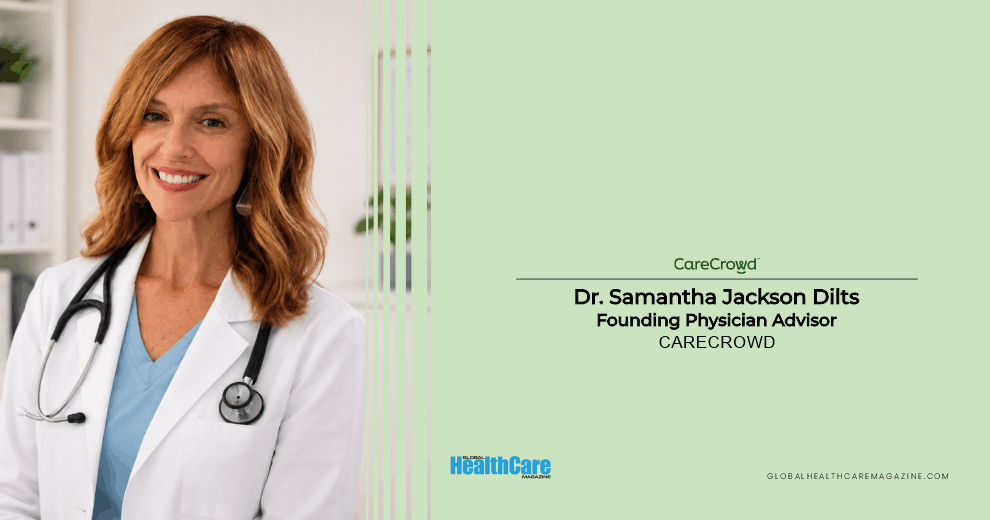
A pediatric emergency room does not leave much room for hesitation. Children arrive frightened, their parents often arrive even more anxious, and every decision has to be made quickly and with care and accuracy. It is a strange place to learn patience. But it is exactly where Dr. Samantha Jackson Dilts has spent most of her career learning it, shift after shift, in community hospitals that most healthcare leadership conversations tend to overlook.
Today, Dr. Jackson sees patients in the Pediatric Emergency Department at Sinai Hospital of Baltimore, chairs the Women’s Resource Group and sits on the Medical Missions and Service Committee at US Acute Care Solutions (USACS), serves as a Founding Physician Advisor for the health tech platform CareCrowd, and holds a faculty appointment as Clinical Associate Professor of Pediatrics at The George Washington School of Medicine and Health Sciences. It is a wide portfolio, but everything in it traces back to a single, stubborn belief: that every individual and every community, especially those facing barriers, deserves access to high-quality medical care regardless of geography, income, or luck.
A Detour Through Mozambique
Dr. Jackson did not arrive at medicine in a straight line. She graduated from university with degrees in psychology and political science, and by her own account, “still did not really know what I wanted to do with my life.” She remembers sitting with job newsletters, circling anything related to international aid and humanitarian work, hoping something would click.
The answer came during two years spent living and volunteering in a small village in Mozambique. It was there, confronted daily with what she describes as glaring disparities in poverty and life circumstances, that the decision crystallized. She would go to medical school.
Pediatrics, once she arrived, felt less like a choice and more like a homecoming. She loved working with children, cared deeply about child advocacy, and found herself drawn to congenital pathology. After completing her pediatric residency in Atlanta and a year-long pediatric pulmonary fellowship, she found what she calls her professional happy place: the pediatric emergency room.
Choosing Community Over Convention: A Path to Leadership
One option with that training was to head toward an academic medical center. Dr. Jackson went in a different direction, building her career in community-based pediatric emergency rooms and clinics, where she believed academic, evidence-based, high-quality care was needed most in communities facing barriers to access.
That conviction naturally led her into leadership at PM Pediatric Care, a specialized pediatric urgent care company that brought academic, evidence-based care for pediatric patients into the heart of communities, where she spent nearly eight years progressing from medical director to regional medical director and then regional medical officer. As her responsibilities grew, so did her opportunity to expand access to high-quality pediatric care beyond the bedside. Her role stretched across strategic and business operations, stakeholder relationship management, provider recruitment and management, quality improvement, change management, and the everyday unpredictability of leading clinical operations across a region.
If there was a single period that tested her leadership skills fully, it was the COVID-19 pandemic. Professionally, she was a bedside clinician navigating a novel virus while leading teams of physicians and advanced practice providers through profound uncertainty. Personally, she feared bringing the virus home to her own family.
The period, she says, gave her valuable leadership experience in change management, crisis intervention, and leading a team through sustained uncertainty, skills that have quietly informed her leadership style ever since.
Naming the Barriers
Ask Dr. Jackson what stands between families and quality pediatric care, and she does not philosophize. She lists them, plainly: insurance, access, cost, transportation, trust, and representation. Each word carries the weight of a thousand small failures she has witnessed at the bedside, but she offers them almost as a diagnostic checklist, the kind a physician runs through before deciding on a treatment plan.
It is this same clarity that eventually pointed her toward a very different kind of intervention, one that would not happen in an emergency room at all.
A Crisis That Became a Catalyst
Last summer, Dr. Jackson spent time caregiving for her mother during what she describes as a crisis situation. Even as a physician, she found herself overwhelmed navigating the health care system, medical care, insurance, and finances involved.
“If I wasn’t a physician with a supportive family, this would have absolutely crushed me, emotionally and financially,” she says. The experience pulled her thinking toward what is often called the sandwich generation: people, and especially women, caring simultaneously for teenagers and aging parents, often at the exact moment their careers should be accelerating.
What she believes she needed, and did not have, was a patient and family advocate. Someone who understood geriatric medicine, the long-term care landscape, and the health care well enough to offer the next one or two steps amid an overwhelming list of decisions. Someone who could sit with her through choices about medications, transitions, and hospitalizations.
Around that same time, a company called CareCrowd was taking shape, seeded by co-founders Dr. Mary Nwoke and Nnamdi Nwoke. Dr. Jackson understood the mission instantly, because she had just lived the problem it was built to solve.
Building a Doctor in the Family, at Scale
CareCrowd’s ambition, as Dr. Jackson describes it, is to make patient advocacy physician-led and scalable, delivering continuous physician presence between health care encounters. She draws a direct comparison: much like what Uber did for independent taxi services. At any hour, a patient or caregiver will be able to reach a physician advocate, the same access enjoyed by those lucky enough to have a doctor in their inner circle.
“CareCrowd wants everyone to have a doctor in the family,” she says.
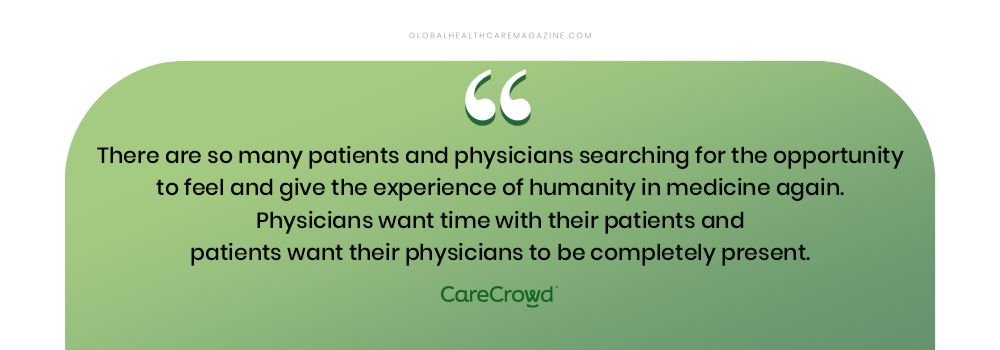
She is one of seven Founding Physicians helping to build and define this new connective tissue in the health care system. The next phase of the work, CareCrowd Academy, will train physicians directly in advocacy work, a response, she notes, to how many physicians are searching for a way back to the humanity of medicine, for time with patients, for presence.
Advocating for Women in Medicine
Dr. Jackson’s advocacy extends well beyond the patients she treats. She has also devoted considerable energy to examining how medicine supports – or too often fails to support – the women who practice it.
She speaks candidly about her own experience. During her first pregnancy, while a third-year pediatric resident, she took just six weeks of maternity leave. After the birth of her second child, she returned to work after only four weeks. Medical school debt was high, savings were limited, and her position offered no paid maternity leave. At the time, she just rationalized that “this was the price if you wanted to become a physician.”
Like many women in medicine, over the years she has experienced pay inequity, harassment, and marginalization. Over time, her mentality has changed: “My way of dealing with these situations has been to address them head-on, out loud, and move on if the response I get is not satisfactory to me. There is not much I leave unsaid these days. I’m professional and polite, but I’m not beating around the bush either.”
Today, she sees her experience as part of a much larger pattern.
Physicians are leaving medicine at alarming rates because of burnout, moral injury, and the cumulative pressures of a demanding profession. The burden is especially acute for women, who often navigate pregnancy, postpartum recovery, breastfeeding, perimenopause, menopause, and caregiving responsibilities alongside their clinical careers. Dr. Jackson notes that female physicians die by suicide at higher rates than their male counterparts – a statistic she shares not for shock value, but as a call to action.
“If fewer women reach C-suite positions because of the pressures of the sandwich generation, chronic overburden, and physician suicide,” she says, “it will take longer to change the systems and social structures that have kept women out of those leadership roles in the first place. Medicine needs to do a better job of supporting women.”
That conviction led her to serve as Chair of the Women’s Resource Group at USACS, where she focuses on recruiting, retaining, and advancing women physicians into leadership positions. She believes that investing in the well-being and professional success of physicians is inseparable from improving the quality of care delivered to patients and strengthening the healthcare system as a whole.
What a Day Actually Looks Like
There is no such thing as a typical day for Dr. Jackson. Most days, and nights, she is at the bedside in the emergency room before heading home to her family. Other days she is meeting with the CareCrowd founders to help build the company and expand its physician-led advocacy model. Some days are spent doing advocacy work directly with patients, meeting with women across USACS, or engaged in service work with Operation Smile, the GIV Back Initiative, or the USACS Medical Missions team. Some days involve networking to solve problems in pediatric care for communities facing barriers to access. And some days involve creating content for her social media platforms. Dr. Jackson’s Instagram channel @shiftchangewithdrsam is focused on mentoring young people going into medical fields.
Where Service and Volunteer Work Fits
Of everything on that list, Dr. Jackson is most animated when she talks about her international service work, particularly her volunteering with Operation Smile, an organization delivering free, safe surgical care to children and young adults in communities that would otherwise lack access. The model is one of partnership between local teams and international volunteers, and the work spans cleft lip, cleft palate, and burn graft surgeries, maternal and child health programs. In addition, there is a heavy investment in the training and education of physicians, surgeons, and community health workers.
She has served as a PACU physician, pediatrician, and team doctor on 14 different teams since 2014 in Honduras, Nicaragua, Paraguay, Peru, Guatemala, Mozambique, Madagascar, Ghana, Vietnam, and Jordan. What stays with her, she says, are the quiet moments between mother and baby before and after surgery.
“Mothers and fathers will stop at nothing for a better life for their children,” she says. “They will walk for three days. They will trust their child to a group of strangers at just a chance for a better life; it is truly inspiring to watch.”
Being able to provide that chance, she says, alongside a team of dedicated professionals, has been the fulfillment of the dream she had in medical school.
Dr. Jackson is also an Ambassador for GIV Gowns’ GIV Back Initiative. Co-founders Shawn Gibbs and Morgan Jenkins reinvented hospital and paper gowns to allow for more dignity for patients. A portion of their sales goes to their GIV Back Initiative, providing essential care and support to low-resource communities.
“It is amazing watching a child go from the ER to the OR feeling empowered in a superhero gown. Seeing them go from scared to smiling and brave puts the parents at ease and makes me feel so much better about the care we are providing.”
Dr. Jackson notes that her husband, children, extended family, and colleagues have all been extremely supportive of her service work throughout her career. In October, she will take her first medical service trip with her 13-year-old son to Honduras with the Medical Missions team at USACS and HOPE Worldwide, solidifying this truly as a “family affair.”
Measuring Success Differently
Asked what she is most proud of, Dr. Jackson does not point to a title or a milestone. She points instead to the relationships built with colleagues and direct reports over the years, to having remained committed to international humanitarian work throughout her career and through her early years raising children, and to simply being a good role model to her two children.
It is a small but telling detail: for someone whose resume includes regional medical officer titles and a founding role in a health tech company, the metric she reaches for first is relational, not institutional.
The Discipline Behind the Resilience
Dr. Jackson is equally direct about how she sustains all of it. She names four practices she leans on regularly: Movement, through running, walking, hiking, and spending time outdoors; Gratitude, through prayer, meditation, and mindfulness; Perspective, gained through travel, stepping outside her comfort zone, and service work; and Support, drawn from family, friends, and mentors.
A Vision Grounded in Humanity
When Dr. Jackson describes her vision for the future of pediatric healthcare, she doesn’t begin with technology, disruption, or the next breakthrough. She begins with confidence.
At a time when healthcare is grappling simultaneously with pandemics, widening health disparities, physician burnout, workforce shortages, and rapid technological change, she believes the most effective leaders are not necessarily those who move the fastest – they are the ones willing to pause long enough to listen.
“We’re facing pandemics, health disparities, physician burnout, and technological disruption all at once,” she says. “What rebuilds confidence is someone willing to slow down. To ask questions instead of declaring answers. To admit mistakes. To show up consistently for people who have every reason to doubt them.”
That same philosophy shapes her view of innovation. She sees technology – including artificial intelligence, digital health tools, and telemedicine – not as a replacement for the physician-patient relationship, but as a way to strengthen it. The greatest promise of technology, she believes, is not to make physicians less human, but to free them from unnecessary administrative and cognitive burdens so they can spend more time listening, thinking critically, and caring for patients and families.
Looking ahead, Dr. Jackson believes pediatric medicine will require bold leadership that embraces innovation while remaining deeply rooted in compassion, equity, and partnership. Expanding access through technology, advocating for underserved communities, and improving care for children living with rare and chronic diseases are all part of that future.
Her vision is both ambitious and remarkably simple: healthcare works best when everyone can access it and when decisions are made with families, not for them.
A Closing Thought
Asked if there was anything else she wanted to share, Dr. Jackson returned, fittingly, to the population she has organized her entire career around.
“In my heart, I’m an advocate. For children mostly, as a pediatrician, but for others that don’t have a voice, for issues I believe in, causes I value, and the societal status quo I believe should be different.”
“I want to ensure pediatric patients have access to high-quality care regardless of where or when they are born,” she says. “It shouldn’t come down to chance. Children are our futures; what we do in the present matters.”
It is a simple sentence, and also the closest thing to a mission statement for her career, from taking care of patients in Flint, Atlanta, DC, and Baltimore, to helping build a health tech platform that will give everyone access to a doctor in the family, to being a champion for recruitment, retention and promotion of women in medicine, to operating rooms across ten countries. Access, in her telling, is not a policy position.
It is the thread that connects every role she has chosen – from community emergency medicine and physician leadership to health technology innovation and humanitarian service. It is a daily practice, repeated at bedsides and in boardrooms alike, always with the goal of bringing high-quality care closer to individuals and communities facing barriers.
Quotes
Also Read: Leaders Advancing Pediatric Care & Health Tech Innovation 2026