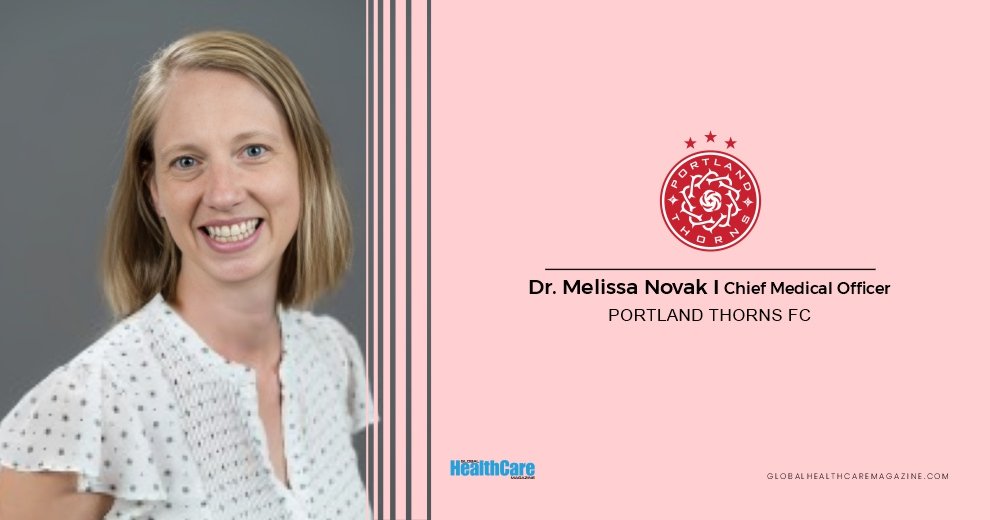
The Pacific Northwest has a specific rhythm, dictated by the relentless persistence of rain and the equally relentless drive of those who choose to move through it. In the heart of this damp and verdant landscape, a profound shift is occurring in how we understand human performance. At the center of this evolution stands a practitioner whose career reads like a study in the delicate balance between pushing the human body to its absolute limits and preserving its long-term health. Dr. Melissa Novak is quietly reshaping the architecture of athletic care, focusing with laser precision on populations that have historically been overlooked by traditional sports medicine models.
A Midwestern Foundation and a Western Ascension
The roots of a physician often predict the trajectory of their empathy. For Dr. Novak, the journey began in the Midwest. She completed medical school at Midwestern University’s Chicago College of Osteopathic Medicine in Downers Grove, Illinois, earning her Doctor of Osteopathic Medicine (D.O.) degree in 2007. Alongside medical school, she also completed a pre-doctoral osteopathic manipulative medicine fellowship from 2004 to 2007, adding an additional dimension to her osteopathic training.
Between July 2007 and June 2010, she spent three formative years as a Family Medicine Resident at the University of Minnesota, through North Memorial Medical Center in Minneapolis. She then pursued a highly specialized Sports Medicine Fellowship at the University of Utah from 2010 to 2011, where she developed expertise in primary care sports medicine and the management and prevention of athletic injuries.
In September 2011, she relocated to Portland, Oregon, beginning a nearly 15-year chapter at Oregon Health & Science University (OHSU). Her academic contributions at OHSU have been substantial. She held academic and fellowship leadership roles that included Associate Professor of Family Medicine and Sports Medicine Fellowship Program Director, alongside later service as Associate Sports Medicine Fellowship Director, fundamentally shaping the next generation of physicians.
The Multidisciplinary Philosophy
The modern athlete is not merely a collection of joints and ligaments, but a complex psychological and physiological ecosystem. Recognizing this, Dr. Novak spent over 10 years as the Head Primary Care Team Physician for Portland State University Athletics. In this role, she provided sports medicine care in the varsity athletic training room, in her OHSU clinic, and directly on the field during chaotic athletic events. She was instrumental in building an integrated model of athlete care that supported both clinical excellence and medical education.
Her clinical innovations extend far beyond the sidelines. She developed a multidisciplinary concussion program at an academic center, utilizing evidence-based approaches for safe return to athletics. Her work has also included research and presentations on female athlete health, concussion care, fellowship education, exercise promotion, and disparities in sports medicine. Her invited presentations frequently focus on the advancement of female athletes, including unique physiological challenges such as the Female Athlete Triad and Relative Energy Deficiency Syndrome (REDS).
Her work was recognized in 2024, when the Osteopathic Physicians and Surgeons of Oregon awarded her the D.O. of the Year Award, while she also received the 2024 OHSU School of Medicine Professional Development Clinical Star Award.
A Career Built Around Female Athletes
Dr. Novak’s interest in female athlete health extends beyond clinical encounters. Her academic work has examined questions surrounding women’s sports medicine, including menstrual health and injury prevention, while her teaching has addressed conditions such as REDS and the Female Athlete Triad. A 2024 scoping review she co-authored examined menstrual phase-specific interventions in female athletes, reflecting the broader effort to understand how sports medicine can better account for women-specific considerations.
Her work also extends into injury prevention for younger athletes. At OHSU, she has contributed to programs focused on ACL injury prevention and has worked with athletes, coaches, and families to support safer participation in sport. The approach reflects a recurring thread throughout her career: sports medicine is most effective when it addresses not simply an injury, but the athlete’s wider health, environment, and path back to activity.
Education as Infrastructure
Teaching has remained inseparable from her clinical work. At OHSU, Dr. Novak has mentored students, residents, and sports medicine fellows while contributing to fellowship curriculum and physician education. Her leadership within sports medicine fellowship training has extended beyond the university through her work with the American Medical Society for Sports Medicine (AMSSM).
Nationally, she serves on the AMSSM Board of Directors and as Co-Chair of its Fellowship Committee, roles that place her at the center of efforts to strengthen sports medicine fellowship education and support the development of future clinicians. She has also contributed to educational resources and presentations that help physicians incorporate physical activity, concussion management, and athlete health into primary care.
The philosophy is consistent: knowledge should not remain confined to one examination room. A clinical problem can become a teaching case; a recurring question can become a curriculum; and experience from the sideline can inform the physicians preparing to stand there next.
A New Chapter at Kaiser Permanente
The landscape of professional sports in Portland requires medical leadership that is both dynamic and deeply experienced. In April 2026, Dr. Novak joined Kaiser Permanente Northwest as a Primary Care Sports Medicine physician, marking a new chapter in a career already deeply rooted in the region.
She now serves as Chief Medical Officer for the Portland Thorns FC and as Associate Team Physician for the Portland Fire of the WNBA. Her expertise is further utilized as a consulting physician with the Oregon Ballet Theatre, where she cares for dancers within a collaborative model that brings together performance science, primary care, orthopaedics, and rehabilitation.
The combination is revealing. A professional soccer player, a professional basketball player, a dancer, a collegiate athlete, and an active individual may inhabit very different worlds, but their medical needs can overlap in fundamental ways: preventing injury, managing recovery, maintaining performance, and preserving the ability to remain active for the long term.
Leading Beyond the Sidelines
Dr. Novak’s leadership has also grown through community-facing work. Her years with Portland State University Athletics placed her in direct contact with collegiate athletes while also connecting sports medicine with broader questions around health and participation.
In 2026, that community orientation continues through her work with Kaiser Permanente’s Portland sports partnerships and public-facing injury-prevention initiatives. She has participated in programs that promote safe movement, ACL injury prevention, and healthy activity for young athletes, extending the reach of sports medicine beyond professional and collegiate competition.
That broader view is central to how she describes her work. Elite sport may sharpen the demands placed on the body, but the principles of recovery, prevention, movement, and long-term health belong to anyone who wants to stay active.
The Whole Athlete, Not Just the Injury
For Dr. Novak, the patient is never simply the site of an injury. Her approach brings together primary care, sports medicine, rehabilitation, performance, and prevention, allowing treatment to account for the person behind the diagnosis.
This is particularly important in female athlete health, where issues involving energy availability, menstrual health, bone health, concussion, and performance can intersect. Rather than treating these concerns in isolation, her work emphasizes coordinated care and a broader understanding of what allows an athlete to train, recover, compete, and remain healthy.
“I am particularly committed to advancing systems of care for athletes, especially women, through clinical innovation, multidisciplinary collaboration, and program development that bridges performance, health, and long-term well-being,” she says.
The statement also explains why her leadership work matters. Sports medicine is not only about what happens when an athlete gets injured. It is about designing systems that recognize risk earlier, coordinate expertise more intelligently, and give athletes the support required to keep moving.
A Wider Field of Play
Today, Dr. Novak’s career brings together several strands that once existed in separate lanes: family medicine, sports medicine, concussion care, female athlete health, medical education, research, team medicine, and community prevention.
Her current work with the Portland Thorns and Portland Fire places those ideas inside professional women’s sports, while her academic and national leadership connects them to the broader medical profession. Recent work on ACL injuries, female athlete health, and sports medicine education shows that her focus remains not only on treating today’s athlete, but also on improving how tomorrow’s athletes are understood and cared for.
In that sense, the evolution in her career is less about moving away from traditional sports medicine than expanding what sports medicine can encompass. The field can sit on the sideline, in the clinic, in the classroom, in research, and in the community, and each setting can strengthen the others.
For Dr. Novak, the objective remains straightforward: support performance without sacrificing health, treat injuries without losing sight of the individual, and build systems of care capable of following athletes through every stage of their lives.
The result is a model of sports medicine that is increasingly difficult to define by a single stadium, specialty, or population. It is a model built around the athlete as a whole and, increasingly, around making sure the female athlete is never treated as an afterthought.