There is a particular kind of frustration that accumulates silently inside research institutions. It does not announce itself dramatically. It settles into the space between a laboratory finding and the patient who might benefit from it, a space that is, more often than not, wider than anyone originally planned for.
Most people who work in science encounter this distance and learn to live with it. They publish their findings, hand off the work, and return to the bench. Dr. Michael Heke encountered that same distance early in his career and spent the next three decades methodically doing something about it. He approaches this gap with a measured perspective: “In science and medicine, excitement isn’t a bad thing; it’s often where progress starts. At the same time, data usually moves more slowly than headlines. I find it helpful to separate curiosity from certainty and firmly believe that forming an opinion is rather more important than having one.”
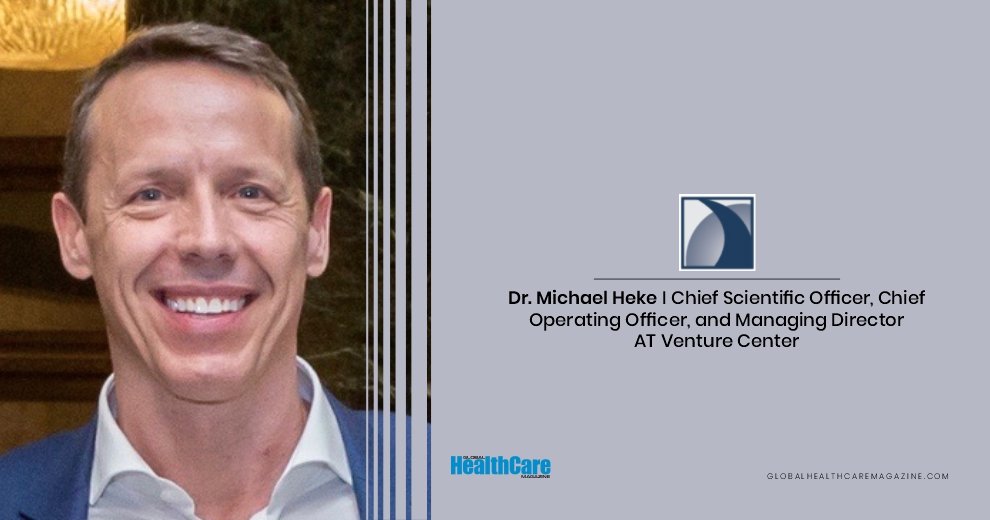
Today, as Chief Scientific Officer, Chief Operating Officer, and Managing Director of AT Venture Center, and as a key leader behind the Crowley Center for Regenerative Biotherapeutics, he holds a position that is genuinely uncommon in his field: someone with deep roots in academic science who has also built, co-founded, and operated the commercial and regulatory machinery that carries discoveries out of it. “I’ve worked across academia, clinics, industry, and regulatory environments, and what always fascinated me is the space between those worlds,” Dr. Heke notes.
His career is not a straight line. It is something more like a widening spiral, each turn adding a new set of capabilities, a new set of responsibilities, and a sharper understanding of what translation actually demands from the people willing to attempt it.
A Foundation Built in the Lab
The beginning was methodical, as beginnings often are. Dr. Heke trained as a research technician at Bayer AG, working within the company’s pharmacological research division. Those years gave him something specific and durable: a deep respect for rigorous scientific methodology, the kind of respect that does not erode when the pressures of commercial life begin to push in.
That foundation carried him to The Rockefeller University in New York, where he worked at the forefront of early human embryonic stem cell biology and basic research across two pivotal tenures spanning 1999 to 2005 and later from 2013 to 2016. What the Rockefeller years produced was less about specific discoveries and more about a clarifying kind of perspective. Watching the distance between what the laboratory produced and what eventually reached a patient, he came to understand something that would shape everything that followed.
It was an ethos perfectly captured by the university’s motto: “Scientia pro bono humani generis,” which translates to “Science for the benefit of humanity.” For Dr. Heke, this became a living mandate to pursue the highest standards of biomedical innovation as a direct instrument to improve human health.
“The bottleneck was rarely the science itself, but the translation infrastructure around it,” he has reflected. It was a quiet but consequential realization, and it became the organizing logic of almost everything he would build afterward.
The European Chapter
From New York, Dr. Heke’s career moved into a European phase of considerable scope. At the University of Düsseldorf Medical School, he co-led the INSTEM multicenter clinical trial, one of the first prospective studies of laser-supported autologous CD133+ stem cell therapies for heart failure. The work was significant not only for its scientific ambition but for what it demonstrated about the complexity of moving a cellular therapy into clinical practice, with all the coordination, documentation, and regulatory architecture that demands. In addition, clinically applying stem cells yielded some insights that would have been impossible to see at the bench.
He then moved to the University of Cologne’s Institute of Neurophysiology, where he served as Head of the Department of Knowledge Management. The role was substantially larger than its title suggests.
Managing three simultaneous European research consortia is not the kind of work that fits neatly onto a résumé. As Scientific Coordinator and Project Manager for the EU FP7 initiatives ESNATS (€15.5 million), DETECTIVE (€8.7 million), and the SEURAT-1 research cluster (representing a combined investment of €50 million), he was coordinating dozens of institutions, navigating regulatory bodies, managing scientific working groups spread across the continent, and keeping distributed research efforts coherent enough to be fundable and deliverable.
He describes this period as developing in him a command of multi-stakeholder governance and what he calls “consortium diplomacy,” the discipline of aligning distributed scientific effort into outcomes that multiple institutions, funders, and regulators can all recognize as progress. These are not skills acquired in a single laboratory. They are skills acquired under sustained operational challenges.
During this same European period, Dr. Heke co-founded the German Stem Cell Network at the request of the German Federal Ministry of Education and Research (BMBF), placing him at the center of national scientific policy in one of medicine’s most consequential and contested fields.
Parallel Ventures, Transatlantic Ambitions
Alongside these institutional responsibilities, Dr. Heke was also building companies. He co-founded ELIVE Medical Ltd. in Dublin, where he served as CSO and acting CEO, developing a novel cardiac laser-stem cell therapy platform. At RUMI Scientific in New York, he held dual roles as COO and CFO, working on stem cell-based drug discovery. He also served as acting COO at OvaNova Laboratories, also in New York, each venture operating at a different stage of the translational pipeline.
The combination of large-scale institutional leadership and entrepreneurial co-founding is unusual, and it was clearly intentional. Dr. Heke was not learning the theory of translation from a distance. He was practicing it, repeatedly, in different contexts, with different teams, and under very different constraints. Each experience deepened the one before it.
By this point, Dr. Heke had accumulated a rare combination of academic, entrepreneurial, and operational experience, positioning him for leadership roles that extended beyond traditional research environments. The next chapter would place him at one of the world’s most influential research institutions, where science, strategy, and clinical translation converged on an even larger stage.
Stanford and the Shape of What Followed
The American chapter deepened considerably at Stanford, where Dr. Heke became a Senior Research Scientist and took on two roles of particular significance: Supporting the President of Stanford’s academic research activities and leading the Bing Presidential Laboratory. He also served as Deputy to the President of Stanford University, placing him at the intersection of scientific leadership and institutional strategy at one of the world’s most influential research universities.
It was during these years that the vision for AT Venture Center took clearer form. “My primary passion for clinical translation into real-world applications” was, as he has described it, what ultimately drew him away from the university environment and toward a model built entirely around that mission.
In parallel, he spent nearly a decade as a senior advisor to the Vinmec Research Institute for Stem Cell and Gene Technology in Hanoi, contributing to peer-reviewed publications in stem cell transplantation for neurological disease. The advisory work in Vietnam was not incidental. It extended his clinical and geographic reach, and it reinforced the conviction that the promise of regenerative medicine was genuinely global in its relevance.
Building the Bridge
AT Venture Center was not designed to offer laboratory space or advisory services. Dr. Heke is precise about this distinction. The platform was built to sit inside the programs it supports, operationally, scientifically, and strategically, combining what he describes as “scientific credibility with venture-building discipline.”
At its scientific core is the Crowley Center for Regenerative Biotherapeutics, which drives clinical translation across stem cell therapy, MSC-derived exosomes, and regenerative aesthetics, among a variety of other projects in a wide range of biotech applications. The center’s work with a focus on regenerative medicine and aesthetics is primarily carried forward through two commercial platforms: Regenerelle and Resiliélle.
The focus on Wharton’s Jelly MSC-derived exosomes is particularly significant. He co-authored the first published case series of this approach for wound healing, a contribution that marks a meaningful step in building the clinical evidence base for what he envisions as a standardized, off-the-shelf regenerative platform.
“Most incubators offer space; most consultancies offer advice. We sit inside the programs we support,” he has said, pointing to what he regards as the structural difference that produces speed, coherence, and accountability that conventional models cannot replicate. A clinical question raised in the morning reaches a scientist the same morning. Commercial realities inform scientific planning from the outset rather than arriving as a correction at the end.
In 2025, he co-authored a major stem cell textbook, published by Springer Nature. He describes it as part of the arc from early bench science through clinical translation to codified knowledge, a journey, as he frames it, that he continues to build upon at the Crowley Center.
The Day He Chose Science
Among the episodes from his leadership experience, one stands out for what it reveals about his priorities. Early in AT Venture Center’s exosome program, preliminary clinical observations did not align cleanly with the preclinical data. The pressure to proceed was real, commercially and emotionally. The temptation to rationalize the discrepancy and keep the program moving forward was genuine.
Dr. Heke stopped the program. He directed the team to re-examine the characterization protocols and invest the time required to understand what the discrepancy actually meant before advancing.
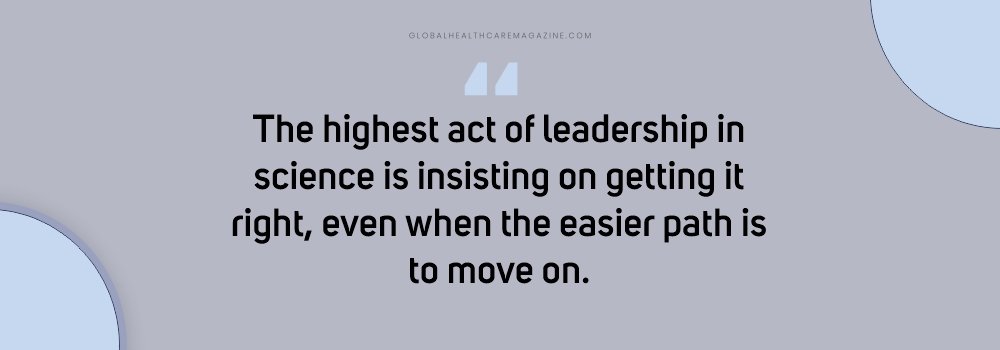
“It delayed us. It was also the right decision,” he has said, with a matter-of-factness that suggests he has made complete peace with the cost of that choice. He speaks of the moment as having reinforced something he holds as a core conviction: “The hardest leadership choice is often the one that protects the science at a cost to momentum.”
The willingness to absorb a commercial delay rather than proceed on uncertain scientific ground is not the behavior of someone who treats science as a means to an end. It is the behavior of someone who understands that science is the only foundation on which anything durable can be built.
The Misconceptions He Corrects
One of the consistent themes in Dr. Heke’s thinking about the gap between research and commercialization is the distance between how scientists understand their work and what the translational process actually requires of them.
The most persistent misconception, in his view, is that a strong dataset constitutes a business case. It does not. Regulatory, clinical, and commercial thinking must be woven into a program from the very beginning, not assembled at the end when the science is already done.
“Investors fund narratives as much as data,” he has observed, a statement that tends to land differently depending on the audience. For scientists trained to regard data as the primary currency of persuasion, it can feel uncomfortable. Dr. Heke does not offer it as a warning against scientific values. He presents it as an extension of them, an argument that understanding the full environment in which a therapy must ultimately succeed is itself a form of scientific responsibility.
His advice for early-stage scientists is consistent: find someone who has crossed from science into clinical or commercial terrain and returned, and engage with them before the moment of transition arrives. “Most scientists engage with translation too late and find themselves unprepared for how different the questions become,” he has said.
A Vision for What Comes Next
Looking ahead, Dr. Heke describes AT Venture Center’s ambitions in terms that are specific and expanding. The near-term focus is on broadening the exosome programs across therapeutic and aesthetic indications, with particular emphasis on standardized manufacturing at the highest quality standards and on building the clinical evidence base required to establish Wharton’s Jelly MSCs and MSC-derived exosomes as a validated, off-the-shelf regenerative platform.
The longer-term aspiration is institutional as much as scientific: to make AT Venture Center a recognized model demonstrating that rigorous science and commercial discipline can coexist and actively reinforce each other. It is, at its heart, the same argument he has been making with his career for three decades, now expressed in the language of platform-building and regulatory strategy.
On Balance and the Space for Good Ideas
There is a version of the driven scientist who exists entirely inside the work, for whom the boundary between professional and personal life has effectively dissolved. Dr. Heke describes something more candid than that: a person who draws genuine energy from the work, who finds it difficult to step away precisely because of that energy, and who relies on his family to keep him honest about the need for distance.
Outside of science, he speaks of travel, good literature, time outdoors, and a disciplined workout schedule he maintains throughout the week. He has noted, with the kind of incisive practicality that characterizes much of how he speaks, that the best ideas tend to arrive when he is not actively thinking about science. It is, he suggests, reason enough to protect that space deliberately and without apology.
The Thread Running Through
Dr. Heke’s career resists easy summary. Pharmaceutical research at Bayer AG. Embryonic stem cell biology at Rockefeller. A multicenter cardiac clinical trial in Düsseldorf. Three simultaneous European research consortia representing tens of millions in coordinated funding at the University of Cologne. Biotech co-founderships in Dublin and New York. Stanford. Hanoi. The Crowley Center.
What connects these stops is not a single technology or a single institution. It is a refusal, sustained over three decades, to accept that scientific integrity and real-world impact are competing values.
“The thread running through my career is a refusal to accept the false choice between scientific rigor and real-world impact,” he has said. “Those who learn to hold both simultaneously, without subordinating one to the other, are the ones who make a difference and build things that last.”
It is the kind of statement that is easy to read past. It is also, in the context of a career like his, the most precise description of what he has been doing all along.
Quotes
Also Read: Leaders Advancing Innovation in Biotechnology & Translational Medicine 2026