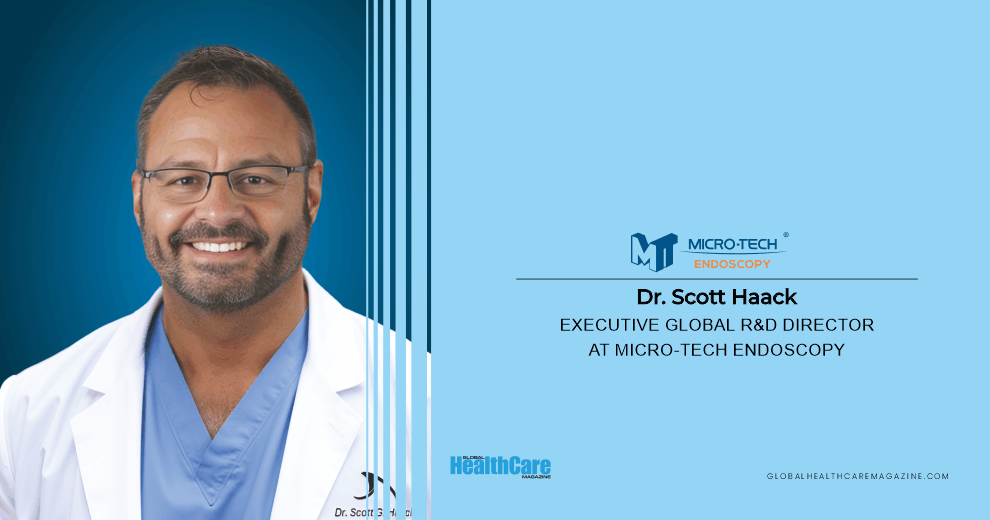
It was a Sunday morning, and the comment came the way the most lasting ones often do: quietly, between two people who had no idea how much it would matter.
Scott Haack and his wife, Connie, a registered nurse in cardiac care, had just come from church when she mentioned something she had been observing at work. Some of her patients, she told him, were refusing to wear their seatbelts because the belt irritated the skin over their surgically implanted pacemakers, defibrillators, or venous access systems. She looked at him and said, “You need to invent something for them.”
That was the sentence. For Scott, it was the moment a light switched on, and as he describes it today, “that light hasn’t dimmed yet.” What followed from that single, unremarkable Sunday morning was not just one invention, but more than three decades of relentless, disciplined, and deeply purposeful creating that now spans medical devices, golf equipment, consumer products, patented luggage design, and a coastal safety drone platform that is set to appear on Daymond John’s new television program, Next Level CEO.
Scott Haack is the Executive Global R&D Director at Micro-Tech Endoscopy, a company founded in 1999 and headquartered in Nanjing, China, under the leadership of founder and CEO Derong Leng and Executive President Chris Li. He is also a licensed chiropractic physician in active practice on weekends, a patented inventor across multiple industries, the president of his own product ideation company, a former network television competitor, and a man who, last year, went free diving in Hawaii alongside 35 sharks. He is, in other words, not easy to categorize. And that, it turns out, is precisely the point.
The Foundation Beneath the Work
Before Scott ever held an endoscopy device, he spent years in clinical chiropractic practice, developing a methodical understanding of the human body and what happens when conventional approaches fall short.
His work centered on a specific challenge: increasing the sacral base angle in patients suffering from low back pain associated with a hypolordotic spine. He designed both a specialized device and an accompanying technique to address this problem directly. In his clinical experience, patients who increased their sacral base angle from 20 degrees to 35 degrees frequently experienced meaningful symptom reduction.
He also studied pelvic unleveling closely, a condition in which muscular imbalance causes one side of the pelvis to shift superiorly, creating what presents as a functional short leg. This imbalance affects gait, posture, and the structural integrity of the entire spine. Some arrived at the clinic walking with a cane and no longer required that level of assistance by their second or third visit due to the treatment. Scott observed that a commonly prescribed response, the heel lift, often worsened the underlying problem by further elevating the already elevated side of the pelvis rather than addressing its root cause. Scott developed a special adjusting technique that corrected this problem many times the same day. This is a dramatic picture and shows how a body habitus correction can lead to a reduction in symptoms. Again, this is a same-day correction. Scott highlights one patient who couldn’t walk without a cane for the past 15 years. He credits Scott for “saving his life” because he no longer uses a cane when he walks. This was something he didn’t think was possible.
This kind of thinking, focused on cause rather than symptom, has shaped every product he has built since. Even today, Scott continues to see patients as a practicing chiropractor and recently treated musicians on an active U.S. tour, a detail that says something essential about how he moves through the world: with both hands in contact with the actual problem.
When One Sentence Changes Everything
The SoftTouch seatbelt device, born from Connie’s observation, became Scott’s first commercial invention. Designed specifically for patients with implanted cardiac devices, it protected the skin and underlying hardware from the friction and pressure of a standard seatbelt. It is now manufactured and distributed by Pressure Products, Inc.
What is notable about that invention is not only the product itself, but what it revealed about how Scott thinks. He identifies a real-world need, usually one that others have noticed but not yet acted on, and builds a solution that is simple, practical, and direct. He reports that simple, intuitive, and impactful products hit the ground running on day one. The customer immediately recognizes the product as a solution to a problem, fully understanding how it works with a result that is meaningful.
The same instinct carried him into the golf industry. He invented the MIR-1 putter, which was tested in Golf Illustrated against leading models, including the Odyssey Tri-Ball SRT, the Yes! Olivia, the Nickent Pipe, and the Rife Two Bar ultimately outperform them all. He also invented the CoreLinks swing training system, which maintains correct geometry throughout the golf swing, and later sold his golf company, Optix Golf, Inc., to Medicus Golf in 2008.
His ALTAIR Force wristwatch, a limited-edition collectible, commemorated NHRA legend John Force’s historic 16th World Championship. The timepiece incorporated material from the exact tire that crossed the finish line, and only 500 individually numbered units were produced.
In 2018, Scott appeared on the second season of the Golf Channel competition series Driver v. Driver 2, in which aspiring golf equipment designers competed for the opportunity to develop the next world-class driver for Wilson Golf. Out of hundreds of submissions, 14 finalists were selected. Scott finished in the top six.
These were not detours from his medical career. They were a curriculum in invention, one that sharpened his understanding of what makes a product genuinely useful and what makes it merely interesting.
Into the Body’s Interior
Scott’s path into GI endoscopy was built on clinical curiosity and a willingness to start over when something did not work. He has now spent more than 25 years in this space, and the work has grown steadily more sophisticated.
Early in his career, during his time with TAP Pharmaceuticals, he was involved in development related to a Neurokinin-1 receptor antagonist intended to control Substance P in patients suffering from fibromyalgia. The product did not ultimately reach the market. It was Scott’s first sustained lesson in the distance between a promising scientific concept and commercial reality, and it stayed with him.
His first major breakthrough in GI endoscopy came at US Endoscopy, a division of STERIS Corporation, where he joined in 2006 and was repeatedly promoted over 11 years, ultimately serving as Senior Director of New Product Research, Design, and Clinical Affairs. During that time, he developed 20 patents and patent applications related to innovative GI endoscopy products.
Among his most significant inventions was the Moray® microforceps, a 0.80 mm tissue sampling device designed to pass through a 19-gauge EUS needle during an endoscopic ultrasound procedure. The device enabled improved characterization of pancreatic cysts, including the differentiation of mucinous from non-mucinous lesions and benign from malignant pathology. It also supported cyst subtyping across gastric, intestinal, pancreaticobiliary, and oncocytic subtypes, each carrying different malignant potential and potential association with intraductal papillary mucinous neoplasms. Physicians described the Moray® as “revolutionary” and “a game changer” for cyst diagnosis and management.
He also invented the Histolock® resection device, recognized by more than 200 physicians as a groundbreaking tool for hard-to-resect lesions, and the HistoGuide®, the first wire-guided biopsy forceps ever used in an ERCP procedure.
Fail Fast. Learn Faster.
One of the most instructive chapters in Scott’s career began not with a success, but with a device that kept flipping.
About 15 years ago, he developed an EMR device designed to flex and grasp tissue, particularly valuable for removing polyps from a fold. The device showed promise, but it performed inconsistently. Rather than abandoning the concept, Scott studied the failure carefully. He introduced flat monofilament wire and developed a twisted-wire configuration to improve stability, and ultimately removed the flex component entirely while preserving the design elements that were working.
That decision produced the Histolock® resection device, which became a meaningful clinical tool for removing flat and non-lifting lesions that had, in some cases, previously required open surgery.
Drawing directly on what that process taught him, at Micro-Tech, Scott then designed the EdgeHog™. He describes it as an ESR device, an Endoscopic Submucosal Resection snare, or a sub-ESD resection device, because it retains significant resection capabilities while not functioning as a true dissection instrument. He believes it occupies a category of its own. The EdgeHog™’s flat-wire monofilament design allows it to approach within 1 mm of a polyp without slipping into the lesion, enabling resection of a healthy margin with clean, exceptionally thin edges and minimal thermal damage to the surrounding healthy tissue.
“I believe the EdgeHog™ has the potential to deliver results more comparable to ESD than to current EMR practices,” Scott says.
Two products. Two companies. One iterative process. That is what he means when he describes the fourth pillar of his innovation philosophy: fail fast in the beginning, learn, and recover quickly.
The other three pillars are equally direct. When a disruptive idea arrives, commit to it fully without letting up. Every solution must be simple, intuitive, and impactful. And the “nice to have” features of a product must never be allowed to drive the timeline, because they rarely matter as much to the end user as developers believe they do. “The harsh reality,” Scott notes, “is that the customer doesn’t really care about these extra features.” Slower innovators lose their competitive window precisely because they allow the nonessential to delay the essential.
Speed Kills the Competition
Scott often returns to the language of athletics to explain what he believes about innovation. “Speed kills,” he says, borrowing from the vocabulary of competitive sport. In competition, it is difficult to overcome what you cannot catch. In the medical device industry, the same principle applies with equal force.
When a promising idea enters development, Scott does not assume it belongs exclusively to him or his company. He assumes that others may already be pursuing the same concept, possibly further along in the process. The organizations that move with speed and discipline are the ones most likely to disrupt markets, reach customers first, and establish credibility that is difficult to displace.
He is candid about what slow development costs: missed opportunity, delayed execution, and weakened competitive positioning. “Innovation speed can strengthen market disruption and deepen customer confidence,” he says. “Slow development cycles and incremental drift can erode momentum and diminish market credibility.”
He would rather be the first mover and become synonymous with a product category than arrive as a strong second. The most promising ideas in a portfolio, he believes, should rise quickly to the top and receive the full weight of available resources. When an idea has genuine potential, it should be pursued with urgency, discipline, and sustained commitment.
The Global Laboratory
Today, Scott leads global research and development at Micro-Tech Endoscopy, working alongside leading physicians worldwide and a highly skilled engineering team in Nanjing, China. His responsibilities span upstream and downstream functions across R&D, clinical affairs, engineering, and marketing, all in service of translating unmet clinical needs into practical, manufacturable solutions.
His current portfolio of inventions at Micro-Tech includes the LesionHunter™ nitinol cold snare, the EdgeHog™ and Advantis™ resection devices, STA-BIL™ non-migrating endoscopic ink, the Pinpoint™ injection needle, FANDOM™ hemostasis clip, and HEALIX™ large-defect closure device, which are expected to reach the market sometime in 2027, and many others.
He is also collaborating with Jalex Medical in Westlake, Ohio, on a hemostasis clip of his own design, intended to address what he describes as an important unmet need in the endoscopy market.
The engineering demands of this work are immense. Devices that measure 230 cm in length require precision, repeatability, and durability at a standard that a single prototype cannot demonstrate. “Developing a single functional prototype is only the beginning,” Scott says. “The greater challenge lies in designing a device that can be manufactured at scale with consistent quality, reliability, and performance.” Because these products are used inside the human body, the margin for inconsistency is effectively zero.
Beyond his own inventions, Scott collaborates with physicians who bring their own concepts to him, helping to refine and commercialize their ideas. He finds this especially rewarding. It is innovation at its most generous, one inventor helping another.
World-renowned Endoscopist, Dr. Greg Haber states, “Scott is a ‘one of a kind’ in the world of Therapeutic Endoscopy. He has a deep understanding of the principles of endoscopic therapy. Achieving this expertise in device design requires incredible knowledge and skill, from prototype design to a final product. This is where Scott excels in his ability to assemble diverse components, incorporate them into a functional and practical device, that simplifies the procedural maneuvers for the endoscopist to achieve that end result of saving a life.”
Looking Where the Puck Is Going
Fifteen years ago, an engineer told Scott, “There is nothing left to create in GI endoscopy. Everything has already been thought of.” Scott’s response was immediate: “We might as well go home then.”
Since that conversation, groundbreaking devices, including EndoSound® and Axios™, have arrived. The field has moved in ways that engineers could not have imagined. Scott sees the next chapter as equally expansive.
With nearly 75 million endoscopic procedures performed worldwide each year, the opportunity for meaningful advancement remains vast. He anticipates growing roles for robotics and artificial intelligence in diagnostic precision, the continued development of endoluminal natural orifice surgery that shifts procedures from the abdominal wall to the body’s internal cavities, and the expansion of third-space endoscopy for full-thickness resection. He also sees artificial intelligence as a major force in advancing capsule endoscopy, which he believes has only begun to realize its potential as a less invasive pathway for identifying abnormalities from the esophagus to the rectum.
He is careful, however, not to overstate what technology can accomplish on its own. Years ago, there were concerns that CT colonography, or virtual colonoscopy, would reduce the need for trained endoscopists. That shift never materialized on any significant scale. “The human touch, empathy, judgment, and advanced tissue resection skills of the endoscopist are difficult to replace,” he says.
He quotes Wayne Gretzky on the nature of foresight: “Skate to where the puck is going, not where it is.” And he points to Steve Jobs, who declined to rely on focus groups when introducing the iPad, knowing that most consumers would have said they already had a laptop and a phone. Scott listens for the clinical version of that same question, the moments when a physician says, “I wish I had a device that could do…” or “These devices need to do A, B, and C instead of X, Y, and Z.” Those moments, he says, reveal the most meaningful opportunities.
Therapeutic Endoscopist and former ASGE President, Dr. Amitabh Chak, says, “Scott has the unique ability to understand the future needs of the clinical endoscopists and translate them to a uniquely engineered device.”
Beyond the Procedure Room
Scott Haack is many things beyond his title. He is a licensed chiropractor who has served the Nike Golf Tour, Ohio Golf Championships, World Championship Wrestling, World Wrestling Entertainment, the Cleveland Crunch professional soccer team, and the Canton Legends arena football team. He is the president of Ultrapreneur, LLC., a product ideation and design company, and the creator of Compassion Outfitter, an apparel line built around a message he personally believes in.
He has also invented a fully patented luggage design featuring what he describes as the first application of negative-camber wheels in that product category, alongside advanced vibration suppression technology. Industry leaders have responded to the concept with strong encouragement regarding its commercial potential.
And then there is HOVER HERO®, Scott’s most ambitious personal project to date. He describes it as a coastal safety and intelligence platform, defined by AI-powered firmware engineered for advanced marine identification and automated threat detection, with additional applications in user-generated content and remote monitoring. Star of the Netflix documentary, “Shark Whisperer,” world-renowned Marine Biologist, Free Diver and Shark Conservationist, Ocean Ramsey said, “I love this product…it will help surfers and swimmers coexist with sharks.”
Scott is currently working with a Ukrainian-based company, Indeema, Inc., that is currently defending their nation’s sovereignty through the drones they create. They have played an integral role in helping with the development of this product. HOVER HERO® is a registered trademark, and Scott has recently been selected to appear on Daymond John’s new television program, Next Level CEO, which will feature both the platform and the broader arc of his life and career leading up to it.
Away from his professional work, Scott scuba dives, a pursuit he has long preferred. Last year, he had the opportunity to go free diving in Hawaii with Ocean Ramsey and her husband, Juan Oliphant, alongside 35 sharks. “It was an unforgettable experience,” he says, “although I still prefer scuba diving. Free diving is far more demanding.”
His wife, Connie, the same woman whose post-church remark set all of this in motion more than three decades ago, has been his partner for more than 35 years and his wife for more than 32. She remains a registered nurse. Their daughter, McKenna, is currently completing her Pharm.D. in graduate school at NEOMED, and Scott describes the time the family is able to spend together as especially meaningful.
To Whom Much Is Given
When asked which achievements best reflect his impact, Scott does not point to a device or a revenue figure. He reaches for something quieter.
He speaks of the verse from Luke 12:48: “To whom much is given, much is required.” He speaks of coming to understand, over years of work, that the ideas entrusted to him are not entirely his own to claim. “I have used the word ‘I’ frequently in this interview,” he acknowledges, “but that is often the simplest way to explain how a project began and doesn’t reflect the entire story.”
He describes himself not as the ultimate source of his inventions, but as a vehicle through which they can be used to make a meaningful impact in the lives of others. “I have found that if Jesus is not in it, it will only last a minute,” he says. “When I am still and listen to Him regarding the ideas and the gifts He has for me, this is when true impact happens. It has never been about me. It has always been about Him.”
The principle that guides him each day is simple: he wants to live without regret. He does not want to look back and wonder why he failed to act when he had the ability, the energy, and the opportunity to do so. Finally, Scott recalls a time early in his career when the CEO of a company said, “I know your desire is to move up in this company…we have enough chiefs, we need more Indians.” While a demotivating comment for most, this lit a blazing fire deep down inside him that has driven him from that day. Scott picks a lyric from his favorite band, Sevendust, to sum up that desire, “Time to light the fuse”…again and again!!!
For a man who has patented inventions across medicine, sports, consumer goods, and aerospace, treated patients on clinical tables and tour buses, gone free diving alongside 35 sharks, competed on national television, and is preparing to appear on screen again alongside the Inside Success crew on a Daymond John driven program, that principle does not read as ambition. It reads as a life lived with intention, conviction, and a faith that has never gone quiet.
Quotes

Also Read: The Most Influential Medical Device Innovators to Watch in 2026