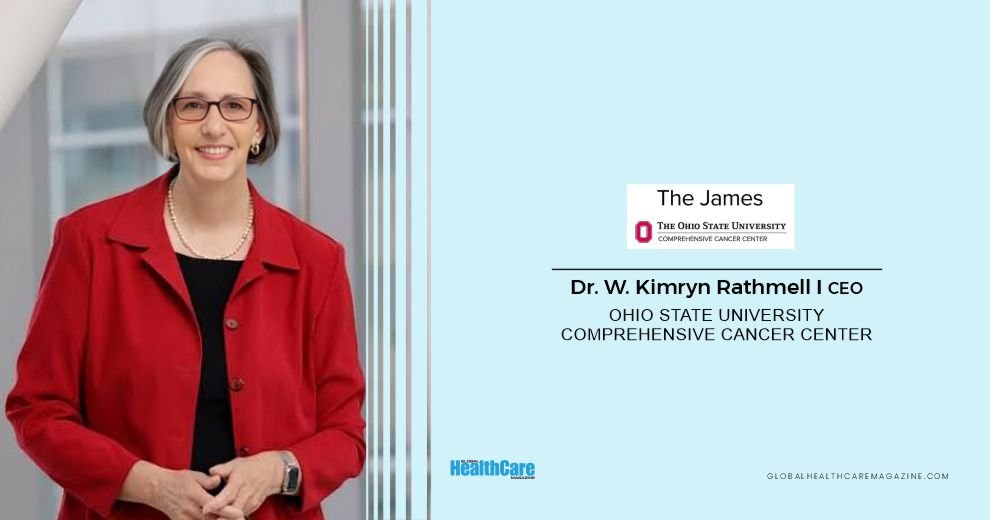
Dr. W. Kimryn Rathmell spent a little over a year leading the most influential cancer research institution in the United States before choosing to return to the operational front lines of cancer care. She served as Director of the National Cancer Institute from December 2023 through January 2025 before stepping down to become CEO of the Ohio State University Comprehensive Cancer Center in May 2025, overseeing the James Cancer Hospital and Solove Research Institute.
The transition also made her the inaugural holder of the Jeri B. Block and Robert H. Schottenstein Distinguished Chair in Cancer, a position created in conjunction with her appointment.
The National Cancer Institute serves as the United States government’s primary agency for cancer research funding and national oncology strategy, overseeing billions of dollars in annual grants while shaping scientific priorities that influence how cancer is studied and treated across the country.
Leading the agency, even for just over a year, placed Dr. Rathmell at the center of nearly every major conversation in American oncology, from research funding and clinical trial priorities to questions surrounding access, equity, and precision medicine.
Building a Career in Nashville
Dr. Rathmell’s path to the NCI moved through Vanderbilt University Medical Center, where she spent more than eight years building both clinical and academic leadership experience.
From January 2020 through December 2023, she served as Chair of the Department of Medicine and Physician-in-Chief, leading one of Vanderbilt’s largest clinical departments while overseeing physician staffing, patient care operations, and academic medicine across numerous subspecialties.
Before that, from August 2015 through January 2020, she directed Vanderbilt’s Division of Hematology and Oncology, helping expand the institution’s clinical and research infrastructure during a period of significant growth in precision oncology and translational cancer medicine.
Together, those positions gave her oversight of both the broad operational systems of academic medicine and the highly specialized scientific environment of cancer care, a combination that later made her uniquely suited for the NCI directorship.
A Dozen Years at Chapel Hill
Her academic foundation was established earlier at the University of North Carolina at Chapel Hill, where she spent more than twelve years as a faculty member from August 2003 through August 2015.
During that period, she developed a research program focused on oncology, genetics, and cell biology while building her reputation as both a physician-scientist and a translational cancer researcher.
Her clinical training preceded that work through an internal medicine residency and medical oncology fellowship at the University of Pennsylvania from 1999 through 2003, following an internal medicine internship at the University of Chicago.
Taken together, those years reflect nearly two decades of scientific, clinical, and academic development before she ever assumed titles such as chief, chair, or director, a long progression that grounded her later executive leadership in firsthand experience at both the bedside and the laboratory bench.
A Career Built for This Moment
What distinguishes Dr. Rathmell’s trajectory is the unusually direct path from laboratory researcher to division director, national policymaker, and ultimately health system executive. Few leaders in oncology have overseen a federal cancer research agency and a major academic cancer hospital system within the same eighteen-month period.
Fewer still have done so after more than twenty years working across genetics, cell biology, clinical oncology, and translational medicine, disciplines that continue to shape how she approaches cancer leadership today.
Her tenure leading the James Cancer Hospital and Solove Research Institute is still in its early stages, yet it follows a pattern visible throughout her career: stepping into positions where scientific discovery, institutional leadership, and patient care converge at the highest level.
The distinguished chair established alongside her appointment serves as a fitting reflection of that trajectory. It recognizes not simply a physician or administrator, but a leader whose career has consistently focused on narrowing the distance between cancer research and the patients waiting for its results.
Quote
“Cancer leadership today requires more than advancing science. It requires building systems that ensure scientific progress actually reaches patients.”