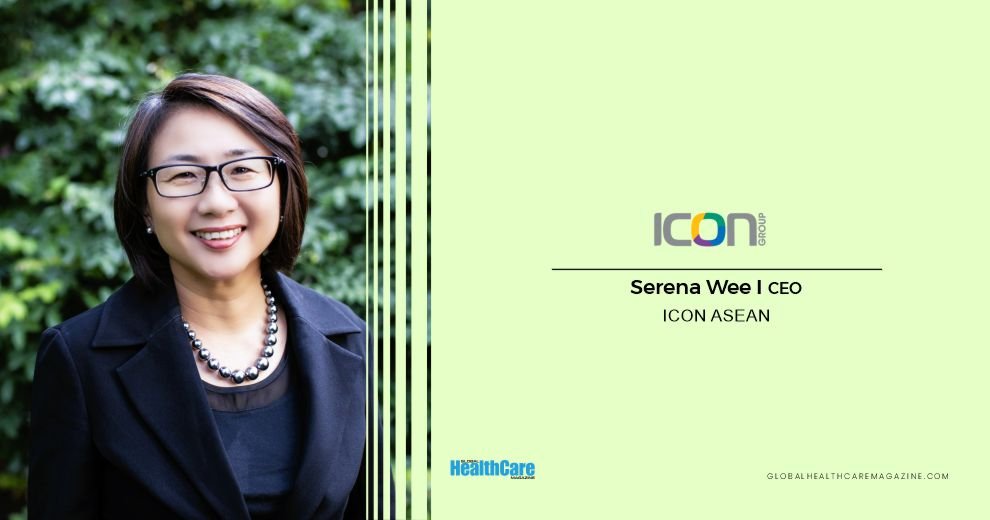
There is something quietly telling about where Serena Wee’s story begins: not in a lecture hall, not in a boardroom, but in the corridors of Mount Elizabeth Hospital in Orchard, Singapore, where a schoolgirl would arrive each afternoon and simply wait. Her mother was among the pioneer nurses who helped establish Mount Elizabeth when the hospital opened in the mid-to-late 1970s, later retiring as the Chief Operating Officer of Mount Alvernia Hospital. For young Serena, the hospital was not yet a vocation or a calling. It was the place where her mother was. She would wander those halls while the afternoon light shifted and the wards grew quieter, absorbing the rhythms of a place built around care.
She began her own career at Mount Elizabeth as a management engineer, recognising that clinical excellence and operations are intertwined realities. Today, as CEO of Icon ASEAN, Serena leads one of the most ambitious cancer care expansions in Southeast Asia, operating ten cancer sites across Singapore, Malaysia, and Indonesia. Her goal is a future in which high-quality oncology care is available to every patient, regardless of where they live.
The Moment That Changed Everything
In 1995, a diagnosis reframed everything. Serena’s aunt was diagnosed with breast cancer. What followed was not simply a family’s grief but an education in what the healthcare system had not yet learned to offer. While clinical treatment was available, the restoration of a patient’s dignity and everyday confidence remained a glaring omission. There was treatment, and then there was a silence where support should have been.
“I still remember a woman walking out of our shop for the first time without clutching a pillow to her chest,” she says. “That moment defined my mission: cancer care is about life after diagnosis, not just treatment.”
That gap, witnessed and felt, led Serena and her business partners to co-found Can-Care Holdings, focused on post-care and rehabilitation. It was a direct, personal answer to a systemic silence, and it established a principle she has carried into every role since.
The Scale of the Challenge
The problem she has dedicated her career to is vast by any measure. ASEAN accounts for nearly 10% of global cancer incidence. Across 11 countries and over 690 million people, more than 700,000 new cases are diagnosed every year, and over 500,000 people die annually. More than 75% of cancer patients in ASEAN experience either death or severe financial strain within the first year of diagnosis. By 2050, new cancer cases in Southeast Asia are projected to rise by nearly 80%.
The healthcare landscape across the region is profoundly uneven. Singapore maintains access to comprehensive cancer care for over 90% of its population, whereas in other parts of Asia, that figure can drop below 15%. Many countries face very low physician-to-people ratios and limited diagnostic capabilities. Even where clinical guidelines are consistent, the delivery of care varies based on what each health system can afford to fund and sustain. These statistics serve as the catalyst for Serena’s leadership and her relentless pace at Icon ASEAN.
Treating the Person, Not Just the Disease
Icon Cancer Centre’s approach to treatment is based on holistic, evidence-based, and integrated cancer care, treating each patient in a highly personalised manner: “We treat the cancer, but we care for the person before the patient.”
At Icon’s flagship centre, its sixth location in Singapore, this philosophy is embedded in the architecture of care. Opened in February 2023 at Mount Alvernia Hospital following a S$23 million investment, the centre brings together medical oncology, radiation oncology, and surgical oncology, alongside PET/CT imaging, and pharmacy services – all under one roof. The centre is equipped with leading cancer care technologies, including a Varian TrueBeam linear accelerator, enabling precision radiotherapy and advanced treatment techniques across a wide range of cancers, while supporting approximately 1,800 patients annually.
The model extends beyond clinical settings. A Medical Concierge assists travelling patients with coordination before they even arrive. Cancer Care Navigators guide each patient through every step, from scheduling to specialist coordination, ensuring no one falls through the cracks. Survivorship resources and programs address physical, emotional, social, practical, and spiritual needs. In Singapore, Icon is incorporating exercise oncology into treatment; in Indonesia, family support extends to bereavement counselling.
“Cancer treatment is about supporting the whole person, not just treating the disease,” Serena says.
A Region, Not a Blueprint
Understanding what Serena and the Icon team have built across ASEAN requires acknowledging the distinct healthcare realities of each nation. Singapore’s system is mature, Malaysia is growing rapidly, and Indonesia is actively constructing its infrastructure.
“We do not believe in lifting a model from one country and dropping it into another. Success requires local partners who understand the ground,” she says.
In Malaysia, Icon formed a joint venture with Sunsuria Healthcare and, in January 2024, opened its first centre at Island Hospital, Penang. By August 2025, the Penang centre had doubled its treatment capacity and launched the Icon Women’s Cancer Programme. A second Malaysian centre was announced at Prince Court Medical Centre in Kuala Lumpur, and a third satellite clinic at Lifecare Medical Centre in Bangsar South opened this month.
In Indonesia, the milestone carried historical weight. In June 2025, Icon launched its first fully integrated cancer centre at Bali International Hospital, an Indonesia Healthcare Corporation (IHC) hospital within the Sanur Special Economic Zone. Through this regulatory framework, oncologists from Singapore, Malaysia, and Australia obtained licenses to practice in Indonesia alongside their colleagues. It was the first time – doctors from outside Indonesia were permitted to practice in the country, bringing previously unavailable oncology medications directly to local patients.
Technology as the Great Equaliser
The most potent element of the Icon framework is not a physical building, but a remote radiation therapy planning system. Through this centralised network, a specialist team develops complex treatment plans for the global network, reducing planning time by 66% and accelerating the start of treatment. A radiation oncologist in Bali receives the same quality of planning support as a colleague in Singapore or Melbourne, Australia.
This system also facilitates an ongoing clinical community of practice. Real-time, case-based learning sessions connect multidisciplinary specialist teams in Singapore with clinicians across the ASEAN region. These sessions focus on radiation therapy planning, contouring, and clinical outcomes, ensuring that local clinical education is a continuous exchange rather than a one-off event.
Looking ahead, she envisions a centralised compounding facility within selected ASEAN countries. The facilities would enable smaller cancer centres to offer advanced oncology treatments without specialised infrastructure, improving access to therapies that currently remain inaccessible to a large portion of ASEAN citizens.
Affordability, Access, and the Community
Clinical excellence means little if patients cannot access it. Icon’s partnership with Prudential provides customers in Singapore and Indonesia with cashless access to outpatient cancer treatments. These risk-pooling solutions are essential to preventing a cancer diagnosis from becoming a financial catastrophe. Icon also champions affordable options, including generics and biosimilars, to ensure effective therapies remain within reach.
“Quality healthcare should never be limited by accessibility,” she says.
Community outreach extends to prevention and early detection. Icon supports screening campaigns for breast, cervical, and prostate cancers, with a particular focus on underserved populations. Partnerships with the Singapore Cancer Society, 365 Cancer Prevention Society, and the Indonesia Cancer Foundation bring these interventions to communities that might otherwise be left behind.
From Operations to Strategy: The Making of a CEO
Before assuming the CEO role at Icon ASEAN, Serena served as Chief Operating Officer. That tenure allowed her to work directly with medical teams to master the complexities of clinical governance and workforce planning across varied sites.
Her operational background ensures that every strategic expansion is built for long-term sustainability.
“Having that operational lens ensures our strategy remains patient-led and disciplined,” she says.
In November 2024, Icon Cancer Centre Singapore received the Business Excellence Award of the Year from the Australian Chamber of Commerce. While the award is a meaningful validation, Serena measures success by the barriers removed for her patients.
Learning to Lead Out Loud
When discussing leadership in a complex landscape, Serena prioritises the evolution of her own voice over structural mechanics.
“Early in my career, I hesitated to speak up and worried excessively about perception. I realised that staying quiet does not serve patients or teams,” she says.
Today, she is visible and vocal, driving the change that effective cancer care demands.
Her approach is situational, adapting to the different developmental stages of each ASEAN country. She prioritises collaboration, engaging directly with local clinicians, regulators, and families to understand their specific needs before implementing solutions. This philosophy has led to successful partnerships with Sunsuria Healthcare and IHC, among others.
A Life Integrated, Not Balanced
Serena does not believe in a perfect work-life balance; she prefers integration.
She has two sons, and some of her clearest thinking happens over a meal and a bottle of wine with family and old friends. She stays physically active through long walks, runs, and tennis, and has recently taken up pickleball.
“Leaders who burn out help no one. So I try to protect time for what matters: family, friends, and staying healthy. It is sustainable leadership,” she says.
The Vision That Has Never Changed
Serena’s vision for the future of cancer care in Southeast Asia is specific and already in motion.
She sees the remote radiation planning model scaling further and a centralised compounding facility bridging gaps in oncology drug access. She envisions stronger local clinical teams built through continuous knowledge transfer. Every decision is evaluated against a single metric: does this increase access to high-quality care?
Icon’s mission, and Serena’s own, is clear: bring the best care possible, to as many people as possible, as close to home as possible.
“I did not take this role to be comfortable. I took it to transform cancer care across ASEAN. That transformation is already happening.”
Quotes
Also Read: Global Women Leaders Advancing Cancer Care