A diagnosis has a way of splitting a life into a before and an after, even when nothing about the body looks any different from the outside. For the founder of Optithy Health and Wellness, that split happened at nineteen, when she was diagnosed with Hypothyroidism. What followed was not a dramatic collapse but something quieter and, in its own way, harder to name. It was a growing desire to understand her health rather than simply accept feeling unwell as something she had to live with.
A Diagnosis That Refused to Stay Quiet
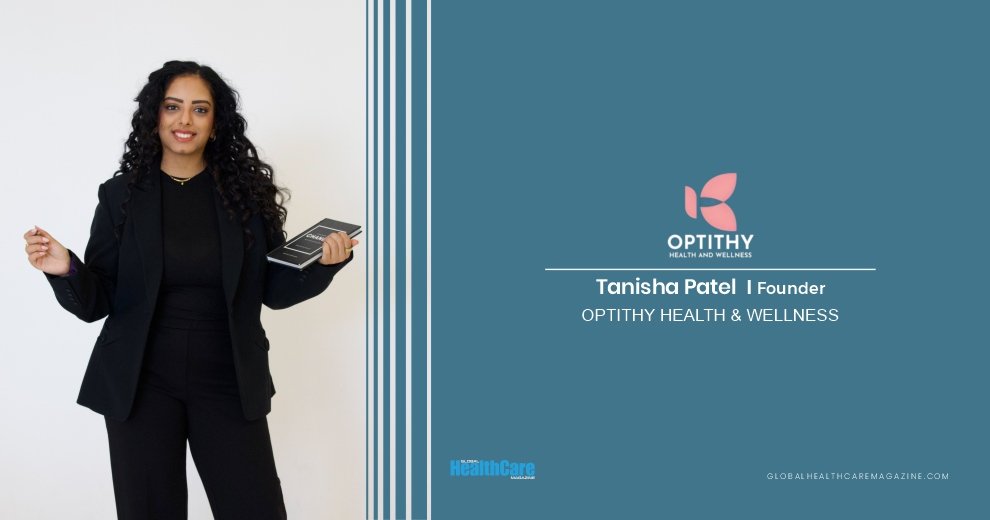
Tanisha Patel is the Founder and Health Coach at Optithy Health and Wellness, a coaching practice built specifically around women navigating Hypothyroidism and Hashimoto’s Thyroiditis. But long before Optithy took shape as a business, there was a nineteen-year-old trying to make sense of a body that no longer felt entirely her own.
Her background in customer success and operations had given her strong skills in communication, problem-solving and supporting people through challenges. It was not health coaching, not yet, but she wanted to bring those skills into an area she genuinely cared about: helping women navigate Hypothyroidism and Hashimoto’s while still working demanding jobs, managing busy lives and pursuing their own goals.
That refusal to accept the easy explanation would become the quiet engine behind everything she built next.
The Gap She Wanted to Address
Optithy grew from that personal frustration, the experience of being told to simply ‘deal with it’ or ‘lose weight and exercise more’ when she felt there was clearly more going on. “Optithy came from my frustration with being told to simply deal with it or lose weight and exercise more when there was clearly more going on in my experience,” Tanisha explains.
She is careful, even now, not to dismiss the role of medicine. Medication matters. But she had noticed a gap, one that seemed to sit between being prescribed treatment and understanding how factors such as nutrition, stress, sleep, movement and habits can affect how someone feels and functions. Optithy was built to support women beyond simply surviving their diagnosis, helping them build sustainable habits and feel more empowered in managing their health alongside appropriate medical care.
Beyond Tired and Heavy: Unlearning the Stereotypes
Ask Tanisha what people get wrong about Hypothyroidism, and she does not hesitate. The most persistent misconception, she says, is the assumption that the condition begins and ends with fatigue and weight gain. In reality, the symptoms can ripple outward in ways that rarely make it into casual conversation, shaped by sleep, stress, hormonal changes, mental well-being, and other overlapping health conditions.
There is a second misconception she encounters just as often, one that lives closer to the kitchen table than the doctor’s office. All-or-nothing thinking around food and weight, the belief that there exists one perfect diet or a single quick fix waiting to be discovered. Tanisha’s approach moves in the opposite direction entirely. Rather than chasing a universal solution, she looks at the whole person, their symptoms, their routines, their circumstances, and she draws a clear line between what can be supported through lifestyle changes and what genuinely requires medical assessment or treatment.
No Single Template for a Single Body
Rather than expecting clients to fit a fixed system, Tanisha adapts the process to the individual. “I have always believed that one size does not fit all,” she says, and the sentence carries the weight of something learned firsthand rather than borrowed from a textbook.
Her Level 6 Diploma in Health Coaching and Nutritional Therapy gave her a range of coaching techniques rather than a single script, allowing her to adapt the approach depending on the person and their needs. Some women respond well to motivational interviewing and reflective questioning. Others need something more concrete: practical structure, positive reframing, smaller accountability steps that feel achievable rather than aspirational. “Personalisation, for me, means adapting the process to the individual rather than asking the individual to fit the program,” she says.
The Threads That Refuse to Stay Separate
Tanisha sees these areas as interconnected rather than separate boxes. Poor sleep can affect energy and motivation, low energy can make movement and meal preparation harder, stress can disrupt routines, and frustration around weight can lead to unsustainable approaches.
Her response is not to tackle all four fronts simultaneously, because trying to change everything at once can create overwhelm. Instead, she favours a targeted, step-by-step approach, identifying the most meaningful starting point, building a realistic habit around it, and only then layering in the next change. The goal, as she puts it, is progress someone can actually maintain, rather than another cycle of doing everything perfectly and burning out.
A Founder’s Two Jobs in One Day
As a solo founder, Tanisha divides her time between the front-facing side of the business- coaching, content creation, community building, the parts that are visible to the women who follow her work. And there is the back office side that almost nobody sees: emails, website updates, coaching notes, resources, planning, and the other work involved in keeping the business running.
She genuinely enjoys the social media side of the work, she says, because it lets her share information in a way that makes women feel seen and less alone. But if pressed to name the part of the job she loves most, the answer comes quickly. Coaching itself. “Having a conversation with someone, understanding what is really getting in their way and helping them find a realistic next step,” as she describes it, is where the work feels most alive.
How a Client Session Actually Unfolds
Tanisha’s coaching process begins with understanding the person before trying to change anything: their goals, routines, eating patterns, the stressors pulling at their attention, the responsibilities waiting for them at work and at home, and what they have already tried before arriving at her door.
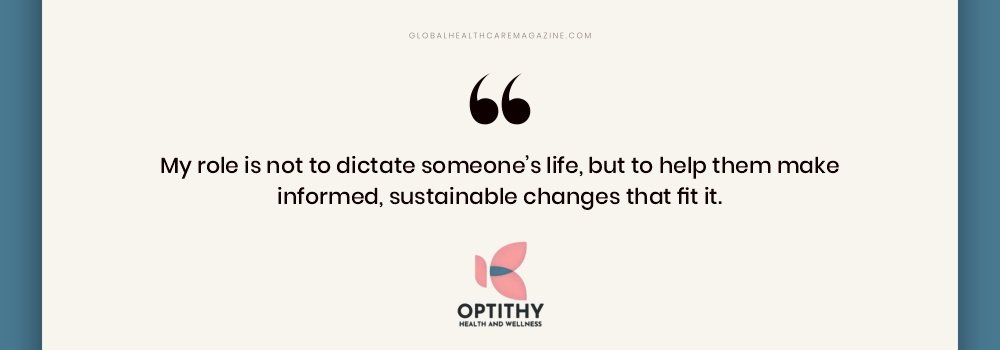
From there, she and the client identify a small number of priorities together, resisting the urge to build an overwhelming checklist. They work on practical actions, review what is working and what is not, and adjust as they go. Accountability itself is personalised too. Some clients want structure and regular check-ins. Others need flexibility and the space to build confidence in a way that suits them. “My role is not to dictate someone’s life, but to help them make informed, sustainable changes that fit it,” she says.
Burnout, Isolation, and the Lesson She Had to Apply to Herself
Building a coaching practice while holding down a demanding nine-to-five is the kind of challenge that sounds manageable in theory and feels entirely different in practice. Tanisha spent a period trying to do exactly that, stretching herself across a full-time job, a growing business, and the relationships and social plans that make up an ordinary life outside of work.
The strain caught up with her. She describes stretches of genuine burnout and isolation, made harder by the fact that the people around her, however much they cared, could not always relate to what she was experiencing. The way through, eventually, was to apply to herself the exact principle she now shares with clients – focus on what needs attention now, take one step at a time, and use what you learn to make the next season more sustainable.
Measuring Impact Without Inflating It
Ask Tanisha about milestones and client outcomes, and she resists the temptation to oversell a business still in its early stages. She is candid about not yet having a long list of results to point to, and she treats that honesty as something worth protecting rather than something to paper over.
What she is proud of instead is a growing community of women who recognise themselves in the conversations she has been starting around Hypothyroidism and Hashimoto’s. The messages, comments, and conversations she receives from women who feel understood, less alone, or simply more informed are, in her words, the reminder of why she started coaching in the first place. “For me, impact is not only about numbers, but it is also about creating a trusted space where women feel heard and encouraged to take a more informed, personalised approach to managing their health,” she says.
That same restraint shows up when the conversation turns to hard figures: sessions delivered, community reach, program growth. Tanisha would rather hold off than present numbers before they genuinely reflect the business’s growth. At this stage, her focus is on establishing the foundations of the business, developing her coaching approach and building an engaged online community. As the business matures, she wants her measurements to capture more than reach and client counts. She wants them to reflect the habits clients are able to sustain, the confidence they develop, how supported they feel, and how their day-to-day experience changes. Those, she says, are the numbers and stories she will be proudest to share once the business has grown into them.
What Keeps Her Whole Outside of Work
A strong support system makes a huge difference for Tanisha. Ambition, left unchecked, has a way of quietly consuming everything around it. She has learned this about herself directly, which is why she credits the people around her with reminding her to work toward her goals without forgetting to enjoy life too.
Outside the business, her hobbies sit far from anything resembling productivity: scrapbooking, jewellery making, arts and crafts, and baking for friends and family. These are activities that give her something completely separate from business and help her reconnect with a version of herself that is not measuring productivity. That balance, she is quick to note, did not come naturally. It is something she has had to consciously learn.
The Philosophy She Keeps Returning To
There is a line Tanisha comes back to often, especially in conversations about what it means to live with a long-term condition. “If it was easy, everyone would do it.” Beneath the simplicity of that sentence sits something she takes seriously: the grief that can come from realising a body does not always work the way it used to, and the pressure so many women place on themselves to find the one perfect diet, routine, or solution that will finally fix everything.
Health, in her experience, is rarely that linear. What works brilliantly for one person may do nothing for another, and that difference does not amount to failure. Tanisha is candid that she is still learning too, and for her, personalised wellness ultimately comes down to finding what works for you, taking it one step at a time, and recognising the small wins along the way. As she puts it, nobody needs to have all the answers before they start making changes that help them feel more like themselves.
Quote
Also Read: Health & Wellness Leaders to Watch in 2026