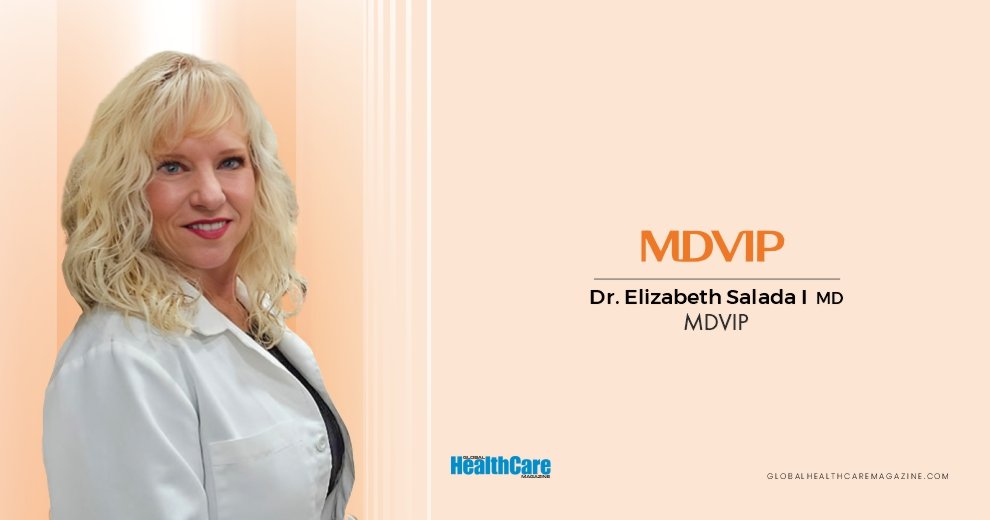
A stethoscope can tell a physician a great deal, but it cannot tell them why a patient cannot sleep, why they have stopped taking walks with their spouse, or why they have quietly given up on the version of themselves they once imagined. For more than three decades, one internal medicine physician has built a career around understanding the factors that influence health beyond the symptoms visible in an exam room. Her name is Dr. Elizabeth Salada, and her practice emphasizes prevention and long-term health at the center of patient care.
The Making of a Prevention-First Physician
Every physician has a moment that reorients their entire understanding of what medicine is. For Dr. Salada, it happened quietly, in the lecture halls of medical school, where she noticed something that troubled her. “In medical school, I was struck by how little emphasis was placed on nutrition, lifestyle, and prevention compared with treating disease,” she recalls.
It was not a dramatic epiphany so much as a slow accumulation of observation. Over more than 30 years of practicing medicine, that early discomfort matured into conviction. She began her career in a multispecialty group practice, working alongside cardiologists, nephrologists, and gastroenterologists, where she experienced that without prevention, patients often developed chronic disease before understanding how their daily choices affected their health. “I realized that many people needed a more comprehensive approach, one that addressed the factors shaping health long before illness develops,” she says.
That realization did not stay theoretical for long. It became the architecture of her career.
Building Her Healing Sanctuary.
Watching patients develop chronic disease before they understood how their daily choices were quietly working against them left an impression that would not fade. “Without prevention, patients often developed chronic disease before understanding how daily choices affected their health,” Dr. Salada explains. She wanted something different: a practice where prevention was not an afterthought tacked onto the end of a visit, but the foundation the entire relationship was built upon.
That vision became her legacy. The practice grew from a simple but demanding premise: help patients identify risks early, understand their own health, and build strategies sustainable enough to support long-term wellbeing. “Helping patients identify risks early, understand their health, and develop sustainable strategies to remain well, rather than simply react to disease,” is how she describes the mission, and it is a mission that has not wavered since the practice’s founding.
Beyond Diet and Exercise
Ask most people what lifestyle medicine means, and they will likely mention a gym membership or a meal plan. Dr. Salada hears this misconception often, and she has spent years gently correcting it. “A common misconception is that lifestyle medicine is simply diet and exercise,” she says. In reality, she explains, health is influenced by a much wider web of influence: sleep, stress, relationships, emotional wellbeing, movement, nutrition, and purpose.
The harder truth, she has found, is that patients frequently already know what they should be doing. Knowledge was never the obstacle. “Patients often know what they ‘should’ do, but knowing is very different from changing behavior,” she notes. Her work, then, is less about instruction and more about translation, helping people connect the choices they make each day to how they actually feel, function, and age. From there, she and her team build practical goals and accountability structures so that healthy behavior stops being a program with an end date and starts becoming simply how a person lives.
A New Model of Care
Three decades in medicine is long enough to watch an entire system evolve, and Dr. Salada has evolved alongside it. She noticed that people needed more time, access, and individualized guidance than traditional medicine often allows.
In response, her practice combines comprehensive primary care with membership-based medicine, executive health, life coaching, and telemedicine. This model is designed to provide the time and individualized attention needed to look beyond symptoms and understand what is truly driving a person’s health. “The goal is to understand what is truly driving a person’s health and move from a disease-based model to a health-based model,” she says. More time with each patient, she has found, allows her team to address the whole person rather than simply manage symptoms.
Leading From the Exam Room
Despite the responsibilities of running a practice, Dr. Salada has never stepped away from direct patient care. She remains involved in the exam room even as she leads the vision, culture, and operations of her practice. For her, maintaining that connection to patient care keeps the practice’s philosophy grounded in the realities of the people it serves.
What energizes her most is ensuring that her entire team understands whole person health deeply enough that the philosophy shows up naturally in every patient interaction, not just the ones she personally conducts. The practice meets regularly to review what is working and refine what is not. “I am especially passionate about personalized health planning, goal setting, and helping patients recognize that they have more influence over their health than they may realize,” she says, and there is a quiet conviction in the way she says it.
The Team as Family
No physician builds a practice like this alone, and Dr. Salada is quick to credit the people around her. Her team, she says, is united by one core belief: that patients should be treated as individuals, not diagnoses. Each team member brings different strengths, but they share a commitment to listening, educating, encouraging, and supporting the people who walk through the door.
As a leader, she sees her role as cultural as much as clinical. “My responsibility as a leader is to create a culture in which the team works as a family, and our patients become part of that community as well,” she says. It is a philosophy grounded in something she has observed again and again over the years: meaningful behavior change rarely happens in isolation. People do better when they feel supported and understood, and that principle shapes the way her team approaches patient care.
Tested by Change
Leadership, Dr. Salada is careful to point out, is rarely tested by a single dramatic crisis. More often, it is tested by the ongoing pressure of a rapidly changing healthcare environment. Healthcare changes rapidly, and physicians and their teams are routinely asked to do more with fewer resources. Continually adapting the practice while protecting its core values has been, in her words, one of her greatest leadership tests.
What she has learned through those pressures is not a formula so much as a posture. “Leadership is not about having every answer; it is about staying grounded in the mission, communicating clearly, listening to your team, and being willing to change course,” she says. During the hardest stretches, she returns to a single guiding question, one simple enough to cut through any complexity: “What will ultimately serve our patients best?” “What would I want me or my family to be experiencing as a patient?”
Measuring What Matters
After more than 30 years in practice, Dr. Salada does not measure her impact solely through conventional clinical or financial measures. What she values most is something harder to quantify and, arguably, harder to earn: the trust her community has placed in her over three decades.
That reputation, she says, has been built on being actively engaged in her patients’ lives and helping them take ownership of their own health. The impact has extended beyond her own patient roster, too. Her practice has invested in community education, and Dr. Salada personally mentors students such as nurse practitioners, physicians, assistants, and medical students, extending her commitment to education beyond her own practice. “Success is not simply a financial or clinical metric; It is seeing patients and families become healthier and more confident in managing their future,” she says. She believes in teaching other providers to practice in the same way, with person-centered care.
The Next Chapter
Even after thirty years, Dr. Salada is not interested in standing still. She wants to broaden the conversation about lifestyle medicine well beyond the walls of her own practice, and she is actively exploring new platforms to do it, including social media, podcasts, and other educational channels. She is also considering writing a book.
The goal behind all of it is consistent with everything else she has built: reaching people who may never otherwise have access to this kind of personalized care, and giving them practical tools they can use. “We need a cultural shift from waiting for disease to appear to actively building health throughout life,” she says, and it is clear this ambition extends well past her own clinic doors.
Practicing What She Teaches
Even while leading her practice, Dr. Salada holds herself to the same standard she asks of her patients. “I believe I have to practice what I teach,” she says simply. Her own routine centers on sleep, movement, strength training, nutrition, and the kinds of habits that support long-term health rather than short-term fixes.
She is equally clear that wellness is not only physical. Her family, her children, her friendships, her relationships, travel, and time set aside for reflection all hold real weight in her life. She works with both a life coach and has periodically worked with a therapist in order to practice mindfulness and meditation. She treats her own personal growth as an ongoing project rather than a finished one. Staying connected to the people and experiences that give her life meaning, she says, is what keeps her balanced.
The Lesson of Thousands of Small Decisions
If there is one lesson Dr. Salada wants readers to walk away with, it is this: information alone rarely changes behavior. “People rarely change because they are given more information,” she says. “They change when they understand why the change matters to them and have the support and confidence to make it sustainable.”
Health, in her view, is never the product of one perfect diet, one medication, or one annual physical. It is built through thousands of small decisions, repeated over time. Her role, as she sees it, is to help patients discover their own reason for change, their “why,” and then to help them build realistic goals alongside the mindset and support system required to actually achieve them.
A Doctor’s Closing Philosophy
Asked to distill three decades of practice into a single guiding idea, Dr. Salada does not hesitate. “My leadership philosophy is simple: lead by example, stay curious, and never lose sight of the person behind the diagnosis,” she says. Medicine, in her view, should offer people hope and agency, not merely a list of problems to be managed.
After thirty years, she says she remains energized by a particular kind of moment, the one where a patient realizes it is not too late to change the direction of their health. Whether that means better sleep, greater strength, improved nutrition, less stress, or a renewed sense of purpose, she believes meaningful change remains possible at every stage of life. “Health is something we build together,” she says, and after three decades of building it alongside her patients, that philosophy remains at the heart of her work.
Quote