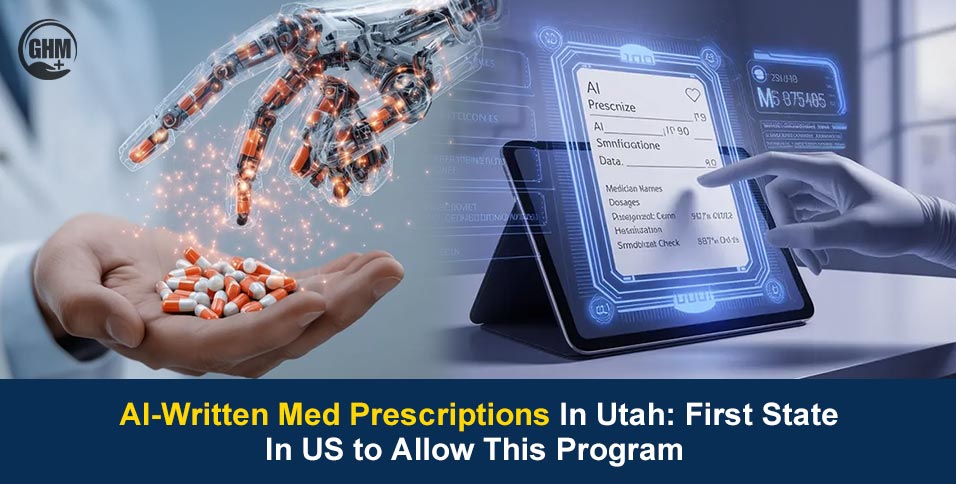
In a groundbreaking pilot program that could reshape American healthcare, the state of Utah has become the first in the nation to launch AI-written med prescriptions. This allows artificial intelligence to renew routine prescriptions for patients with chronic conditions legally.
This landmark move aims to improve access to medications, reduce delays that lead to gaps in treatment, and ease burdens on clinicians, all within a regulated framework that evaluates safety, effectiveness, and patient experience.
What Are The AI Written Prescriptions
The AI-written med prescriptions are renewals generated without any direct real-time physician involvement. They are created by artificial intelligence systems that have been authorized under state regulatory frameworks.
In Utah’s pilot program, AI is being used to review a patient’s history, confirm eligibility, and issue routine refills for certain medications, all within predefined clinical protocols.
This does not replace doctors’ initial prescriptions; instead, it automates the renewal process for patients already taking long-term medications.
The early stages of the pilot also include human oversight, with physicians reviewing some decisions by AI before further autonomy.
How the Utah Pilot Program Works
The Office of Artificial Intelligence Policy of Utah and AI health-tech company Doctronic, in partnership, authorize the AI system to handle prescription renewals within strict parameters.
Step-by-Step Experience For Patients
- Patients verify their identity and location within Utah.
- The AI system reviews their existing prescriptions and eligibility.
- A clinical interview assesses changes in health, side effects, or other risk factors.
- If appropriate, the AI issues a prescription refill directly to a pharmacy.
- Cases that fall outside safe guidelines are escalated to human clinicians.
The program initially covers roughly 190 commonly prescribedmedications for chronic conditions, such as blood pressure drugs, cardiometabolic medications, birth control, and antidepressants. Certain drugs, especially controlled substances like pain medications and ADHD treatments, are excluded.
Regulatory Framework: Sandbox and Safety
Utah’s regulatory “sandbox” allows innovative technologies like this to be tested under relaxed rules, while the state closely monitors outcomes for safety and performance. The aim is to balance innovation with public protection.
Physician oversight remains part of the process, especially during early phases, and every AI decision creates an audit trail that regulators and clinicians can review. This helps ensure that the system adheres to clinical standards and does not overstep safe boundaries.
Potential Benefits of The AI-Written Med Prescriptions
The proponents of Utah’s program argue that the AI-prescribed medications could provide several advantages:
- Faster access to routine refills, avoiding long waits for doctor appointments.
- Improved medication adherence reduces the risk of lapses that lead to avoidable complications.
- Lower healthcare costs, by reducing unnecessary clinician workload and administrative overhead.
- Better patient experience, especially in rural or underserved areas where physician availability is limited.
Doctronic’s co-CEO, Matt Pavelle, described the partnership with Utah, “ It’s a major milestone to demonstrate how AI can improve access to care and health outcomes, and I hope other states will adopt similar programs.”
Concerns and Criticisms of Doctorless Prescribing
Despite the potential advantages, AI-written med prescriptions have drawn notable concerns from healthcare professionals and patient advocates:
- Safety and clinical nuance: Some experts argue that AI may miss important clinical details that a human doctor would catch, especially when a patient’s condition changes.
- Lack of direct physician oversight: Critics worry that removing the requirement for real-time physician approval could expose patients to avoidable risks.
- Ethical and legal questions: With AI encroaching into clinical decision-making, questions arise about liability and regulatory authority, including how federal agencies like the Food and Drug Administration (FDA) might eventually oversee such systems.
In response, Utah’s pilot includes staged oversight and human review phases to mitigate risks while gathering data on performance and safety outcomes.
What This Means For the Future of AI in Healthcare
Utah’s test represents a significant evolution in the role of AI in healthcare. By legally allowing AI-written med prescriptions, the state is testing how automation can help solve long-standing issues with prescription refills, chronic care management, and clinician workload.
The data generated from this program is expected to inform national policy and could pave the way for similar initiatives in other states in America. Legislators and healthcare leaders are watching closely, as the outcomes could establish new standards for AI integration into clinical workflows.
As adoption grows, patient access may improve, but so too will the scrutiny over how these systems are regulated and overseen. Stakeholders will likely debate how to balance innovation with safety, ethics, and quality of care.
Conclusion
Utah’s first-of-its-kind program that integrates AI-written med prescriptions marks an important milestone in healthcare innovation. By allowing AI to renew routine medications within a regulated framework, the state aims to streamline care delivery, improve access, and reduce costs, while testing the limits of autonomous decision-making in medicine.
Whether this model becomes commonplace nationwide will depend on careful analysis of outcomes, stakeholder consensus, and evolving policy frameworks that seek to harness the benefits of AI without compromising patient safety.