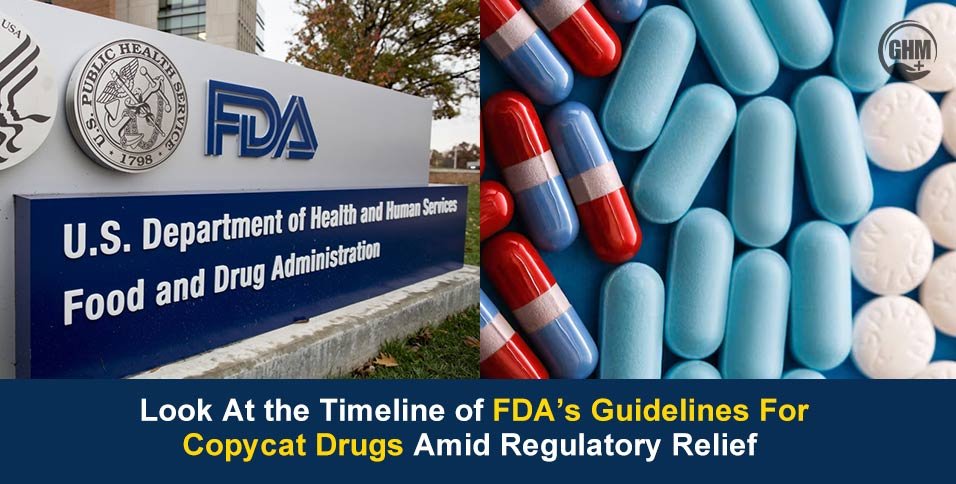
In a move that could reshape the prescription drug landscape, the U.S. Food and Drug Administration (FDA) has announced plans to speed up approvals for cheaper copycat drugs.
A step experts say could make medicines more affordable for millions. This initiative builds on a decade of evolving FDA’s Guidelines For copycat drugscopycat drugs, designed to make biosimilar drugs and generics more accessible without compromising safety.
The Latest Decision: Fast-Tracking Cheaper Copycat Drugs
the FDA is working to loosen regulatory requirements for some biosimilar drugs. These are lab-made versions of expensive biologic medicines used to treat chronic conditions such as cancer, autoimmune disorders, and diabetes.
Under the new FDA’s guidelines for copycat drugs, companies may no longer need to conduct full-scale human clinical trials if they can demonstrate similarity through advanced laboratory and analytical testing. This could cut years off the approval process and drastically reduce development costs.
“We’re focusing on evidence that matters most, rigorous analytical comparisons,” said Dr. Peter Marks, head of the FDA’s Center for Biologics Evaluation and Research. “If two products are functionally identical, patients shouldn’t have to wait years for access.”
The move comes amid growing global pressure to reduce drug prices and improve patient access which are in jeopardy due to the Trump administration’s interference with prescription drug costs in the U.S.
Timeline: FDA’s Guidelines For Copycat Drugs So Far
The FDA’s evolving stance on copycat drugs reflects years of policy reform aimed at balancing innovation with affordability.
2010–2016: Laying the Foundation
- The Biologics Price Competition and Innovation Act (BPCIA) of 2010 established the legal pathway for biosimilar drug approvals in the U.S.
- During the Obama administration, the FDA began issuing initial these guidelines, focusing on how companies should prove similarity to reference biologics.
- In 2015, the first biosimilar, Zarxio, a version of the cancer drug Neupogen was approved, marking a major milestone.
2017–2020: Deregulation Push and Price Concerns
- The Trump administration’s moves emphasized deregulation and market competition. The FDA accelerated the review of generic drugs and issued new guidelines for copycat drugs that simplified data requirements.
- During this period, the FDA also faced criticism over drug quality concerns, including blood pressure medicine recalls and cholesterol medication recalls linked to manufacturing impurities.
- Despite challenges, the FDA approved a record number of generics, signaling a shift toward faster and more market-driven decision-making.
2021–2024: Focus on Biosimilars and Global Harmonization
- The FDA continued to refine its biosimilar drug guidelines, collaborating with international regulators to harmonize standards.
- The agency launched initiatives to educate physicians and patients about biosimilar safety and efficacy, combating misinformation that slowed adoption.
- By 2024, more than 40 biosimilars were approved in the U.S., covering treatments for cancer, arthritis, and diabetes.
2025: The New Acceleration Plan
- In October 2025, the FDA unveiled its latest step, a pilot program to accelerate approvals for copycat drugs manufactured domestically.
- This aligns with new proposals to remove redundant human testing when lab data proves equivalence, reinforcing the latest FDA’s Guidelines For copycat drugs.
- Analysts estimate that the move could save pharmaceutical companies billions and reduce patient costs by up to 30% in the coming years.
Why It Matters: Access, Cost, and Safety
These FDA’s Guidelines aims to lower barriers for pharmaceutical manufacturers, potentially flooding the market with cheaper copycat drugs that can challenge branded giants.
However, this shift raises important questions about safety oversight. While analytical testing can demonstrate chemical similarity, human trials sometimes reveal differences in immune response or side effects.
Global and Economic Implications
Impact on Big Pharma and Generics
- Major pharmaceutical firms may face intensified competition as generic and biosimilar manufacturers capitalize on the relaxed regulations.
- This could drive innovation in biologic drug design, as branded companies seek to stay ahead through next-generation therapies.
- Conversely, smaller generic makers may benefit from lower entry costs, encouraging domestic production and reducing supply-chain dependence on overseas manufacturing.
Implications for India and Global Markets
- Generic drug manufacturers on global scale could see new export opportunities if its manufacturers align with FDA’s guidelines for copycat drugs.
- The move may also push other regulatory bodies, like the European Medicines Agency (EMA), to revisit their biosimilar frameworks for greater global consistency.
Balancing Innovation and Affordability
While the FDA’s actions aim to strike a balance between innovation and accessibility, experts caution that the impact on real-world pricing may take time. The recent decisions of Trump Administration also may impact the results.
Historically, biosimilar drugs have not always led to dramatic price drops due to complex supply chains and brand loyalty among physicians.
Still, the trend is clear: the FDA wants to make copycat drug approvals faster and more predictable, reducing administrative burden and encouraging competition.
Looking Ahead
The coming months will test how effectively the new FDA’s Guidelines for copycat drugs translates into market results.
If successful, the policy could reshape the future of biologic medicine, delivering both speed and savings in a system long criticized for high costs.
But as the agency moves toward looser oversight, transparency and post-market monitoring will be crucial to maintaining trust.
The FDA’s challenge is not just approving cheaper copycat drugs, but ensuring they meet the same gold standard that defines American medicine.