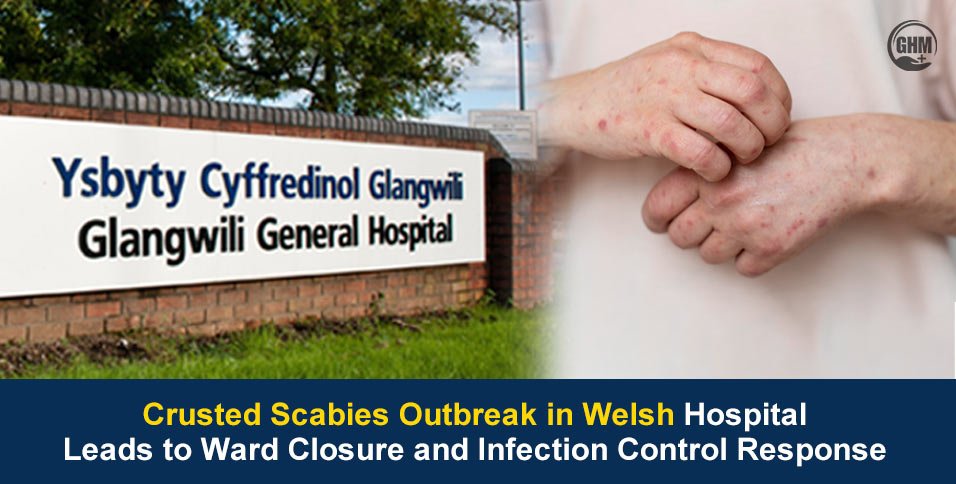
A crusted scabies infection, a highly contagious form of scabies, has spread in Glangwili Hospital in Carmarthen, Wales, triggering an immediate public health containment response. The Hywel Dda University Health Board confirmed the temporary closure of Steffan Ward at Glangwili Hospital to manage this rare Victorian disease.
Medical facilities are highly susceptible to scabies transmission due to close, prolonged patient contact and shared care environments. The crusted scabies outbreak in Welsh hospital urged immediate infection prevention protocols, offering swift preventive treatment to all identified contacts among patients and staff.
The Hywel Dda University Health Board reported increasing scabies activity across Carmarthenshire, Pembrokeshire, and Ceredigion, with community transmission directly contributing to hospital outbreaks. However, health officials clarify that ordinary scabies remains highly treatable and is not dangerous when managed promptly.
What Are Crusted Scabies?
Crusted scabies, formerly known as Norwegian scabies, is an uncommon, severe variant of the standard skin infestation caused by the Sarcoptes scabiei mite.
How It Differs From Ordinary Scabies
In crusted scabies, patients develop thick crusts of skin harboring thousands or even millions of mites, unlike ordinary scabies, which typically involves only a few mites. This massive mite burden makes crusted scabies exceptionally contagious through even brief contact.
While crusted scabies is typically associated with a weakened immune system, it can occur in individuals with normal immunity as well.
What Are the Symptoms of Crusted Scabies?
Recognizing the physical signs of infestation is vital for stopping an internal spread.
Typical Scabies Symptoms
- Severe, intense itching, particularly at night.
- A raised rash or red bumps across the skin.
- Visible mite burrows in the skin layers.
- Common locations include fingers, wrists, waist, groin, and underarms.
Crusted Scabies Symptoms
The specific crusted scabies symptoms differ markedly from the typical presentation:
- Thick, crusted skin areas with a distinctly flaky appearance.
- Minimal or completely absent itching in some cases, which frequently delays diagnosis.
- Commonly affects the hands, feet, elbows, and knees.
How Carmarthen Crusted Scabies Outbreak is Being Controlled?
To prevent the Glangwili Hospital scabies outbreak, the health board deployed strict control measures for scabies infection:
- Temporary Ward Closure: Halting all new admissions to fully isolate the affected area.
- Contact Tracing: Identifying all individuals, visitors, and staff who interacted with the ward.
- Preventive Treatment: Providing medication to exposed patients and staff, even those without symptoms.
- Enhanced Monitoring: Actively checking for new scabies cases with ongoing support from infection prevention specialists.
The health board confirmed that the ward will remain closed until specialist guidance indicates it is completely safe to reopen.
What The People in Wales Should Know?
To prevent the crusted scabies outbreak in Welsh hospital from spreading further, people should:
- Seek medical care immediately for persistent itching or unexplained rashes.
- Complete prescribed treatments exactly as directed by healthcare staff.
- Treat all close household contacts simultaneously to prevent re-infestation.
- Wash clothing and bedding at high temperatures according to medical guidance.