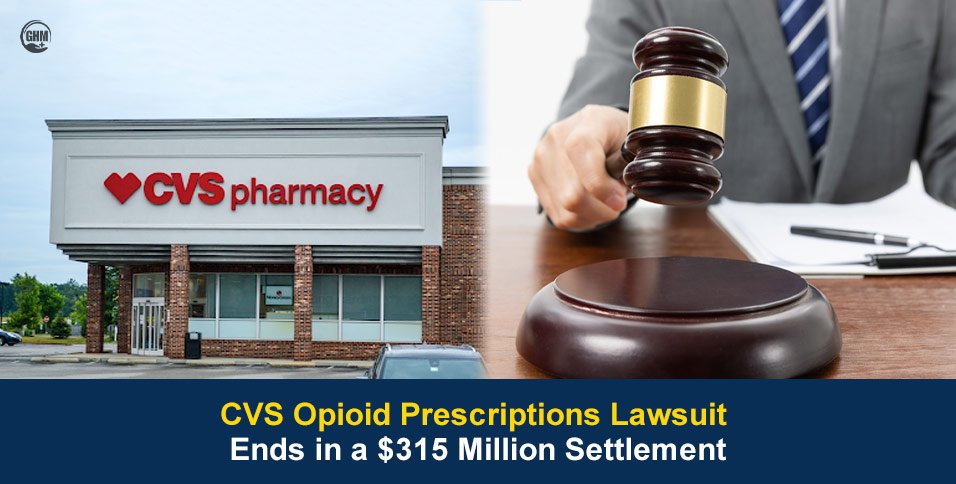
CVS Pharmacy and its related corporate entities have agreed to pay $315 million to resolve allegations that they unlawfully filled opioid prescriptions and improperly sought reimbursement from federal healthcare programs. Announced by the U.S. Department of Justice (DOJ) on October 13, 2026, the CVS opioid prescriptions lawsuit settlement also requires the pharmacy chain to strengthen its safeguards for dispensing controlled substances.
The settlement also resolves a federal case involving prescriptions filled between October 17, 2013, and December 2, 2025. CVS disputes the allegations and has not admitted wrongdoing under the agreement.
What Led to the CVS Opioid Prescriptions Lawsuit?
A whistleblower complaint brought by former CVS employee Hillary Estright under the False Claims Act led to the CVS Opioid prescriptions lawsuit. This law’s qui tam provisions allow private individuals to bring certain claims on behalf of the U.S. government and potentially receive part of the recovery.
The government intervened in the case and took over the litigation. The DOJ said the whistleblower’s share of the settlement had not yet been determined when it announced the agreement.
The settlement also comes amid broader federal scrutiny of pharmacy dispensing practices. In August 2026, Walmart agreed to pay $50 million to resolve a separate DOJ case involving allegations of unlawful opioid dispensing.
CVS had also agreed in 2022 to pay nearly $5 billion to resolve thousands of opioid-related claims brought by states, local governments, and Native American tribal governments.
What Happened in the CVS Opioid Prescriptions Lawsuit?
The DOJ filed its complaint against CVS in December 2024 in the U.S. District Court for the District of Rhode Island. The government alleged that CVS knowingly filled prescriptions that lacked a legitimate medical purpose, were invalid, or did not follow accepted professional practices.
According to the DOJ, the CVS opioid dispensing allegations included:
- Excessive opioid quantities: Filling prescriptions for potentially dangerous amounts of opioid painkillers.
- Early refills: Dispensing controlled substances before the appropriate time.
- Dangerous drug combinations: Filling so-called “trinity” prescriptions that combine an opioid, a benzodiazepine, and a muscle relaxant.
- Prescriptions from pill mills: Dispensing medications prescribed by providers allegedly issuing controlled substances without legitimate medical purposes.
The government also alleged that pharmacists overlooked warning signs indicating that prescriptions might be unlawful or medically unnecessary.
The complaint further claimed that CVS’s staffing policies, performance targets, and incentive compensation systems prioritized business performance over patient safety. The DOJ argued that these practices contributed to the alleged dispensing violations.
Why the DOJ CVS Opioid Settlement Involves Federal Healthcare Claims?
The CVS pharmacy lawsuit involved two federal laws: the Controlled Substances Act (CSA) and the False Claims Act (FCA).
The CSA regulates controlled substances, including opioids, and establishes requirements for their lawful handling. The FCA allows the federal government to pursue claims involving false or fraudulent requests for government payments.
The DOJ alleged that CVS violated the CSA by filling unlawful prescriptions and then violated the FCA by seeking reimbursement for many of those prescriptions through Medicare and other federal healthcare programs.
These allegations against CVS connect pharmacy dispensing practices with the use of public healthcare funds. The $315 million agreement resolves the government’s civil claims, but it does not represent a criminal conviction or a judicial finding that CVS was liable.
What Is the CVS Agreement With DEA?
Beyond the DOJ CVS opioid settlement, CVS entered into a memorandum of agreement with the Drug Enforcement Administration (DEA) to address its future responsibilities for dispensing controlled substances.
Under the CVS agreement with DEA, the company must:
- Establish a reporting hotline: Allow employees and members of the public to report suspected unlawful dispensing.
- Monitor dispensing patterns: Proactively review pharmacy activity to identify potentially illegal practices.
- Evaluate prescribers: Develop procedures to assess healthcare providers suspected of illegally prescribing controlled substances.
These measures aim to help CVS identify warning signs earlier and strengthen oversight of opioid and other controlled-substance prescriptions.
Assistant Attorney General Brett A. Shumate said in the official statement, “Today’s settlement requires CVS to implement additional safeguards to ensure that prescriptions for opioids and other controlled substances are dispensed only when medically appropriate.”
He also highlighted proactive monitoring as a measure to protect patients and federal healthcare programs.
What Was the Response to the CVS Opioid Dispensing Allegations?
CVS strongly disagrees with the government’s claims. The company said its pharmacists receive training in the safe and appropriate use of medications and that it has implemented programs to help them make sound decisions for patients.
CVS also emphasized that the CVS opioid prescriptions lawsuit settlement does not constitute an admission of wrongdoing.
The DOJ CVS opioid settlement allows the company to resolve the federal litigation without a judicial determination of liability. The distinction is important because the DOJ’s claims remain allegations rather than findings established at trial.
In August 2026, Kroger Pharmacy also paid about $17 million for a settlement over unfair pricing to insured customers for certain generic medications.