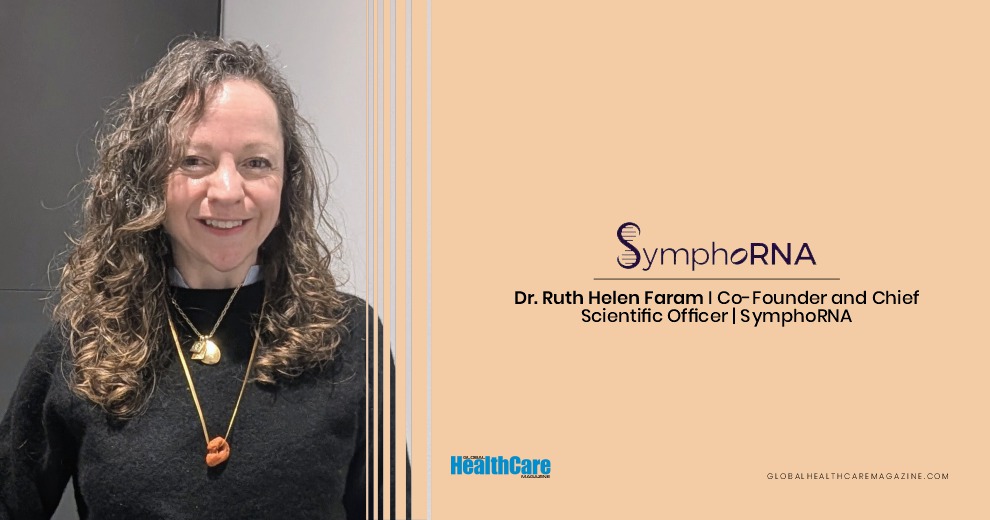
Every dedicated scientist can remember the moment when simple curiosity deepened into a personal passion. For Dr. Ruth Helen Faram, this pivotal moment did not occur in a classroom; it took place as a patient in a children’s hospital.
She grew up in Yorkshire, raised by loving parents who encouraged young Ruth and her sister to work hard throughout their education at their local secondary school. However, a large portion of Ruth’s childhood was spent between hospital appointments and operating theatres.
Born with congenital talipes and later diagnosed with a neurological condition called Arnold–Chiari malformation, she underwent repeated surgeries throughout her early years. At fifteen, she faced major brain surgery as her condition worsened, with a clear understanding of the significant risks the surgery entailed, as well as the serious dangers of leaving her condition untreated.
The operation restored her health. It also ignited a deep fascination with understanding the brain.
At sixteen, she knew she wanted to study neuroscience. She subscribed to New Scientist, read about research jobs that felt impossibly distant, and began rebuilding her academic foundations. Teachers had told her she was not an academic student. She refused to accept that script.
At eighteen, she returned to evening college to obtain the qualifications required for leading neuroscience programs. With just one hour of weekly tuition, countless late nights at her desk, and the unwavering support of her parents and partner Paul, she taught herself the material. When her exam results arrived, one dropped grade nearly cost her place at University College London. Instead, a professor who saw promise during her interview called personally to offer admission. Without that, she wouldn’t be where she is today.
From University College London, she moved to the University of Oxford, where she completed her master’s and PhD in Neuroanatomical Pharmacology. Dr. Faram learned to sharpen her thinking and was stretched way beyond her comfort level. Something that she is still proud of as she works at the forefront of novel RNA therapeutics today: “I’m comfortable with feeling uncomfortable.”
Mechanism, Momentum, and the Discipline of “Why”
Spend enough time around Dr. Faram, and a pattern emerges. She does not accept outcomes at face value. She traces them back. For more than two decades in stem cell research and advanced molecular science, her work has been anchored in mechanism. When a cell shifts identity, when tissue begins to fail, when a disease phenotype appears, she asks a simple question: Why? Then she goes deeper. Which pathways intersect? Which proteins are interacting? Where does the signal begin, and where does it break down?
Outward observation is never enough. Understanding is the goal. Intervention is the ambition.
She describes herself, without irony, as a traditional scientist. She is drawn to first principles. Disease pathways, protein interactions, and signaling cascades are not abstract systems to her. They are puzzles with consequences. If you understand the mechanism, you can change the outcome.
At the same time, she has watched the scientific toolkit transform. Genome engineering, precise molecular targeting, and automated technologies once considered speculative are now standard practice. Each advance has forced her to recalibrate the scope of her questions. If we can now target what was once deemed “undruggable,” what other boundaries have we mistakenly accepted as impossible? That tension fuels her leadership. She pushes teams to clarify their thinking and to also get used to asking uncomfortable questions. Curiosity isn’t something she practices; it’s how she’s wired.
As both scientist and founder, she believes discovery carries responsibility. Science must be accurate, defensible, and clearly communicated.
Discovery, Design, Direction
Dr. Faram operates where science meets strategy. As a second-time founder and Chief Scientific Officer of a biotechnology start-up, her responsibility is no longer confined to experiments. It is to define and defend the scientific direction of the company.
She sets the research roadmap, determines where the technology offers true differentiation, and makes decisions on where time, talent, and capital should be invested. These are not abstract choices. They are high-stakes decisions that shape years of work. Alongside her co-founder of nearly seven years, who serves as Chief Executive Officer, she ensures that discovery science translates into tangible outcomes. While her co-founder leads fundraising, external partnerships, and overall company alignment, Dr. Faram safeguards the scientific engine that drives the business forward.
Though she no longer works at the bench each day, her training remains central to her leadership. She engages deeply in experimental design, interrogates data, and makes clear go or no-go calls. She balances ambition with feasibility, timelines, and regulatory realities.
People leadership now defines much of her work. She leads a multidisciplinary team of scientists, hires carefully, mentors deliberately, and builds a culture where rigor and psychological safety coexist. Earlier in her career, success meant completed experiments.
Today, it means strong decisions, strong teams, and science positioned to improve human health at scale.
Bridging Discovery and Delivery
Dr. Faram moved from academia to biotechnology in a natural transition – not because she fell out of love with academia. If anything, she trusted science more. What changed was her desire to see it move.
In university settings, she had spent years pursuing tightly defined research questions. The work was rigorous and intellectually rich, but progress often unfolded at the pace of publication cycles or grant renewals. Biotechnology offered something different. It promised momentum. It offered a clearer path from mechanism to medicine.
“The foundations are the same,” she explains. Biology. Curiosity. Experimental discipline. Evidence. What drew her into founding a biotechnology company was the chance to apply that thinking in an environment where decisions carried immediate weight. Instead of protecting discoveries through papers, she began protecting them through patents. Instead of chasing a single question in isolation, she worked within teams built to translate insight into intervention.
The shift expanded her accountability. In biotech, scientific choices shape funding confidence, program timelines, and runways. Decisions cannot always wait for perfect publication-ready data. They must be made with clarity and conviction.
She also learned to manage uncertainty differently. Academia allows space to explore. Industry demands forward motion. That required a recalibration from perfection to execution, without compromising rigor.
Scientific success, whether in academia or biotech, requires vision grounded in evidence. Both demand resilience. By moving into biotechnology, she evolved from a solitary researcher into a company architect. She was no longer only asking questions. She began shaping the infrastructure through which discovery could make an impact.
Perseverance, Pressure, and Growth
Innovation has never felt like a smooth ride. The hardest moments in Dr. Faram’s career have not only been technical. They have been human. During her PhD, she spent nearly two years mastering electron microscopy to identify synaptic connections in a novel neuron type. She succeeded in the final weeks of her doctorate, discovering a rare synapse. The timing made publication challenging, and the work was never fully closed. That experience stayed with her. Discovery matters. So does finishing well.
Leadership brought different challenges. Ambitious milestones pushed teams forward, but she had to learn that belief in people is not the same as supporting them well. At times, she misjudged what individuals needed. Owning that was uncomfortable, but necessary.
There were periods of workplace conflict and moments when fundraising placed both company and family under strain. She learned to separate self-worth from outcomes and to treat development as strength, not weakness. For her, persistence is not force. It is staying in the work long enough to grow.
Building Ecosystems, Not Silos
For Dr. Faram, collaboration is not an accessory to science. It is the engine. She has always believed that breakthroughs are built by teams, not individuals in isolation.
Progress, in her view, happens when strong minds challenge and sharpen one another.
Her closest stakeholders begin with her immediate team. Scientists across disciplines, from translational researchers to chemists, work together to move programs forward. She pairs high standards with psychological safety, encouraging debate without ego. Beyond the company walls, academic partners remain essential. Universities bring depth, methodological rigor, and bold thinking. Industry partners, including biotechnology and pharmaceutical collaborators, contribute scale, regulatory insight, and pathways to patients. When aligned, these relationships move ideas from bench to bedside faster and more responsibly.
Across academia and industry, advisors and investors also play a critical role in development, testing strategy, and reinforcing accountability. She believes that fundraising should be a scientific dialogue, not just a transaction.
Returning to where her own journey began, Dr. Faram actively reinvests in education. Through schools and outreach programs, she seeks to ignite curiosity in young minds and encourage the next generation of scientists and educators to see possibilities where others see limits. She understands that inspiration, when sparked early, can shape a lifetime. Beyond the lab, she served as an ambassador for Parkinson’s UK, Alzheimer’s Research UK, and the Medical Research Council, advocating for responsible, patient-centered science.
For Dr. Faram, supporting young people is not an obligation; it is a responsibility and a privilege. She invests in the future of science by empowering the children who will one day define it.
For her, collaboration is not convenient. It is a shared ambition structured for impact.
Leadership, Family, and Expanding the Model
Dr. Faram believes that there should be continuous focus on systemic improvement within leadership roles. Women now comprise a growing share of the scientific workforce, but structural gaps in leadership and opportunity still remain.
Since the beginning, Dr. Faram has worked with hundreds of accomplished scientists spanning diverse demographic groups. Many of her mentors were generous, rigorous, and deeply influential. Over time, she has seen leadership in science become more diverse and more visible, particularly in biotechnology.
She believes talent should lead. Inclusivity, in her view, is about widening the system so the best people can thrive. As a co-founder alongside another female leader, she values complementary strengths and shared ambition over symbolism.
Building companies while raising two young children has undeniably added complexity. After her second child was born, she returned to work within weeks, often bringing her daughter to meetings. Flexibility was, and still is, key. Progress comes through visibility, participation, and honest conversations about capacity. There is no one-size-fits-all formula for a successful career in science.
Milestones That Mark Momentum
The impact of Dr. Faram’s work over the years is best understood as a pattern rather than a single headline. It reflects depth in academia, bold movement into biotechnology, working at the cutting edge, where many people feel uncomfortable, with a consistent focus on changing medicine.
Her scientific foundations were formed at Oxford, which is consistently ranked the No. 1 University in the world. Here, Dr. Faram trained for over a decade in neuroanatomy, pharmacology, and experimental biology, receiving a departmental prize for best doctoral thesis in recognition of both originality and endurance. Driven by curiosity, she mastered demanding techniques — from electron microscopy to uncover rare cellular interactions, to genome-engineering to dissect protein–protein interactions in Parkinson’s disease. These experiences built rigorous problem-solving foundations that continue to power her commitment to developing medicines for complex diseases with clear unmet needs.
A pivotal milestone in Dr. Faram’s career came in 2019 when she co-founded a biotechnology company at the frontier of cellular and RNA-enabled technology. Under her scientific leadership, the company secured major funding rounds, built defensible intellectual property, and navigated a strategic transition to therapeutic development. She is the lead inventor on multiple patents and continues to build RNA technologies to treat complex diseases. Across each chapter of her career, the theme is consistent: curiosity, determination, resilience, and rigor.
Building New Medicines: From the Ground Up
Dr. Faram gravitates toward bold, high-stakes challenges with transformative potential. She is motivated by milestones that are technically demanding and high-risk, high-reward, which others are reluctant to pursue or deem as overambitious. She is committed to building ambitious science that drives awareness, delivers measurable impact, and creates meaningful change in medicine, not by following established templates, but by challenging them.
At the center of that vision is boundary-pushing work. She is drawn to the questions that challenge standard approaches. She seeks better ways to understand and interrogate disease for optimal intervention design. Science is a continual evolution of understanding. We are bound by what we know at any given moment, and progress depends on uncovering what lies beyond it. If it does not compel us to rethink assumptions, it has not aimed high enough.
Translation remains her north star. She wants to see ideas move beyond theory and into the clinic, where they can shape patient outcomes. For her, success is not publication or valuation alone. It is proof that rigorous science can become something practical and life-changing.
At the same time, she is intentional about sustainability. Ambition must be paired with reflection. She checks whether the work still energizes her and her team. Alongside building novel therapeutics and start-up companies, Dr. Faram continues with her public engagement, encouraging early-career scientists – who are the seeds of our future – to stay curious, resilient, and bold.
Balance in Motion
Dr. Faram does not claim to have mastered work–life balance — a phrase she finds more limiting than illuminating. In her experience, balance is not a fixed state. It shifts. Some seasons demand more from the company. Others require more at home. The skill lies in noticing when the scales tip and having the courage to adjust.
She is clear about one thing. Both career and family were conscious choices. She values them equally and speaks openly about the difficulty of holding both well. What anchors everything is her health. “If I’m not well, everything else suffers,” she says. Learning to say no, to protect time, and to set boundaries has been essential.
Support matters. Her partner, Paul, shares responsibility fully, and Dr. Faram has worked with a leadership coach for several years to build resilience and manage pressure with clarity. The coaching has been invaluable in sharpening her focus, fostering self-awareness, and translating challenges into opportunities for growth.
Outside of her work and spending time with her children, she is a committed endurance runner. The childhood surgeries and being told she might struggle to walk were a spark, and over the last 20 years and more, she has had the discipline to train routinely. Running resets her. Family time grounds her. Family travel to the Scottish Highlands and Sardinia offers space to pause. For her, balance is not perfection. It is presence.
Potential Is Not One-Dimensional
If there is one message Dr. Ruth Helen Faram returns to often, it is this: potential does not always look polished. Early in her training, she realized she did not fit the neat definition of a top academic performer. Her exam results were not always flawless. She was not the obvious candidate on paper. What she did have was curiosity that would not quiet down, a habit of asking difficult questions, and the nerve to pursue answers others overlooked.
Over time, she came to see that determination, persistence, and intellectual courage carry as much weight as perfect grades. She speaks openly about this, particularly to young scientists who quietly disqualify themselves when they fall short of an imagined ideal. Too many assume perfection is the entry requirement. It is not.
“I wasn’t a perfect Grade- A student,” she says plainly. “But I was relentless.” When senior leaders admit imperfection, it creates space. It signals that growth is allowed, that ambition is not reserved for the flawless. For Dr. Faram, leadership is not about projecting certainty. It is about widening the definition of who gets to succeed.
Quotes

Also Read: Dr. Ruth Helen Faram (Women Leaders Shaping the Future of Science & Healthcare – 2026