You wake up one morning, and your neck pain has crept into your arms — a sharp, burning sensation that no painkiller seems to touch. Sound familiar? If you’re experiencing neck pain that radiates into your arms, tingling in your fingers, and weakness in your hands, you already know how disabling this can feel.
Well, it is not just normal muscle pain. These symptoms often point to a compressed spinal nerve in the neck. This type of nerve pain frequently responds very well to a targeted surgical procedure called Anterior Cervical Discectomy and Fusion (ACDF).
ACDF surgery is one of the most commonly performed cervical spine surgeries worldwide, and it has helped thousands of patients reclaim their quality of life.
In this guide, you’ll learn exactly what Anterior Cervical Discectomy and Fusion surgery is, when it’s needed, how surgeons perform it, and what recovery really looks like, and to get you prepared before the surgery.
What Is Anterior Cervical Discectomy and Fusion?
The name sounds complex, but it breaks down simply. Each word tells you part of the surgery procedure:
- Anterior: The surgeon approaches through the front of your neck
- Cervical: This refers to the neck region of the spine
- Discectomy: The damaged disc between two vertebrae is removed
- Fusion: The two vertebrae are then joined together permanently
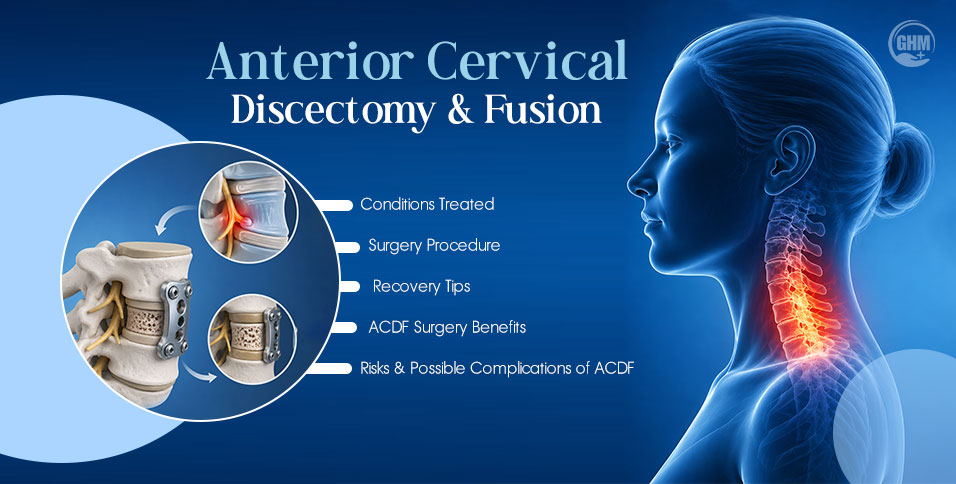
Together, the ACDF surgery procedure removes the source of nerve compression and then stabilises the spine using a bone graft, and often a small metal plate with screws. Think of it like removing a worn-out shock absorber between two car parts and then welding those parts together so they move as one stable unit.
Healthy discs act as flexible cushions that allow your neck to bend and rotate freely. However, when a disc herniates, degenerates, or develops bone spurs, it can press painfully on nearby nerves or the spinal cord itself. An anterior cervical discectomy and fusion surgery removes that pressure and prevents further damage.
After the disc is removed and a bone graft is inserted, the body’s natural healing process gradually grows new bone cells around the graft, fusing the two vertebrae into one solid structure over three to six months.
When Is ACDF Surgery Needed? Common Conditions It Treats
Doctors typically recommend anterior cervical discectomy and fusion only after non-surgical treatments — such as physical therapy, pain medication, and steroid injections — have failed to provide relief. So, what conditions actually drive someone toward this surgery?
Conditions That May Require ACDF
- Herniated Cervical Disc: When the soft inner core of a disc pushes through its outer wall, it can press directly on a nerve root, causing nerve pain that shoots down the arms.
- Degenerative Dics Disease: As discs dry out and thin over time, vertebrae begin to rub together, causing a pinched nerve in neck.
- Cervical Spinal Stenosis: A narrowing of the spinal canal that compresses the spinal cord, causing weakness in the arms and legs and difficulty walking.
- Bone Spurs (Osteophytes): Small bony growths that develop as a result of arthritis and can encroach on nerve spaces.
- Cervical Myelopathy: Spinal cord compression that leads to progressive weakness, clumsiness, and balance problems, a more serious condition that often requires timely surgery.
- Neck Instability After Injury: Trauma can destabilise the cervical spine, making fusion necessary for structural support.
Common Symptoms Of ACDF
- Persistent neck pain that does not improve with rest or medication
- Pain radiating from the neck into one or both arms
- Tingling or numbness in the hands and fingers
- Weak grip strength or difficulty with fine motor tasks
- Trouble walking steadily or maintaining balance
If these symptoms are affecting your sleep or daily work, it may be time to speak with a spine specialist.
How Is the ACDF Surgery Procedure Performed?
Understanding the surgical process can significantly ease anxiety. Here is a clear, step-by-step explanation of what happens during an anterior cervical discectomy and fusion procedure:
Step-by-Step ACDF Surgical Procedures
- Anaesthesia: The patient receives general anaesthesia, so they are completely asleep throughout the procedure.
- Small Incision: The surgeon makes a small cut on the front side of the patient’s neck, usually less than two inches long.
- Accessing the Spine: By gently moving aside the neck muscles, trachea, and oesophagus, the surgeon reaches the cervical spine without disturbing the spinal cord or major nerves.
- Disc Removal: The damaged disc is carefully removed. Any bone spurs pressing on nerves are also cleared away at this stage.
- Bone Graft Insertion: A spacer, either a bone graft from a donor, your own bone, or a synthetic cage, is placed in the empty disc space. This acts as a bridge between the two vertebrae.
- Plating: A small metal plate and screws are typically attached to the front of the vertebrae to hold everything securely in place while neck fusion occurs.
- Closure: The incision is carefully closed, usually leaving only a thin scar that fades over time.
The entire procedure of anterior cervical discectomy and fusion surgery generally takes between one and three hours, depending on how many disc levels need treatment. Most patients go home the same day or after a one-night hospital stay.
Surgeons access the spine from the front because it provides a clearer path to the disc while avoiding the spinal cord and the powerful muscles at the back of the neck — an important advantage over posterior (back-of-neck) approaches.
Recovery After ACDF Surgery: What to Expect
Immediately After Surgery, most patients go home the same day. Some may stay overnight for monitoring. Soreness in the throat, neck stiffness, and mild difficulty swallowing are common in the first few days.
Week 1–2: Light walking is actively encouraged. It promotes circulation and supports healing. You will wear a soft cervical collar for comfort and support.
Weeks 2–6: Many patients with desk-based jobs return to work within two to six weeks. Driving typically resumes after you stop taking strong pain medication and have full neck rotation.
Months 3–6: The bone graft begins fusing with the vertebrae. Physical therapy may be recommended to restore strength and range of motion.
Months 6–12: Full fusion is typically complete within three to twelve months. Complete recovery from cervical fusion surgery takes up to a year for some patients.
Recovery Tips to Optimise Your Spinal Healing
The Spinal Surgery Recovery Tips below can give you better relief
- Stop smoking: Nicotine prevents bone growth and dramatically reduces fusion success rates — fusion fails in up to 40% of smokers versus 8% of non-smokers.
- Follow lifting restrictions: Avoid lifting heavy objects for at least six weeks after surgery.
- Take medications as directed: Do not skip doses of prescribed anti-inflammatory or pain medication in the early recovery phase.
- Attend all follow-up appointments: Your surgeon needs to monitor fusion progress through imaging.
- Maintain good posture: Avoid hunching over screens. Ergonomic support protects your healing spine.
If you struggle with sleep during recovery, it helps to review strategies like those outlined for related spinal conditions, such as sciatica — many positional principles apply to cervical recovery as well.
Benefits of Anterior Cervical Discectomy and Fusion
When other treatments for spinal nerve pain have not worked, ACDF surgery offers meaningful, long-term relief.
Here are the key benefits of ACDF, reported by the patients and surgeons:
- Significant reduction in arm pain and radiating nerve pain
- Reduced tingling and numbness in the hands and fingers
- Improved grip strength and upper limb function
- Better mobility and the ability to perform daily activities
- Prevention of further spinal cord compression and neurological decline
- Long-term stability of the cervical spine
Research supports these outcomes. Studies show that over 80% of patients with arm pain experience significant improvement after ACDF surgery. For most people, the goal is not just pain relief — it’s returning to the life they had before the pain took over.
Risks and Possible Complications of ACDF
As with any surgery, anterior cervical discectomy and fusion carries some risks. However, serious complications are uncommon when an experienced spine surgeon performs the procedure.
Your healthcare provider will explain all relevant risks specific to your health situation before you make your surgical decision. Most patients tolerate ACDF surgery well, and outcomes continue to improve with advances in surgical technique and technology.
But being informed helps you make a confident, balanced decision.
Known Risks of Anterior Cervical Discectomy and Fusion:
- Infection at the surgical site (rare, treated with antibiotics)
- Temporary difficulty swallowing or a hoarse voice due to throat irritation
- Bleeding at the operative site
- Nerve injury or worsening of neurological symptoms (uncommon)
- Failed fusion (pseudoarthrosis) — where the vertebrae do not join as expected
- Adjacent segment disease — over time, the vertebrae above or below the fusion may experience increased stress and degenerate faster
- Need for a repeat surgery in some cases
When Should You See a Spine Specialist?
Not every episode of neck pain requires a spine surgeon. But certain warning signs suggest it’s time to seek a professional evaluation without delay.
Consider booking a doctor’s appointment if you experience:
- Neck pain that persists beyond six weeks and does not improve with rest or over-the-counter medication
- Pain, weakness, or numbness radiating into your arms or hands
- Difficulty gripping objects or buttoning clothing
- Loss of balance or coordination when walking
- Symptoms that are disrupting your sleep or ability to work
Early evaluation by a qualified spine specialist allows for conservative treatment first and ensures surgery is only considered when truly necessary.
End Note
Anterior cervical discectomy and fusion is a well-established, effective solution for cervical disc conditions that cause debilitating pain, nerve symptoms, and functional limitations. When performed by an experienced spine surgeon after conservative treatment has been explored, ACDF surgery delivers lasting relief for the majority of patients.
The key lies in early diagnosis, expert evaluation, and a well-structured recovery plan. If you’re struggling with chronic neck pain, arm pain, or any of the symptoms described in this guide, don’t wait it out. Consult a qualified spine specialist and explore all your options.
Speak with a qualified spine specialist to find out whether anterior cervical discectomy and fusion surgery may be the right solution for you.
Frequently Asked Questions
- How long does ACDF surgery last?
Most ACDF procedures take between one and three hours, depending on the number of disc levels being treated. Single-level surgeries are typically completed within 90 minutes.
- Will I need to wear a neck collar after ACDF surgery?
Many patients wear a soft cervical collar for one to four weeks after surgery. However, the duration depends on your surgeon’s protocol, the number of fused levels, and your rate of healing. Your surgical team will provide specific instructions.
- How is ACDF different from cervical disc replacement?
ACDF permanently joins two vertebrae together, eliminating movement at that segment. Cervical disc replacement inserts an artificial disc that preserves some natural movement. Both procedures effectively relieve nerve pain, but disc replacement may be preferred in younger patients who want to maintain neck flexibility. Not everyone is a candidate for disc replacement — your surgeon will advise based on your specific anatomy and condition.
- Does insurance cover ACDF surgery?
In most cases, ACDF surgery is covered by health insurance when it is medically necessary and non-surgical options have been documented and exhausted. You should verify your specific policy details with your insurer and your surgical team’s billing department before proceeding.