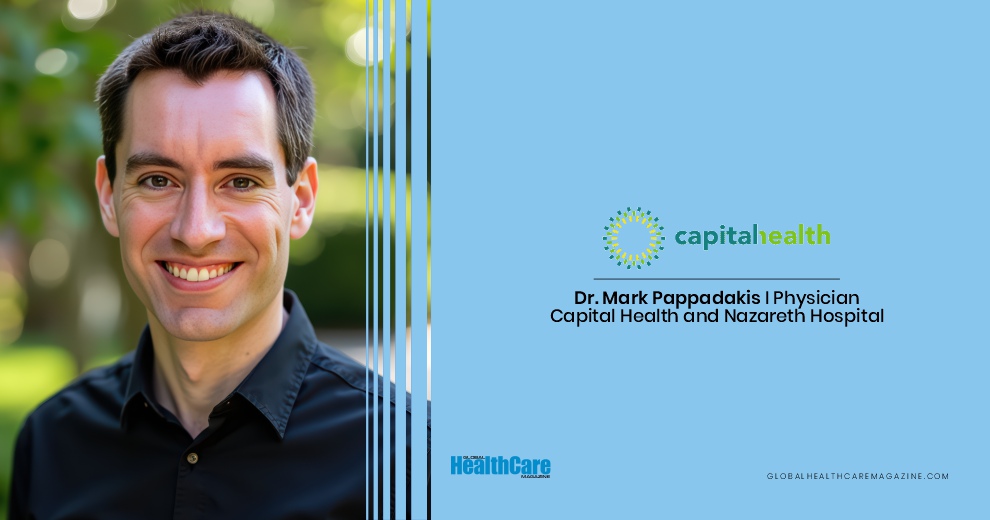
On any given day, the emergency room tells the full story of a community. It welcomes the unexpected. It carries urgency in every hallway. Some patients walk in. Others are rushed through sliding doors on stretchers. Every one of them arrives with uncertainty.
Emergency medicine sits at the center of that storm. It asks physicians to think clearly when seconds matter. It demands wide clinical knowledge and steady hands. Not every doctor feels called to that pace. Fewer still choose to build a career there. Dr. Mark Pappadakis did.
Long before he earned his medical degree, he stood inside that environment as an ER patient care technician. He watched physicians make critical decisions with limited information. He saw how preparation met unpredictability. He learned early that the emergency room is the front door of the health care system. Everyone comes through it. Every background. Every story. Often on the worst day of their lives.
That exposure shaped his direction. He did not enter medicine by accident. He moved toward it with intention. He wanted to bring together his respect for science and his instinct to serve. The emergency department offered both. It required sharp clinical thinking and a steady presence. It asked him to be ready for anything at any time.
For him, the appeal was not just the adrenaline. It was the responsibility. Emergency physicians do not select their cases. They show up for whoever arrives. That idea stayed with him from his earliest shifts. Over time, it became the foundation of his work and the reason he chose to remain at the front lines of care.
Efficiency and Empathy in Motion
At Capital Health and Nazareth Hospital, the pace rarely slows. The waiting room fills quickly. Ambulances arrive without warning. Decisions cannot wait. Working in these high-volume emergency departments has sharpened Dr. Pappadakis’s definition of quality care. He believes it stands on two pillars: efficiency and empathy. One keeps the system moving. The other keeps it human.
Dr. Pappadakis relies heavily on what he describes as triage thinking. He scans for the most urgent threats within moments of meeting a patient. He sorts symptoms, reads vital signs, and makes early judgment calls with limited information. That skill grows only through repetition and responsibility.
At the same time, he refuses to let the rush strip away compassion. Even during peak hours, he pauses long enough to make patients feel seen. Clear and concise communication guides every interaction. In a setting where minutes matter, precision is not optional. It is protection.
A Balcony View of the Emergency Room
When Dr. Pappadakis stepped into the role of Assistant Director at Nazareth Hospital, his perspective shifted. He no longer saw only the patient in front of him. He saw the entire system at work.
Leadership gave him what he describes as a balcony view. From that vantage point, Dr. Pappadakis began to understand that managing a department extends far beyond clinical skill. It requires removing obstacles that slow teams down. It demands attention to the small breakdowns that quietly affect care.
He focused on improving processes that directly influenced safety. Bedside registration had to move smoothly. Stroke protocols need to run without hesitation. Each adjustment mattered. When systems function well, clinicians can focus fully on medicine. When systems fail, even experienced physicians feel the strain.
That experience reshaped how he thinks about the emergency room. He now sees it as a living organism. Every role connects to the next. When each part moves in sync, the entire community benefits.
Teaching the Art of the Audible
In addition to his clinical work, Dr. Pappadakis serves as a Clinical Assistant Professor at Philadelphia College of Osteopathic Medicine and teaches students from Rutgers New Jersey Medical School. The classroom gives him a different kind of responsibility. There, the pressure feels different, but the preparation is just as serious.
Dr. Pappadakis teaches what he calls “the art of the audible.” He explains it simply: “In the classroom, cases are linear. In the ER, they’re messy.” Textbooks move step by step. Real patients rarely do.
He pushes residents to think beyond checklists. He encourages them to develop clinical gestalt, to trust their eyes and ears as much as the monitor. “Treat the patient, not just the lab values,” he tells them.
For him, medical education must reflect the unpredictability of the field itself. If students learn to pivot early, they grow into physicians who can adapt without panic.
Where Emergency Care Truly Begins
For Dr. Pappadakis, emergency medicine does not start at the hospital entrance. It begins long before that. It starts in living rooms, on highways, and inside ambulances. Through his work educating EMTs and paramedics, he has gained deep respect for the pre-hospital phase of care. He sees it as the most critical link in the chain of survival. The first assessment, the first intervention, and the first decision often happen in the field. Those early minutes shape everything that follows.
Dr. Pappadakis teaches pre-hospital providers with the understanding that they are not separate from the emergency department. They are an extension of it. When communication flows smoothly between EMS teams and hospital staff, transitions feel seamless. When it does not, gaps appear.
He believes strong collaboration reduces errors and preserves time. Mutual professional respect builds trust. And in emergency medicine, trust between teams directly affects patient outcomes.
Raising the Standard of Care
Through his work on the Sepsis Committee, Dr. Pappadakis has witnessed how data-driven protocols quietly save lives. Metrics, when used correctly, sharpen performance. Structured systems reduce error. The evidence shows up in outcomes.
Still, Dr. Pappadakis believes emergency medicine faces a deeper challenge. “We’re battling an infodemic,” he says. Misinformation spreads quickly, often louder than science. Patients arrive uncertain about what to trust.
He believes physicians must reclaim clarity. “If we don’t explain medicine in plain language, someone else will explain it poorly,” he notes. Accessible, evidence-based communication must become part of modern practice, not an afterthought.
He also points to systemic boarding issues that strain emergency departments nationwide. When admitted patients wait extended hours for beds, pressure builds across the system. For Dr. Pappadakis, improving care now requires both better operations and better public understanding.
Building Careers That Last
Emergency medicine demands stamina. The shifts run long. The cases carry weight. Over time, that pressure can erode even the most committed physicians.
Dr. Pappadakis speaks openly about burnout. He does not dismiss it as a weakness. He treats it as a real occupational risk. When mentoring residents and young physicians, he often reminds them that they cannot pour from an empty cup. The phrase sounds simple, but he treats it as policy.
He encourages young doctors to define their reason for entering medicine. That sense of purpose becomes an anchor during difficult stretches. He also pushes them to protect their time outside the hospital. Rest, family, and personal interests are not luxuries. They are safeguards.
Dr. Pappadakis believes longevity in emergency medicine depends on balance. Clinical excellence alone is not enough. Personal fulfillment sustains endurance. As a mentor, his aim is clear. He wants residents to build the resilience required for a career that lasts decades, not just years.
Pulling Back the Curtain on Modern Medicine
Outside the hospital, Dr. Pappadakis found another outlet for education. He launched The JAFERD Cast, short for Just Another F’in ER Doctor, after noticing a growing gap between medical facts and public understanding.
Patients, he realized, want the truth. But they often encounter two extremes. On one side sits dense medical language that feels inaccessible. On the other side sit viral trends and oversimplified advice. Neither serves them well.
He started the podcast to humanize the physician behind the mask. He wanted listeners to hear a real voice, not a clinical script. Alongside the show, he writes The JAFERD Notes, where he breaks down health care news and common conditions in clear, direct language.
Dr. Pappadakis’s goal remains practical. He wants people to navigate the health care system with confidence. He also offers a behind-the-scenes look at modern emergency medicine, showing both its strain and its purpose.
Advocating for the Front Lines
As a member of the Bucks County Medical Society and the Pennsylvania Medical Society, Dr. Pappadakis steps beyond the emergency department and into policy discussions that shape daily practice.
From that vantage point, he sees the pressure building. Administrative demands continue to grow. Documentation expands. Metrics multiply. At times, he believes the corporate structure of modern medicine risks placing numbers ahead of nuanced clinical judgment.
Emergency physicians also face increasing concerns around workplace safety. Verbal threats and physical violence have become more common. At the same time, mental health resources for patients in crisis remain limited, often leaving emergency departments to fill systemic gaps.
Dr. Pappadakis approaches advocacy with urgency. Lawmakers and administrators, he argues, must understand what it feels like to stand at a bedside at 3:00 a.m. Physicians need a voice in those rooms. Without that seat at the table, decisions drift further from the realities of patient care.
Leadership Forged in Training
During his time as Chief Resident of Academics at New York Medical College, Dr. Pappadakis encountered leadership in its rawest form. The role carried weight. He balanced clinical duties with academic oversight. He managed expectations from faculty while advocating for residents still finding their footing.
He often describes that period as his baptism by fire. The pace felt intense, and the responsibility arrived quickly. Yet it clarified what leadership truly requires.
Dr. Pappadakis learned that transparency builds trust. When expectations stay clear, and communication stays open, teams move with confidence. He also saw how a strong educational culture shapes performance. If learning becomes something to celebrate rather than fear, excellence follows.
Those lessons still guide him. Whether he leads a trauma resuscitation or records an episode of his podcast, he relies on structured thinking and direct communication. Improvement, in his view, should never feel optional. It must remain constant.
Bridging the Bedside and the Public Square
When reflecting on his career, Dr. Pappadakis does not point to a single case or title. Instead, he speaks about connection. He takes pride in his ability to bridge clinical leadership with public advocacy.
At the bedside, he has experienced defining moments. He has treated patients during the golden hour, when swift decisions determine survival. Those victories stay with him. They represent the core of emergency medicine.
Yet Dr. Pappadakis feels equally proud of building The JAFERD Cast into a platform that reaches beyond hospital walls. Through it, he offers transparency in a field that often feels opaque to the public. Instead of helping one patient at a time, he can reach thousands in a single episode.
Balancing life as a board-certified emergency physician with the responsibilities of a media founder has tested him. It has also fulfilled him. For Dr. Pappadakis, impact does not stop at discharge. It extends into conversation, clarity, and trust.
Looking Ahead
Recognized as one of the nation’s leading emergency medicine physicians of 2026, Dr. Pappadakis thinks less about awards and more about reach. He plans to grow The JAFERD Cast and The JAFERD Notes into trusted destinations for public medical education.
“Through ‘The JAFERD Cast,’ I’m bringing radical transparency to healthcare, one unfiltered conversation at a time.”
Dr. Pappadakis wants to set a gold standard for health communication that stays authentic, direct, and grounded in evidence. When people look back on his career, he hopes they see a physician who stepped beyond the emergency room and worked to make medicine understandable, accessible, and honest for everyone.
A Simple Standard
When asked to distill his leadership philosophy, Dr. Pappadakis keeps it direct. “Do the right thing for the right reason, every time,” he says. The sentence guides him whether he is managing a department or treating a single patient.
In the emergency room, time often runs short. Decisions move fast. Emotions run high. Yet he believes one choice always remains available: the choice to be kind. Skill matters. Speed matters. But character defines a physician’s impact.
To young doctors entering the field, Dr. Pappadakis offers steady advice. Do not let the system erode curiosity. Protect it. Medicine may begin as a calling, but communication becomes a force multiplier. A clear voice can calm fear and correct confusion. Even on the hardest shifts, he reminds them, the opportunity to change someone’s life still exists.
Quotes
Also Read: USA’s Leading Emergency Medicine Physicians of 2026