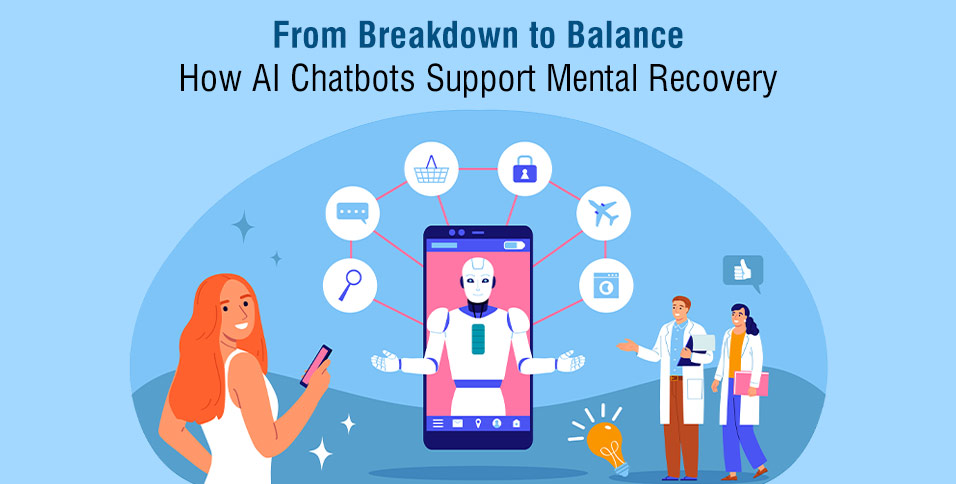
Emotional breakdowns, whether caused by burnout, overwhelming stress, grief, or prolonged anxiety, can leave people feeling mentally exhausted and emotionally disconnected. Recovery often requires support, reflection, and practical coping strategies. In recent years, AI therapy chatbots have emerged as digital tools that provide immediate emotional support, structured mental exercises, and daily guidance during recovery.
While AI cannot replace licensed therapists, research shows that chatbot-based mental health tools can help people manage emotional distress, practice coping skills, and gradually rebuild emotional balance. This article explores how AI chatbots support mental recovery, supported by clinical studies, statistics, and real-world experiences.
What Happens During an Emotional Breakdown
An emotional breakdown, often referred to as a mental health crisis or severe stress response, can occur when psychological pressure exceeds a person’s coping capacity. Symptoms commonly include:
- Persistent exhaustion
- Emotional overwhelm
- Anxiety or panic
- Difficulty concentrating
- Feelings of hopelessness or detachment
According to the World Health Organization, chronic stress and burnout can significantly impair mental well-being and functioning, contributing to anxiety, depression, and emotional exhaustion worldwide.
Recovery usually requires emotional processing, cognitive restructuring, and supportive coping strategies, which is where digital tools like AI chatbots are increasingly being used.
What Are AI Therapy Chatbots?
AI therapy chatbots are conversational programs designed to simulate supportive dialogue and provide mental health exercises. Many are built on psychological frameworks such as:
- Cognitive Behavioral Therapy (CBT)
- Mindfulness-based stress reduction
- Behavioral activation
- Emotional journaling and reflection
These tools are accessible through mental health apps or messaging interfaces and can guide users through exercises such as:
- Mood check-ins
- Cognitive reframing
- Breathing and grounding techniques
- Thought pattern tracking
Unlike human therapists, AI chatbots do not diagnose or treat mental disorders, but they can act as supportive companions during difficult emotional periods.
Why AI Chatbots Are Used in Mental Recovery
AI mental health tools have gained popularity because they address several common barriers to traditional therapy.
1. Immediate Support
Unlike therapy appointments that may require scheduling weeks in advance, AI chatbot offer 24/7 availability.
2. Reduced Stigma
Some users feel more comfortable discussing emotional struggles with a chatbot than with another person, especially during the early stages of recovery.
3. Structured Coping Guidance
AI chatbots can guide users through structured exercises derived from therapeutic practices, helping individuals learn skills to manage stress and emotional distress.
4. Consistent Check-ins
Regular interactions help users develop emotional awareness and monitor mood changes over time.
Clinical Evidence: What Research Shows
Scientific research into AI mental health tools has expanded rapidly in recent years.
1. Randomized Clinical Trials
A randomized controlled trial of the chatbot Woebot found that participants who interacted with the chatbot experienced significant reductions in depression symptoms after two weeks, compared with a control group receiving only informational material.
Researchers concluded that conversational agents can effectively deliver cognitive behavioral therapy techniques and may help reduce emotional distress.
2. Depression and Loneliness Reduction
A 2025 randomized study of a CBT-based chatbot intervention found significant reductions in depression and loneliness among university students, with moderate effect sizes.
Participants experiencing higher stress levels showed the greatest improvements, suggesting AI tools may be particularly useful during periods of emotional overload.
3. Real-World Evidence
Observational studies of generative-AI mental health tools have found improvements in:
- Depression symptoms
- Anxiety levels
- Perceived social support
- Emotional hope and motivation
Some improvements were sustained during follow-up periods after several weeks of chatbot engagement.
How AI Chatbots Support Recovery After Breakdown
AI therapy chatbots support mental recovery through several psychological mechanisms.
1. Encouraging Emotional Expression
One of the most important steps in emotional recovery is simply talking about how you feel.
Chatbots typically begin with prompts such as:
- “How are you feeling today?”
- “What has been stressful recently?”
These prompts encourage users to articulate thoughts and emotions, which psychological research links to improved emotional regulation.
2. Cognitive Reframing
Negative thinking patterns often intensify during breakdowns. AI chatbots help users challenge these thoughts by asking reflective questions like:
- “What evidence supports this thought?”
- “Could there be another explanation?”
This process mirrors Cognitive Behavioral Therapy, helping users gradually shift from catastrophic thinking to more balanced perspectives.
3. Interrupting Rumination
Rumination—repetitive negative thinking—is common during emotional distress. AI chatbots can intervene by:
- Suggesting grounding exercises
- Offering alternative perspectives
- Guiding users through short mindfulness sessions
These interactions help break the mental loop that often fuels anxiety and emotional exhaustion.
4. Teaching Coping Skills
Many chatbot platforms guide users through practical mental health exercises such as:
- breathing exercises
- gratitude journaling
- behavioral activation tasks
- stress-reduction techniques
These small practices help users rebuild psychological resilience over time.
5. Providing Emotional Consistency
Unlike human support systems that may not always be available, AI chatbots provide consistent check-ins and encouragement, which can help users feel less alone during recovery.
Testimony From an AI Chatbot User
Many users describe AI therapy chatbots as helpful companions during stressful periods.
User testimony example:
“After months of burnout, I struggled to talk to anyone about how overwhelmed I felt. I started using an AI mental health chatbot every night before bed. At first it felt strange, but the daily check-ins helped me recognize patterns in my thinking. Over a few weeks, the coping exercises and reflective questions helped me calm my thoughts and regain some emotional balance.”
While individual experiences vary, many users report that chatbots help them develop healthier habits and emotional awareness during difficult periods.
Limitations and Ethical Considerations
Despite their potential, AI therapy chatbots also have limitations.
They cannot replace human therapists
Mental health professionals provide deep emotional understanding, clinical diagnosis, and crisis management—capabilities AI systems do not possess.
Safety and accuracy concerns
Experts have warned that AI systems may occasionally provide inaccurate or overly simplistic advice, particularly in complex mental health situations.
Emotional dependency risks
Some clinicians worry that users may rely too heavily on AI tools instead of seeking professional support when needed.
For these reasons, most experts recommend using AI chatbots as supplementary tools rather than replacements for therapy.
Conclusion: From Breakdown to Balance
AI therapy chatbots represent a new form of digital emotional support that can help people navigate recovery after stressful or overwhelming life experiences. Research shows that these tools can deliver evidence-based techniques such as CBT exercises, emotional reflection, and coping strategies that support mental well-being.
While they are not substitutes for licensed therapists, AI chatbots can play an important role in modern mental health care—providing accessible support, encouraging self-reflection, and helping individuals gradually rebuild emotional balance after breakdowns.
As digital mental health tools continue to evolve, they may become valuable companions in helping millions of people move from emotional breakdown toward psychological resilience and recovery.