There is a distinct type of silence in a hospital room after the doctor leaves. It is the silence of a patient who has just been informed that the medication that could save their life may also make them wish they were dead. For decades, this has been the troubling compromise in oncology: we will eliminate the cancer, but we will take part of you with it. We will scorch the earth to save the village.
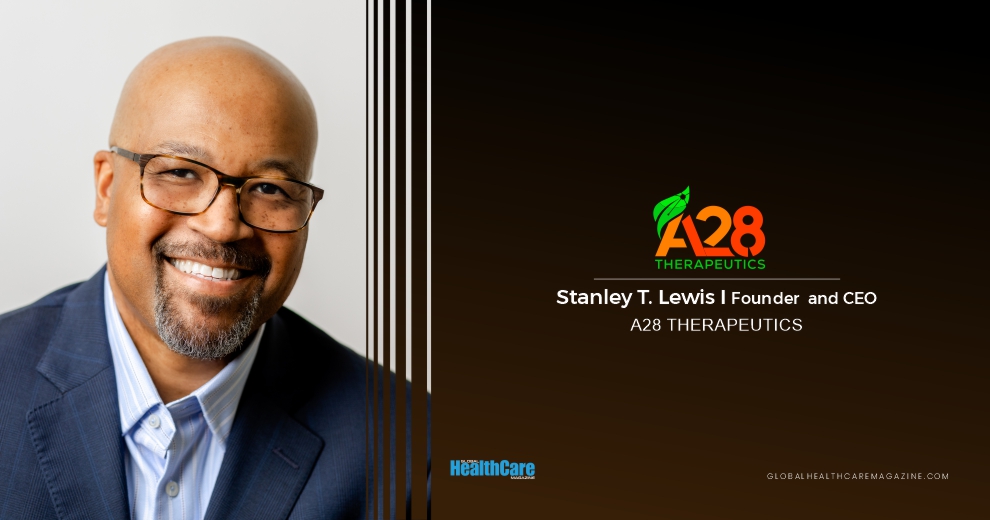
Stanley T. Lewis, MD, MPH has dedicated his life to listening to that silence, which has troubled him for a long time.
“I kept telling myself, someone needs to come up with better medications that are more tolerable for patients,” he says.
Most people who have this thought are patients or their families, who feel powerless to change the chemistry. Dr. Lewis is different. He is a physician, a public health expert, and a biotech executive with a history of accomplishing the seemingly impossible. He examines the complexity of modern medicine, the billion-dollar machines, the convoluted regulatory pathways, and recognizes a stubborn truth: Nature usually has a better solution.
As the Founder and CEO of A28 Therapeutics, Dr. Lewis is currently wagering his career on a molecule inspired by the venom of a honeybee. It is a “targeted oncolytic peptide,” a microscopic guided missile designed to accurately target cancer cells while leaving healthy cells unharmed. This technology has the potential to transform the way we treat one of the most devastating diseases of our time. For Dr. Lewis, however, this endeavor is not just science; it is personal. It represents the continuation of a conversation with a father who never had the chance to see his son become a doctor.
The Boy from Lufkin
To understand Stanley Lewis, you need to go back to Lufkin, Texas. It is a small, rural town located in the Piney Woods of East Texas, where the community is close-knit and dreams are often practical. However, Stanley had a dream that was anything but small.
“I told my father that I thought I wanted to become a doctor,” he recalls. “He became very excited and proceeded to tell everyone in our town who would listen.”
That enthusiasm became a powerful motivator for young Stanley, propelling him through the University of Texas at Austin and the challenging years of medical school at UT McGovern in Houston. He didn’t just want to be a doctor; he wanted to be the doctor his father believed he could become.
Tragedy struck during his third year of medical school when his father passed away from cancer.
“He never got to see his son become a physician,” Dr. Lewis reflects quietly.
That loss could have shattered him, but instead, it focused him and gave him a sense of purpose. He completed his training, becoming an internist and an assistant professor. He saw patients, taught residents, and fulfilled every duty expected of a doctor. Yet, frustration began to grow within him as he witnessed HIV patients suffering from the toxic side effects of early antiretroviral treatments and cancer patients devastated by chemotherapy.
“I soon realized that if I wanted better treatments, I’d need to develop them myself,” he says.
The Pivot to Industry
The transition from bedside to boardroom is a challenging journey; many doctors attempt it, but few succeed. Dr. Lewis navigated this path with a combination of luck and determination. He was recruited by a biotech company to develop a promising HIV medication. Just then, the industry faced turbulence: acquisitions, displacements, and the chaotic shifts of corporate strategy.
Despite this upheaval, Dr. Lewis held on to the development of the molecule. He played a key role in out-licensing it and subsequently joined TaiMed Biologics, the company that acquired it. As Chief Medical Officer, he led a team to a historic milestone: the FDA approval of TROGARZO™.
“TROGARZO became the first monoclonal antibody treatment for HIV,” he notes with pride. This breakthrough was particularly significant for patients with multi-drug resistance, providing a lifeline for those who had exhausted other options. Crucially, it was also well-tolerated, validating his belief that effective medicine doesn’t have to be toxic.
Later, he served as CMO of Ansun Biopharma, where he led trials for respiratory viruses and helped secure $100 million in financing. At that point, he was at the peak of his career: an experienced executive who understood how to guide a drug through the FDA’s complex processes.
Then came the pandemic, derailing development plans for his company. And then came the bees and a new direction to pursue.
The Bee and the Bullet
The technology behind A28 Therapeutics may sound like science fiction, but it is firmly rooted in biology. Dr. Lewis stumbled upon a drug that resembles an antibiotic: a lytic peptide.
“Scientists added a targeting unit to direct the molecule to destroy cancer cells,” he explains.
The brilliance of this approach lies in the fact that nature has already developed effective methods for cell destruction. For example, bee venom contains melittin, a peptide that creates holes in cell membranes. While it is effective, it is also indiscriminate and can cause harm to healthy cells.
Dr. Lewis’s platform, called Targeted Oncolytic Peptides (TOPs), harnesses this lethal efficiency while incorporating a guidance system. It combines a peptide ligand (the GPS) with a peptide payload (the warhead). The ligand specifically binds to receptors found on cancer cells, allowing the payload to be delivered directly to them. Consequently, the cancer cell is lysed, effectively popping like a balloon.
“It acts as a rapid cytotoxic agent that not only kills cancer directly by lysis, but also produces an immunogenic cell death that recruits the immune system,” Dr. Lewis explains.
This means the drug performs a dual function. It eliminates the tumor, and the debris from the dying cancer cells activates the patient’s immune system, mobilizing it to join the fight against cancer. This “1-2 punch” strategy is something traditional chemotherapy does not achieve. Additionally, because it utilizes peptides instead of antibodies, it is more cost-effective to manufacture than similarly designed biologic treatments.
“Also, this drug offered me the opportunity to potentially avenge the death of my father,” he says. “It was more like this drug found me than the other way around.”
The Introvert in the Spotlight
As the Founder and CEO of A28 Therapeutics, Dr. Lewis now faces a new set of challenges. He is no longer just a medical expert; he is the face of the company, responsible for fundraising and providing the visionary leadership needed.
“I am fundamentally an introvert,” he admits. “But being CEO has pushed me out of my comfort zone.”
He has had to learn the art of making pitches and asking for millions of dollars. However, he approaches this role with the same methodical preparation he used in the clinic. “Preparation is to performance as circulation is to luck,” he states.
Dr. Lewis leads his cross-functional teams with a philosophy of listening. He understands that he doesn’t have all the answers, but he believes those answers exist if he is quiet enough to hear them.
“A good leader must be able to distill the available information….. and then make a responsible, defensible, decision,” he says.
The Metrics of Humanity
In an industry that is often fixated on ROI and P-values, Dr. Lewis’s definition of success is refreshingly human. He states, “Cancer is the enemy. Success can only be measured by the number of quality years we can add to the lives of patients.”
Dr. Lewis rejects complexity for its own sake and adheres to the KISS principle: Keep It Simple and Straightforward.
He observes, “In drug development, we have evolved to worship complexity. However, sometimes the best solutions are not complex at all. As the airplane emergency briefing teaches us, ‘The closest exit may be behind you.’”
This philosophy also informs his view of nature. He believes that “nature will provide clues.” The most physiologic interventions, those that align with the body’s natural processes, such as a peptide, are likely to yield the best outcomes.
The Road to La Jolla
A28 Therapeutics is currently located in La Jolla, California, far from the pine forests of Lufkin. The company was recognized as a “Cool Company” by San Diego Connect in 2023. They are preparing to return to clinical trials next year, targeting hepatocellular carcinoma (liver cancer) as their primary focus.
“We will complete dose optimization and proof of concept studies before initiating a registrational program,” Dr. Lewis outlines.
The vision is bold: “We envision a world where we don’t fear cancer or its treatments.”
This vision fuels Dr. Lewis’s work, but he also maintains a sense of balance in his life. He is a husband and the father of two teenagers, and he enjoys unwinding with a good mystery movie or reading a self-improvement book. He understands that in order to help heal others, he must also take care of himself.
Dr. Stanley T. Lewis has journeyed through significant life experiences; from the sorrow of losing his father as a son to the pride of saving lives as a physician. He has transitioned from patient care at the bedside to research at the bench, and now to leadership in the boardroom.
Yet, through all these changes, he has remained connected to the initial spark of excitement about medicine that his father inspired in their hometown of Lufkin. He is a doctor, a healer, and he is demonstrating that sometimes the most effective weapon against cancer is not a toxic chemical, but a precise molecule, inspired by nature, and used skillfully and compassionately by a dedicated human being.
Quotes
Also Read: The 10 Most Impactful Biotech Leaders to Watch in 2026