Nerve damage has long been a medical challenge that frustrates patients and providers alike. Whether caused by diabetes, injury, chemotherapy, or an autoimmune disease,nerve damage can lead to chronic pain, numbness, tingling, and weakness. Unlike skin or muscle, nerve tissue does not heal easily, and in many cases, recovery is slow or completely stagnant.
So why are nerve tissues so hard to heal? And what advancements are changing the outcomes for people who have nerve damage? Let’s break it down.
Why Nerve Tissue Is So Difficult to Repair
There are a number of reasons why nerve tissue is so hard to heal:
● Nerves have limited regenerative ability: While peripheral nerves have some ability to regenerate, the process is extremely slow. Nerve fibers grow at an average rate of about 1 mm per day under ideal conditions, meaning healing can take months or even years. When damage is severe, the nerve may never regenerate properly.
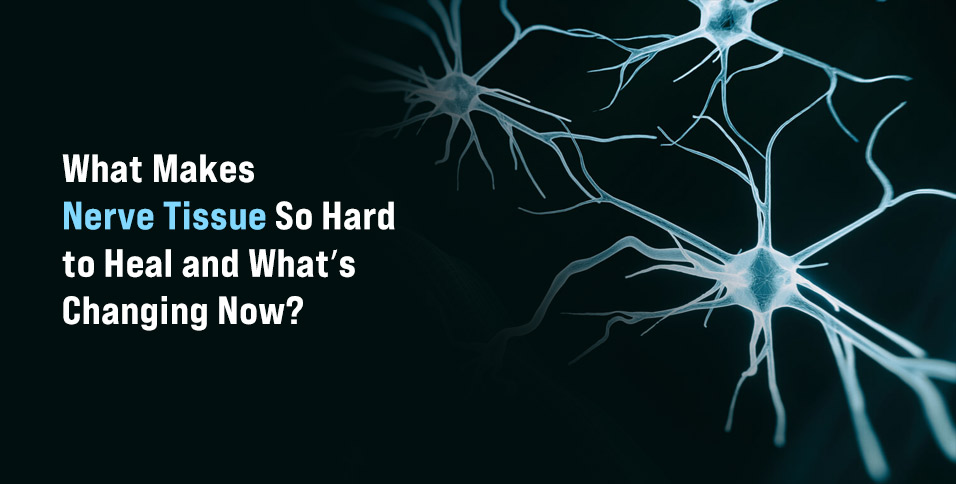
● Nerve cells have complex structures: Nerve cells, or neurons, are highly specialized and structured differently than most other cells in the body. They are made up of a cell body, an axon (which transmits signals), and branching dendrites. When an axon is damaged, the body not only has to regrow the nerve fiber but also connect it to the correct tissue. If this reconnection fails, symptoms like numbness or pain can persist.
● Poor blood flow in damaged areas: Healthy circulation is critical for healing, but many neuropathy conditions cause reduced blood flow to the small nerves in the hands and feet. Without adequate oxygen and nutrients, damaged nerve tissue struggles to regenerate.
● Chronic Inflammation: Ongoing inflammation can further damage nerve fibers and slows recovery. In conditions like autoimmune neuropathy, the body’s immune system mistakenly attacks nerve tissue, creating a destructive cycle that’s difficult to stop.
● Scar Tissue: After injury or surgery, scar tissue can form around nerves. This scar tissue may compress nerve fibers and interfere with signal transmission, preventing proper healing.
What’s Changing in Neuropathy
Nerve damage has long been thought to be relatively permanent, so traditional neuropathy treatments have focused on symptom control rather than nerve repair. However, advances in regenerative medicine are beginning to shift that perspective.
● Improved Understanding of Nerve Regeneration: Improved understanding of how nerves regrow and what factors stimulate or inhibit regeneration have led to therapies that are designed to enhance the body’s natural repair systems.
● Regenerative Medicine: Emerging regenerative approaches are meant to promote tissue repair and cellular healing rather than simply blocking pain signals. These therapies aim to improve blood flow, stimulate growth factors, and reduce inflammation – all of which support nerve healing.
● Focus on Microcirculation: New treatments emphasize restoring healthy microcirculation, which is the blood flow to the small vessels. Since peripheral neuropathy often starts in areas with the smallest blood vessels, improving circulation can increase a nerve’s healing potential.
● Personalized Treatment: Modern neuropathy is becoming more individualized. Instead of one-size-fits-all medication plans, providers conduct comprehensive evaluations to determine the severity of nerve damage, underlying causes, metabolic health, and inflammatory markers before determining a treatment plan.
The Future of Healing
If you’re living with neuropathy, it might help to speak with a qualified provider about newer treatment options. While severe nerve damage can still be difficult to reverse completely, the outlook is more promising than in years past. With advancements in regenerative therapies and a deeper understanding of nerve biology, many patients are not only experiencing better symptom control but in some cases, actual improvement.