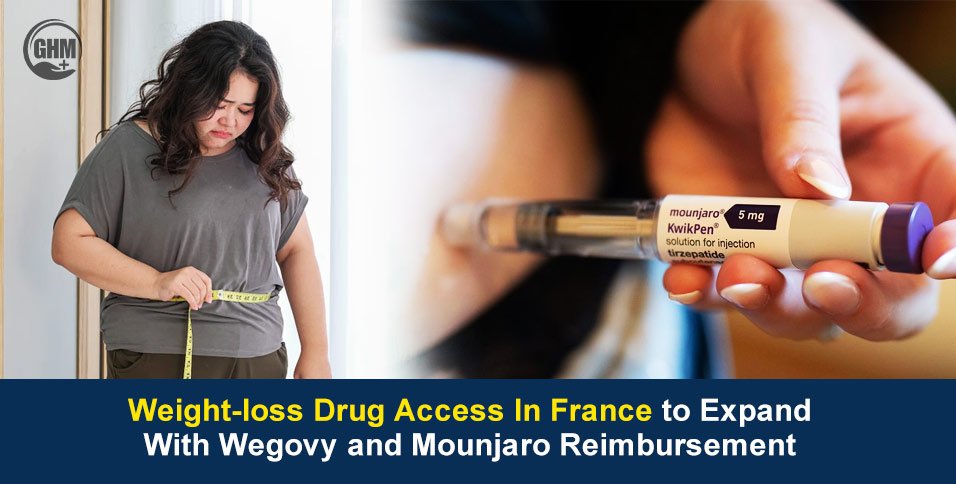
The French government announced plans to reimburse weight-loss medications for patients with severe obesity beginning in mid-June. The weight-loss drug access in France is expected to improve treatment affordability for thousands of patients struggling with obesity-related health conditions. Currently, patients in France pay close to €300 per month for the weight-loss medications, making access difficult for many families.
The reimbursement policy will apply to injectable anti-obesity medicines Wegovy and Mounjaro. The drugs, produced by Novo Nordisk and Eli Lilly, respectively, have become globally recognized for helping patients achieve significant weight loss. With this, France will be the first European country to reimburse weight-loss drugs.
The Wegovy and Mounjaro reimbursement announcement puts France among the growing number of countries increasing public support for obesity treatment as demand for newer injectable therapies rises globally.
Weight-Loss Drug Reimbursement In France Begins in Mid-June
French Health Minister Stéphanie Rist confirmed that the anti-obesity drug reimbursement framework is currently being finalized and is expected to take effect by mid-June.
Under the new Weight-Loss Drug Access Expansion policy in France:
- Eligible patients will receive 65% reimbursement through the national healthcare system.
- Many patients may ultimately receive full coverage because of existing obesity-related illnesses.
- Weight-loss drug prescriptions will remain subject to physician approval.
The French government estimates the weight-loss medications reimbursement program could eventually support nearly one million patients nationwide, costing the state approximately €100 million annually. However, officials believe the move could help reduce long-term healthcare costs.
The obesity advocate Anne-Sophie Joly said the policy is “excellent news” for patients who previously could not afford long-term obesity treatment.
Weight-loss drug access in France is being implemented at a time when healthcare systems across Europe are facing increasing pressure to address obesity as a major public health concern.
Who’s Eligible For French Weight-Loss Medication Access Policy?
The new reimbursement policy for Wegovy and Mounjaro specifically targets patients with severe obesity.
Under the new policy, Weight-loss drug access in France will apply to:
- Patients with a Body Mass Index (BMI) of 40 or higher
- Patients with a BMI of at least 35 who also have obesity-related health conditions, such as diabetes or hypertension
- Patients who have not achieved sufficient results through diet, exercise, and lifestyle changes
French health authorities also clarified that these medications are intended as second-line treatments. Patients are generally expected to first attempt weight management through nutrition changes, exercise, and lifestyle interventions before receiving drug therapy.
The reimbursement program follows lengthy pricing discussions with pharmaceutical companies. and favorable recommendations from France’s health authorities.
Global Demand for Weight-Loss Drugs Continues to Grow
France’s obesity medication access expansion reflects growing international recognition that obesity is a serious chronic disease rather than only a lifestyle issue. Clinical studies also have shown strong weight-loss results in eligible patients.
France’s obesity rate has become an increasingly important issue as it continues to rise nationwide. According to French public health data, around 18% of the country’s population is considered obese, representing nearly 10 million people.
The growing use of obesity drugs has also transformed the pharmaceutical industry globally.
Several other countries continue expanding access to obesity treatments. The UK recently announced broader preventive access to similar therapies through the NHS. Earlier this year, Canada approved a lower-cost alternative to Ozempic, another widely used GLP-1 medication.
At the same time, demand pressures have pushed governments and healthcare systems to reconsider affordability and insurance coverage.
Conclusion
Despite the optimism surrounding the announcement, experts continue to debate the long-term financial sustainability of widespread reimbursement programs.
Some healthcare analysts have also warned about possible supply shortages as demand for GLP-1 medications continues to rise globally. Several countries have already experienced temporary shortages because of increased prescriptions and growing consumer interest.
Still, public health experts argue that improving France’s weight-loss drug reimbursement policies may help reduce future healthcare burdens tied to obesity-related illnesses.
The expanded weight-loss drug access in France could influence future obesity treatment policies across Europe and strengthen discussions around equitable healthcare access for chronic disease management.