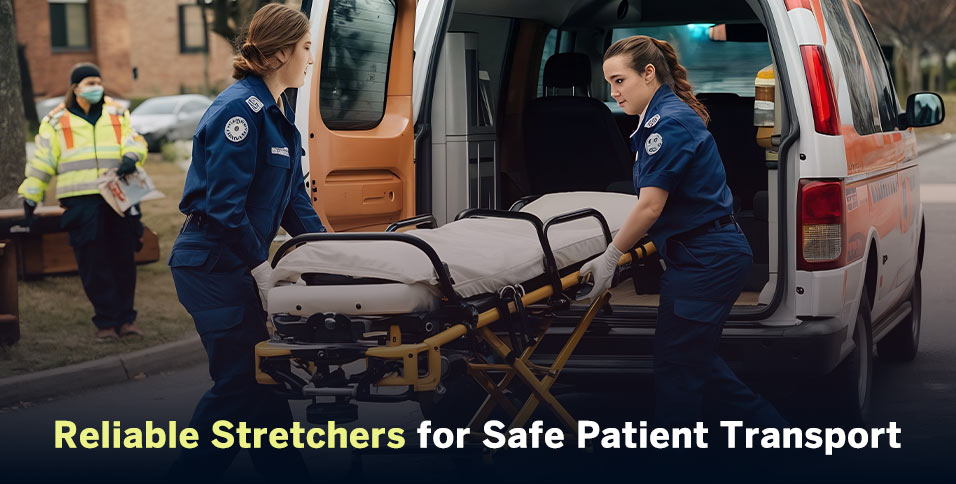
Selecting the right stretcher is a critical decision for any organization responsible for moving patients safely, from ambulance services and hospitals to event medical teams and home-care providers. Reliable options—such as stryker stretchers—for safe patient transport reduce risk, improve comfort, and lower staff injury rates. This 2026 practical guide walks through stretcher types, essential safety features, selection criteria by setting, maintenance best practices, useful accessories, and budgeting and regulatory considerations. It’s written to help procurement managers, clinic operators, EMS coordinators, and even affiliate marketers who recommend medical equipment make informed, defensible choices.
Types Of Stretchers And Where They Excel
Standard Transport Stretchers
Standard transport stretchers are the workhorses of medical facilities: simple frames, wheeled bases, and a mattress platform. They excel in routine intra-hospital transfers, ward to radiology, or surgical prep to recovery, because they’re cost-effective, durable, and easy to maneuver. When choosing a standard stretcher, decision-makers should prioritize mattress quality, side-rail design, and compatibility with hospital bed locks and imaging tables.
Emergency/EMS Stretchers
Emergency/EMS stretchers are engineered for speed, stability, and rugged use. They often feature foldable frames for ambulance loading, five-point restraints, and shock-absorbing mechanisms. These stretchers matter when seconds count: extrication from scene, highway accidents, or multi-victim incidents. Agencies should weigh weight (lighter units reduce crew strain), compatibility with ambulance mounting systems, and rapid-locking mechanisms.
Powered/Hydraulic And Electric Stretchers
Powered and hydraulic models raise and lower patients with minimal physical effort, lowering caregiver injury rates and enabling precise height adjustments for safe transfers. Electric stretchers increasingly offer battery-backed operation, programmable positions, and remote controls. They’re ideal for high-volume emergency departments and hospitals focused on ergonomics. Procurement teams should confirm battery runtime, maintenance requirements, and emergency manual override features.
Scoop, Stretcher Chairs, And Specialty Designs
Scoop stretchers split longitudinally to minimize spinal movement during loading: stretcher chairs convert to seated position for bariatric or respiratory-compromised patients: specialty designs include pediatric, bariatric, and MRI‑compatible stretchers. These niche options serve specific clinical needs, trauma centers may stock scoop stretchers, while long-term care facilities prioritize bariatric or tilt functionality. Organizations should map patient demographics and clinical scenarios before investing in specialty units.
Critical Safety Features To Look For
Restraints, Side Rails, And Patient Security
Secure restraints and well-designed side rails prevent falls and protect patients during transport. Five-point harnesses are standard in EMS: adjustable straps that reduce shear and pressure points are better for long transfers. Side rails should lock solidly yet fold away easily for procedures. Evaluators should test restraint ergonomics on varied body types and check whether rails meet applicable safety standards.
Braking, Locking Casters, And Maneuverability
Reliable brakes and locking casters are non-negotiable. Dual-action brakes that immobilize both wheels and swivel mechanism improve safety during loading and bedside transfers. Maneuverability depends on caster size, bearing quality, and frame geometry, wider wheelbases increase stability while tighter turning radiuses aid corridor navigation. Facilities with narrow hallways should prioritize agile designs.
Weight Capacity, Stability, And Center Of Gravity
Stretcher rating must exceed the facility’s heaviest expected patient plus any adjunct equipment. Stability is a function of frame geometry and center of gravity, low-center-of-gravity chassis resist tipping during elevation or lateral transfer. For bariatric units, reinforced frames and wider platforms reduce failure risk. Purchasing teams should request load-testing documentation and, where possible, witness live demonstrations.
Pressure Relief, Surface Materials, And Infection Control
Mattresses and cover materials influence both pressure ulcer prevention and infection control. Pressure-relief foam or alternating-pressure options reduce risk for long transports. Vinyl covers with sealed seams simplify cleaning: antimicrobial-treated surfaces add protection but don’t replace proper disinfection protocols. When comparing models, inspect seams, fasteners, and how easily covers can be replaced or reconditioned.
How To Choose A Stretcher For Your Setting
Ambulance And EMS Use Cases
EMS operators need lightweight but durable stretchers with fast-loading features and secure ambulance mounts. Battery-assisted raise/lower systems reduce crew injuries. Compatibility with patient monitoring and oxygen mounts matters in advanced life support units. Procurement should verify that the stretcher pairs with existing mounting systems or budget for adapters.
Hospital Wards, Imaging, And Surgical Support
Hospitals require modularity: stretchers that integrate with imaging suites and OR workflows, with radiolucent surfaces for imaging and removable components for sterilization. Height-adjustable powered models improve transfer ergonomics in surgical settings. Facilities may standardize on one or two stretcher models to streamline staff training and spare-part inventories.
Events, Evacuations, And Temporary Medical Stations
Event medical teams and disaster response units value portability, rapid-deploy designs, and ruggedness. Lightweight folding stretchers and scoop options are useful in mass-gathering triage and evacuation scenarios. Planners should consider stackability, transport volume, and whether stretchers are compatible with volunteer-staffed operations.
Home Care And Long‑Distance Transport Considerations
Home-care and interfacility transfers require patient comfort and adaptability. Lower-profile frames ease home transfers: battery life and portability matter for long distances. Consider mattress comfort, transfer aids, and whether the stretcher fits through typical residential doorways. For agencies offering transport services, warranty and serviceability become key operational concerns.
Maintenance, Inspection, And Lifespan Best Practices
Daily Preuse Checks And Simple Field Inspections
Daily checks catch small issues before they become safety hazards. Staff should inspect brakes, casters, restraints, frame integrity, and mattress condition before each use. A quick checklist, visual frame check, caster spin test, restraint function test, and mattress seam inspection, takes minutes but prevents incidents.
Scheduled Servicing, Repairs, And Parts Management
Adopt a scheduled servicing cadence based on manufacturer guidance and clinical intensity, quarterly for high-use EMS units, semiannual for ward stretchers. Keep a small inventory of common parts (casters, straps, batteries) and a documented repair workflow to minimize downtime. For agencies and facilities, a dedicated asset register with service histories improves budgeting and audit readiness.
Cleaning, Disinfection, And Infection Prevention Protocols
Establish written cleaning protocols aligned with local infection-control policies and manufacturer recommendations. Use EPA-registered disinfectants where required, and ensure cleaning staff understand which solutions can damage foam or electronic components. Track mattress cover replacements and consider mattress encasements for populations at high risk for pressure injuries.
Accessories, Compatibility, And Practical Add‑Ons
Mattresses, Sheets, And Pressure‑Relief Devices
Mattress selection often determines patient outcomes in prolonged transfers. Memory-foam overlays, alternating-pressure pads, and low-shear covers add therapeutic value. Healthcare purchasers should check mattress dimensions against stretcher platforms and confirm replacement schedules: aftermarket options can extend lifespan while improving comfort.
Mounting Systems, Stretcher Carts, And Ambulance Locks
Secure mounting systems reduce in-transit incidents. Ambulance locks must be compatible with the stretcher model: some agencies benefit from universal adapter plates when their fleet includes mixed stretcher brands. Stretcher caddies and carts speed storage and movement within facilities, evaluate footprint, lockability, and stacking compatibility.
Transfer Aids, Head Immobilizers, And Patient Comfort Items
Transfer boards, slide sheets, and transfer belts reduce caregiver strain and improve patient safety during lateral moves. Head immobilizers, vacuum splints, and redundant padding are essential in trauma care. Comfort items, adjustable pillows, temperature blankets, or noise-reducing covers, improve patient experience without adding safety risk when chosen correctly.
Budgeting, Warranty, And Regulatory Considerations
Cost Vs. Value: Total Cost Of Ownership And Refurbishment Options
Initial price is only part of the equation. Total cost of ownership (TCO) includes maintenance, parts, training, and downtime. Refurbished stretchers can offer savings but demand careful vetting: verify refurbishment standards, replacement parts, and remaining useful life. Decision-makers should run a simple TCO model over expected service life to compare options objectively.
Warranties, Service Contracts, And Trade‑In Programs
Robust warranties and available service contracts reduce unexpected costs. Some manufacturers offer trade-in programs to offset upgrades, useful for scaling agencies or hospital systems modernizing fleets. When evaluating service contracts, check response times, included parts, and whether loaner units are provided during repairs.
Standards, Certifications, And Compliance To Verify
Confirm compliance with relevant standards, ANSI, ISO, FDA guidance for medical devices, and local EMS equipment regulations. Certification often signals that the manufacturer follows repeatable quality processes. For facilities subject to audits, keep documentation of compliance, load tests, and maintenance logs readily accessible.
Conclusion
Choosing reliable stretchers for safe patient transport requires balancing clinical needs, ergonomics, and total cost of ownership. Organizations should match stretcher types to their operational contexts, EMS, hospital, event medicine, or home care, while insisting on essential safety features such as secure restraints, dependable brakes, adequate weight capacity, and infection-control-friendly surfaces. Ongoing maintenance, clear cleaning protocols, and thoughtful accessory selection extend service life and protect both patients and staff.
For procurement teams and affiliate marketers advising clients, sound recommendations rest on documented performance (load tests, certifications), warranty and service provisions, and a realistic TCO analysis. In a sector where safety is measurable, due diligence and evidence-based selection convert equipment purchases into tangible risk reduction and operational resilience.