According to the American Association of Orthodontists, nearly 4.5 million Americans currently wear braces or aligners, with adult treatment increasing by 40% over the past decade. This surge reflects not just changing social attitudes about orthodontic treatment, but also dramatic advances in aligner technology that have fundamentally altered the treatment landscape. What once seemed like a straightforward choice between metal brackets and clear plastic has evolved into a complex decision involving treatment precision, lifestyle compatibility, and long-term outcomes.
The stakes aren’t trivial. Beyond the obvious aesthetic considerations, choosing the wrong treatment approach can mean extended timelines, compromised results, or thousands of dollars in additional costs. As orthodontic practices increasingly offer hybrid approaches and new aligner systems enter the market, patients face more options than ever — but also more confusion about which path leads to the best outcome for their specific situation.
Understanding how these treatments actually work, what research reveals about their effectiveness, and how they impact daily life provides the foundation for making an informed choice that aligns with both your orthodontic needs and your lifestyle realities.
How Do Braces and Aligners Work Differently?
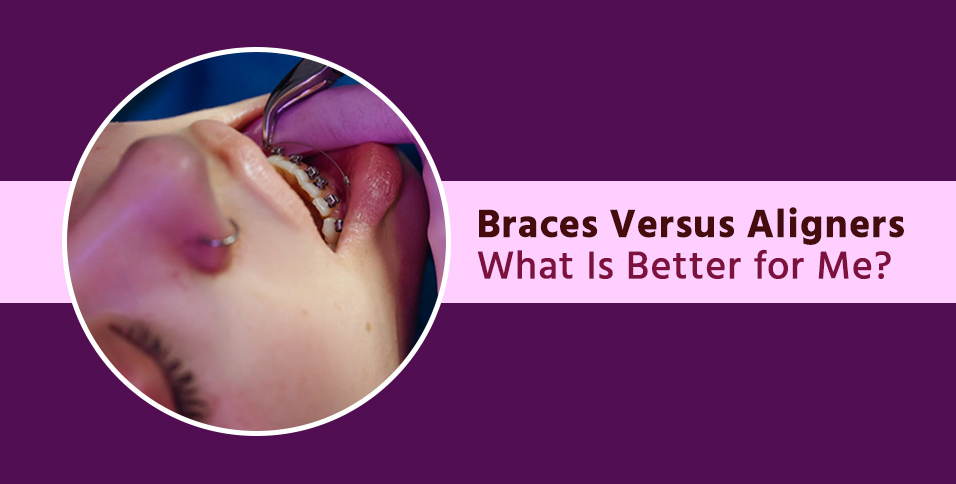
The fundamental difference between braces and aligners lies in how they apply force to move teeth. Traditional braces use a system of brackets bonded to each tooth, connected by an archwire that creates continuous, consistent pressure. The orthodontist adjusts this wire tension during regular appointments, gradually guiding teeth into their target positions through controlled mechanical force.
This constant pressure system excels at complex movements. Braces can rotate stubborn teeth, close significant gaps, and address severe bite issues because the force never stops working. The brackets act as anchor points, allowing orthodontists to apply different types of pressure to individual teeth simultaneously. When a canine needs to rotate while molars shift backward, braces can orchestrate these multiple movements with precision.
Aligners operate through staged progression instead of continuous force. Each set of clear plastic trays applies gentle pressure for approximately two weeks before being replaced by the next stage. The treatment relies on incremental movements — typically 0.25 millimeters per aligner — building toward the final result through dozens of carefully planned steps.
The aligner approach works best for moderate corrections where teeth need to move along relatively predictable paths. Each tray pushes specific teeth slightly closer to their target position, but the force diminishes as teeth adapt to each stage. This intermittent pressure system struggles with complex rotations or movements that require sustained force over extended periods.
Modern aligner systems incorporate attachment points — small, tooth-colored bumps bonded to certain teeth — to improve grip and control. These attachments help aligners achieve movements that were previously impossible with smooth plastic alone, though they still can’t match the mechanical advantage of traditional brackets for the most challenging cases.
What Are the Pros and Cons of Braces and Aligners?
Appearance and Comfort Considerations
The visibility factor often dominates initial treatment decisions, but the reality proves more nuanced than most patients expect. Traditional metal braces remain the most noticeable option, though modern brackets are significantly smaller than their predecessors. Ceramic braces offer tooth-colored brackets that blend more naturally, while lingual braces attach to the back surfaces of teeth for complete invisibility from the front.
Aligners provide near-invisibility during wear, making them popular among adults and image-conscious teenagers. However, this advantage comes with daily management requirements that many patients underestimate. Aligners must be removed for eating and drinking anything other than water, creating 4-6 removal and cleaning cycles per day. The attachments required for complex movements can also be visible, particularly on front teeth.
Comfort patterns differ significantly between the two approaches. Braces typically cause more discomfort during the first week and after each adjustment, as the constant pressure can create soreness that gradually subsides. Once patients adapt, however, braces become largely forgettable between appointments.
Aligners create a different comfort profile. Each new tray causes 2-3 days of pressure and tightness, but the discomfort is generally milder and shorter-lived than braces adjustments. The plastic edges can initially irritate the tongue and inner lips, though most patients adapt within a few days. Speech may be temporarily affected with new trays, particularly with certain sounds like “s” and “th.”
Effectiveness and Suitability for Different Cases
Treatment effectiveness depends heavily on the complexity of the orthodontic issues involved. Braces excel at comprehensive corrections, including severe crowding, significant bite problems, and complex tooth rotations. The continuous force system can address multiple issues simultaneously, making braces the gold standard for challenging cases that require precise control over tooth movement.
Research consistently shows that braces achieve more predictable results for complex treatments. When multiple teeth need extensive movement or when jaw alignment requires correction, the mechanical advantages of brackets and wires provide orthodontists with superior control over the treatment outcome.
Aligners perform exceptionally well for mild to moderate cases, particularly those involving spacing issues, minor crowding, or teeth that need to move along relatively straight paths. Modern aligner systems have expanded their capabilities significantly, with some now successfully treating cases that would have required braces just a few years ago.
However, aligners face limitations with complex rotations, severe crowding, and significant vertical movements. Cases requiring tooth extraction often exceed aligner capabilities, as do treatments involving major bite corrections or jaw repositioning. The success of aligner treatment also depends heavily on patient compliance — wearing trays for the prescribed 20-22 hours daily is non-negotiable for achieving predicted results.
Age factors into effectiveness as well. Adult teeth move more slowly and predictably than teenage teeth, making aligners more suitable for mature patients. Teenagers benefit from the continuous pressure of braces during their peak growth periods, though newer aligner systems designed specifically for teens show promising results for appropriate cases.
How Do Treatment Plans and Timelines Compare?
Treatment duration varies significantly based on case complexity, but general patterns emerge between the two approaches. Traditional braces typically require 18-24 months for comprehensive treatment, with adjustments every 4-6 weeks. Complex cases involving extractions or significant bite corrections may extend to 30 months or longer.
The braces timeline follows a predictable pattern: initial placement, regular adjustment appointments, and final removal followed by retainer fitting. Each adjustment builds on previous progress, with the orthodontist fine-tuning wire tension and bracket positioning to maintain steady progress toward treatment goals.
Aligner treatment often promises shorter timelines — frequently 12-18 months for suitable cases — but this depends entirely on patient compliance and case complexity. The structured progression through predetermined stages can accelerate treatment when patients consistently wear their aligners as prescribed.
The aligner timeline involves more frequent changes but fewer office visits. Patients typically receive several sets of aligners at once, changing them every 1-2 weeks at home. Check-up appointments occur every 6-8 weeks to monitor progress and receive the next batch of trays. This schedule offers more flexibility for busy adults but requires greater self-discipline to maintain progress.
Treatment planning differences significantly impact the patient experience. Braces treatment plans evolve throughout the process, with orthodontists making real-time adjustments based on how teeth respond. This adaptability allows for course corrections but can extend treatment timelines when unexpected complications arise.
Aligner treatment planning relies heavily on computer modeling and 3D projections completed before treatment begins. Patients often see virtual representations of their expected results, which provides motivation but limits flexibility if teeth don’t move exactly as predicted. Mid-treatment refinements may require new scans and additional aligner sets, potentially extending timelines beyond initial estimates.
Emergency appointments also differ between the two systems. Broken brackets or poking wires require immediate orthodontic attention and can interrupt treatment progress. Lost or damaged aligners typically cause shorter delays, as replacement trays can often be fabricated quickly or patients can move to their next scheduled set.
What Does Research and Patient Experience Reveal About Outcomes?
Clinical studies consistently demonstrate that both treatment methods achieve excellent results when properly applied to appropriate cases. A comprehensive review published in the Journal of Clinical Orthodontics found that traditional braces maintain a slight advantage in treatment precision, particularly for complex cases requiring significant tooth movement or bite correction.
Long-term stability data reveals interesting patterns. The American Journal of Orthodontics published research showing that both systems achieve similar retention rates when patients comply with post-treatment retainer protocols. However, the study noted that patients who underwent comprehensive braces treatment showed slightly better long-term alignment stability, possibly due to the more extensive root movement achieved during active treatment.
Patient satisfaction surveys reveal that treatment experience preferences vary significantly based on lifestyle factors and age demographics. Adults consistently report higher satisfaction with aligners due to the aesthetic advantages and flexibility, while teenagers show mixed preferences depending on their social environment and compliance abilities.
Real-world compliance data provides crucial insights into treatment success. Research from orthodontic practices shows that aligner compliance averages 85-90% of prescribed wear time, even among highly motivated patients. This compliance gap can extend treatment timelines and occasionally requires switching to braces to achieve optimal results.
Patient testimonials highlight the lifestyle integration aspects that clinical studies often overlook. Adults frequently emphasize the professional advantages of aligners, particularly in client-facing careers where appearance matters. However, many also report underestimating the daily management requirements and the discipline needed to maintain consistent wear schedules.
For families seeking family orthodontic services, understanding these real-world experiences becomes particularly valuable when multiple family members need treatment simultaneously. Parents often choose different approaches for different children based on age, compliance patterns, and specific orthodontic needs.
Treatment outcome predictability also differs between the systems. Orthodontists report that braces allow for more real-time adjustments when teeth don’t respond as expected, while aligner treatment requires more precise initial planning and may need refinement phases if results deviate from computer projections.
What Are Key Maintenance and Aftercare Practices?
Daily care routines differ substantially between braces and aligners, impacting both oral health and treatment success. Braces require modified oral hygiene protocols that many patients initially find challenging. Food particles trap easily around brackets and wires, making thorough cleaning essential to prevent cavities and gum inflammation during treatment.
The recommended braces care routine involves brushing after every meal with fluoride toothpaste, using interdental brushes or floss threaders to clean between wires, and rinsing with antimicrobial mouthwash. Water flossers provide excellent supplemental cleaning for braces wearers, particularly for removing food particles from hard-to-reach areas.
Dietary restrictions accompany braces treatment to prevent damage to the orthodontic hardware. Hard, sticky, or chewy foods can break brackets or bend wires, potentially extending treatment time. Patients learn to avoid popcorn, hard candies, gum, and tough meats, while cutting foods like apples and corn into smaller pieces.
Aligner maintenance focuses on cleanliness and compliance rather than dietary restrictions. Since aligners are removed for eating, patients can enjoy their normal diet without food limitations. However, aligners require cleaning after each meal before reinsertion to prevent bacteria buildup and staining.
The recommended aligner care routine involves rinsing aligners with lukewarm water, brushing them gently with a soft toothbrush, and soaking them in cleaning solution as directed. Patients must also maintain excellent oral hygiene since trapped bacteria between dirty teeth and aligners can cause rapid tooth decay.
Post-treatment retention protocols are crucial for both systems but require different approaches. Braces patients typically receive both removable retainers for nighttime wear and sometimes permanent retainers bonded behind the teeth. The transition to retainers can feel dramatic after months of constant pressure from braces.
Aligner patients often find the retention phase easier since they’re already accustomed to wearing removable appliances. Many orthodontists recommend part-time aligner wear as the initial retention phase before transitioning to traditional retainers.
Long-term success depends heavily on patient education about retention. Research shows that teeth have a lifelong tendency to shift, making permanent retainer protocols essential regardless of the initial treatment method chosen. The investment in orthodontic treatment—whether braces or aligners—requires ongoing commitment to maintain results over decades.
Understanding these maintenance realities helps patients make informed decisions based not just on treatment preferences, but on their ability to maintain the daily routines that ensure successful outcomes long after active treatment ends.