Medical progress often begins with someone noticing that the pace of discovery in one field has slowed while the rest of science races ahead. In the early years of modern imaging and minimally invasive treatment, a few physicians began to ask whether radiology could do more than diagnose disease.
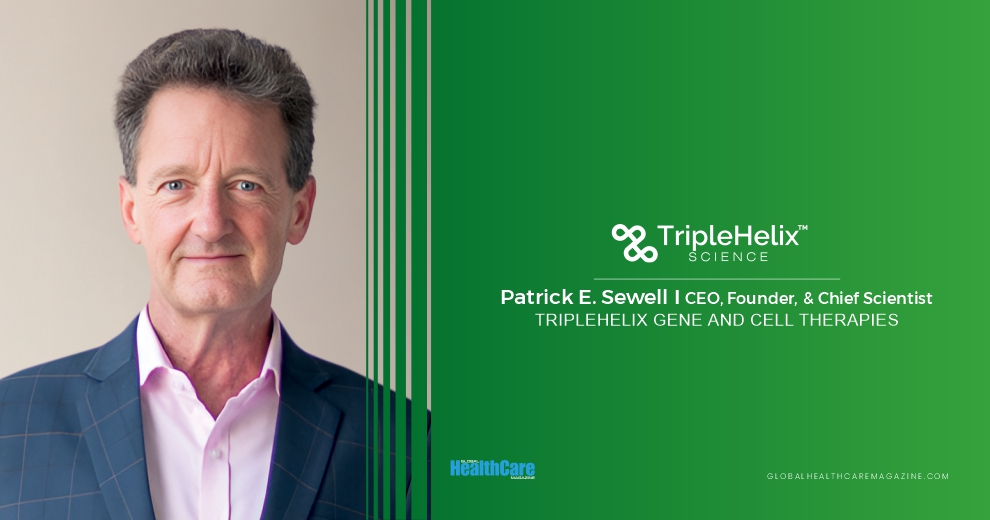
Dr. Patrick E. Sewell, CEO, Founder, and Chief Scientist at TripleHelix Gene and Cell Therapies, was among those physicians who expanded the role of interventional radiology from mere observation to active cancer treatment.
After completing thirteen years of postgraduate training, Dr. Sewell found himself looking closely at the research landscape within his university. While other scientific fields seemed to move quickly, parts of medicine felt stuck in place. Rather than accept that gap, he began to explore ideas that many colleagues initially considered improbable. With the support of a dean and department chair who were willing to entertain unconventional thinking, he secured funding and began building working prototypes for new cryotherapy and radiofrequency technologies designed to destroy diseased tissue.
Those early experiments soon moved from concept to operating room. By combining newly designed ablation tools with advanced radiologic imaging and intervention skills, Dr. Sewell performed the world’s first percutaneous renal and uterine cancer cryoablations, followed by the first radiofrequency ablation for lung cancer. The work opened new possibilities for treating tumors without traditional surgery and marked the beginning of a career shaped by medical, surgical, and scientific innovation.
A Sense of Obligation to Rethink Cancer Care
Innovation in medicine often begins with a simple but difficult question. Why continue using a method that causes great harm if better tools already exist? That question stayed with Dr. Sewell as he treated cancer patients during the early years of his career.
Support from university leadership gave him room to experiment, but the deeper motivation came from what he saw in daily practice. Many cancer therapies offered limited success and left patients with severe, life-changing side effects. In many cases, treatment still meant removing entire organs or body parts with a surgical knife. As Dr. Sewell recalls, “We were still taking a crude knife and cutting off body parts when the science already existed to achieve the same or better results with precision imaging and ablative technology.”
Precision imaging and targeted ablation offered a different path. Instead of a large surgical removal, tumors could be destroyed directly while preserving surrounding tissue. Dr. Sewell believed physicians had a duty to pursue that possibility. In his view, adopting these tools was not just innovation. It was a responsibility to patients who deserved safer and more effective options.
Seeing the Next Step in Cancer Science
Progress in cancer treatment rarely comes from a single discovery. It often grows from the moment when different scientific fields begin to connect. By the time Dr. Sewell had spent years advancing image-guided therapies, another shift in medicine was becoming clear.
Genetic diagnostics had quietly matured. Tests that once offered only academic insight were now producing precise, actionable information about how tumors behaved at a molecular level. Yet much of oncology had not caught up to that change. Doctors could identify genetic signals inside a tumor, but the tools to act on that information were still limited.
That gap led to the creation of Triple Helix Gene and Cell Therapies. Dr. Sewell believed the next logical step was to build technologies that could translate genetic insight into treatment. The goal was straightforward. If medicine could read the genetic instructions driving a disease, it should also be able to intervene at that level. To Dr. Sewell, this was not a leap into the unknown. It was the natural direction of evolving science.
A Strategy Built on Multiple Fronts
Medical research often asks scientists to narrow their focus. Dr. Sewell chose a different path. Rather than concentrate on a single disease area, he explored a wide range of conditions, from cancer and regenerative medicine to neurodegenerative disorders, metabolic health, and longevity.
That approach grew from a principle long discussed in oncology. When confronting cancer, physicians often say to “throw the kitchen sink at it.” The idea is not about desperation. It reflects the nature of the disease itself. Cancer is highly adaptive. If treatment attacks only one pathway, the disease often finds another route to survive.
Dr. Sewell applied that same thinking to research and development. Instead of limiting exploration, he pursued multiple scientific directions at once. Each area offered a different pressure point where disease might be interrupted or reversed.
The strategy recognizes a simple reality. Complex illnesses rarely yield to a single solution. Progress often comes from approaching them from many angles at the same time.
Challenging the Idea of “Untreatable”
The word untreatable carries heavy weight in the field of oncology. Patients usually hear it after standard therapies have failed and available options begin to narrow. Dr. Sewell views the term differently. To him, it rarely describes the nature of the cancer itself. More often, it reflects the limits of existing technology and scientific understanding.
Throughout his career, he has believed that each generation of medicine improves the odds by introducing more precise and sophisticated tools. Gene therapy represents one of those steps forward. Instead of relying only on surgery, radiation, or systemic drugs, physicians can begin to intervene at the genetic level where disease begins.
Dr. Sewell’s work follows that same tradition of building on earlier breakthroughs. Several patients who arrived with cancers labeled incurable were treated using approaches he developed when existing methods fell short. In those cases, the label did not define the disease. It simply meant medicine had not yet found the right method to confront it.
Connecting the Biology Behind Advanced Therapies
Modern regenerative treatments can appear unrelated at first glance. Gene therapy, stem cells, platelet-rich plasma, peptides, and interventional procedures are often discussed as separate tools. Dr. Sewell sees them differently. In his view, they all operate along the same biological spectrum.
At the center of that spectrum lies genetics. Genes shape how cells function by directing metabolic and enzymatic activity inside the body. Gene therapy works at the most upstream level of this process by influencing the genetic instructions that guide cellular behavior. Other treatments act further along the same pathways. Stem cells support tissue repair, PRP delivers growth signals, and peptides influence cellular communication.
Although these approaches target different stages of cellular biology, they remain closely connected. Each one interacts with the same system of genetic instructions and biological responses. Dr. Sewell often points to simple examples. Even the likelihood of catching a cold is partly genetic because immune function is shaped by inherited traits. As scientific knowledge expands, the link between genetics and treatment continues to grow clearer.
The Hardest Barrier to Medical Progress
New medical technologies face technical hurdles. Surprisingly, Dr. Sewell says the greatest challenge has rarely been science itself. In many cases, the larger obstacle has been human resistance to change.
Medicine is a profession built on expertise and long years of training. Physicians spend decades mastering established methods. When new ideas appear, especially those that challenge familiar practices, they can create discomfort. Many people prefer certainty over the unknown, and experimental approaches can feel unsettling even when the science is promising.
Dr. Sewell has seen this pattern repeat throughout his career. Some opposition comes from concern for patient safety, which is an essential part of responsible medicine. Yet resistance can also come from professional pride or fear of losing authority in a field where reputations have been carefully built.
For Dr. Sewell, the tension highlights a deeper issue within medical culture. Progress often asks people to question what they already know. Accepting that challenge is rarely easy, even within science.
Building a Global Practice Without Losing Precision
Delivering advanced therapies across several countries requires careful coordination. Distance, however, has never been the defining challenge for Dr. Sewell. Modern communication systems and remote medical infrastructure allow him to stay closely connected with his teams and patients regardless of location.
Secure digital platforms and shared servers make it possible to review data, imaging, and treatment plans from almost anywhere in the world. When physical presence is necessary, Dr. Sewell travels to the location where the work must be done. Flights often become working hours, allowing him to remain engaged with ongoing research and patient care while moving between continents.
A strong global team plays an equally important role. Colleagues based across multiple regions help maintain consistent standards of safety and quality. Their dedication allows complex treatments to operate smoothly in different healthcare environments.
Personal support also shapes this demanding routine. Dr. Sewell’s wife travels with him on every trip, turning a rigorous international schedule into a life that, for now, works remarkably well.
A Commitment That Rarely Switches Off
Balancing clinical work with the responsibilities of leading a global biotechnology company is not simple. Dr. Sewell approaches it with a clear personal rule: If the work matters, it deserves full commitment.
For him, that commitment means treating the role as a constant responsibility rather than a traditional schedule. Patient care, research decisions, and organizational leadership often unfold at the same time. Opportunities to advance treatment or respond to a patient’s condition do not follow office hours, and Dr. Sewell believes those moments cannot be ignored.
The reasoning behind this approach is deeply practical. A single day can sometimes determine whether a patient receives a treatment that may change the course of their illness. Missing that window is something he finds difficult to accept.
At the same time, endurance requires balance. Rest becomes necessary when the pace becomes unsustainable. Dr. Sewell’s method is simple. Work with full focus, step back briefly to recover, and then return to the task.
Navigating the Ethics of Emerging Therapies
Advances in gene therapy and longevity science bring ethical debate along with scientific progress. Dr. Sewell recognizes that these concerns are complex and rarely fit into simple categories.
Some medical situations make the value of these therapies clear. In cases involving severe illness or limited treatment options, the potential benefit is widely accepted. Other scenarios raise more difficult questions. Many fall somewhere in between, where careful judgment and individual evaluation become necessary.
Public concerns often reflect broader anxieties about new technologies. People worry about creating unfair advantages, widening gaps between wealthy and underserved populations, or crossing boundaries that feel unnatural. Religious and cultural perspectives also shape how these treatments are viewed.
Dr. Sewell believes these debates are part of the natural evolution of medicine. Society has faced similar discussions before. Elective procedures, such as cosmetic surgery, for example, operate largely on personal choice rather than medical necessity. Over time, he expects emerging therapies to find their place in a similar way as both science and public understanding mature.
Preparing for the Next Phase of Cancer Treatment
The next decade may bring a noticeable shift in how cancer is treated. Advances in genetic science are already revealing that the behavior of a tumor is largely defined by its genetic structure. Those genetic signals influence how a cancer responds to chemotherapy, radiation, and immunotherapy.
Dr. Sewell expects gene therapy to become one of the most influential tools in oncology as these insights mature. By altering the genetic instructions inside a tumor, physicians may be able to make existing treatments far more effective. This approach could shorten treatment cycles, lower overall costs, and improve the likelihood of destroying cancer cells.
His organization is preparing for that future by continuing to develop therapies that target cancer at the genetic level while also supporting traditional treatments. As Dr. Sewell explains, “The gene therapies themselves kill cancer, but for now it will still be a kitchen sink approach.” In the years ahead, combining genetic intervention with established therapies may reshape how oncologists fight the disease.
A Philosophy Grounded in Purpose
For those entering medicine, research, or biotechnology today, Dr. Sewell believes the most important decision is not which field to choose but why one chooses it. Careers built around curiosity and service tend to endure far longer than those driven by recognition or financial reward.
Scientific progress often begins with individuals willing to follow difficult ideas. Young physicians and researchers who pursue knowledge with persistence may find themselves contributing to discoveries that change how diseases are treated. Dr. Sewell believes that the possibility alone makes the journey worthwhile.
He often emphasizes that fulfillment in medicine rarely comes from prestige. Titles, influence, and financial success can arrive over time, but they offer little satisfaction if they become the primary goal. A career shaped only by status often leaves people disconnected from the reason they entered the profession in the first place.
Instead, Dr. Sewell encourages the next generation to pursue science with integrity and with the intention of helping others. In the long run, purpose tends to outlast recognition.
Quotes

Also Read: The Most Visionary Healthcare CEOs of 2026