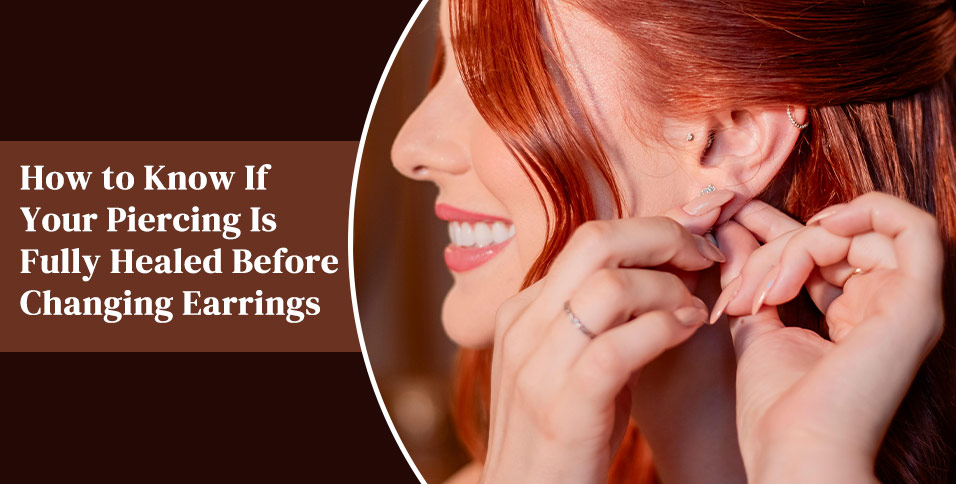
Changing earrings too soon is the fastest way to turn a smooth healing process into an irritated, angry piercing. Even if it looks fine, swapping jewelry too early can reopen the channel, invite bacteria, and set you back weeks.
For an earlobe piercing, you want zero redness, swelling, tenderness, or discharge, and little to no crusting. The skin around the hole should look and feel like the skin next to it, not “new” or fragile.
Pay attention to how the jewelry behaves, too. If it slides and rotates gently with no tightness, pulling, or sting, that’s a strong sign things are on track. Cartilage piercings take much longer, but the standard is the same: no symptoms and no resistance before you change anything.
One key reminder: feeling better is not the same as being fully healed. The outside can look calm while the inside is still repairing. If you’re unsure, wait a bit longer or have a professional piercer check it.
Signs Your Piercing Is Ready for a Jewelry Change
Before diving into timelines and healing stages, it helps to know exactly what to look for when assessing your piercing at home. The following signs generally indicate that a piercing has healed enough to consider a jewelry change:
- No redness, swelling, tenderness, or discharge around the site
- Little to no crusting, with skin that looks similar to the surrounding tissue
- Jewelry that moves gently through the piercing without pain or resistance
That said, “better” is not the same as fully healed. A piercing can feel comfortable and look calm while the internal channel is still repairing. If anything feels uncertain, waiting a few more days or checking with a professional piercer is always the right move.
Healing Time Depends on Where the Piercing Is
Not all piercings heal at the same pace, and assuming they do is one of the most common reasons people change jewelry too early. The type of piercing, more than anything else, determines how long the process actually takes.
Typical Timeline for Earlobe Piercings
Earlobe piercings heal faster than most, typically between 6 and 8 weeks under consistent aftercare. The lobe is made of soft, fatty tissue with good blood flow, which supports faster cell repair compared to other areas.
That said, the surface can appear calm and pain-free while the inner tissue is still closing. Reduced swelling and the absence of discharge are encouraging signs, but they do not confirm that the channel is fully stabilized. According to Cleveland Clinic guidance on ear piercing healing times, even piercings that look healed externally may still need additional time before jewelry changes are safe.
Why Cartilage Piercings Take Much Longer
Cartilage piercings operate under different biological conditions. Cartilage has limited blood supply, which slows the delivery of nutrients and repair cells to the wound site. A helix piercing, one of the most popular cartilage placements, can take anywhere from six months to over a year to fully heal.
Swelling in cartilage also tends to linger longer and can be subtle, making it easy to underestimate how much healing is still underway. For anyone who loves ear accessories and fashion jewelry, including those with sensitive ears who rely on hypoallergenic options, understanding when you can safely change your earrings after a piercing is especially important here, since the margin for error with cartilage is narrower than with lobes.
Patience with cartilage is not overcaution. It is simply what the tissue requires.
What Normal Healing Looks Like at Each Stage
Healing does not happen all at once, and recognizing which stage a piercing is in helps avoid misreading normal symptoms as problems. Even more importantly, it prevents the opposite mistake: assuming everything is fine before the tissue has actually finished repairing.
Early Healing Can Still Look Irritated
In the first few weeks, some redness, swelling, and tenderness around the piercing site is completely expected. This is the body’s inflammatory response at work, signaling that tissue repair has begun rather than that something is wrong.
Light crusting around the jewelry is also normal during this phase. It forms as lymph fluid dries at the surface and is not the same as infected discharge. Gentle aftercare during this stage matters more than appearance, since the wound is still open and vulnerable to disruption.
Late Healing Looks Calm but May Not Be Finished
As healing time progresses, the visible symptoms settle. Redness fades, swelling resolves, and tenderness becomes difficult to notice day to day. This is where many people assume the piercing is done, and where premature jewelry change most commonly happens.
The outer skin can close and look completely normal while the channel running through the tissue is still fragile and unfinished. Full maturation of that internal layer takes considerably longer than surface recovery suggests.
Connecting this back to the decision around jewelry change: a calm appearance is a positive sign, but it is one part of a fuller picture, not the final answer on its own.
Not Healed Yet or Actually Infected?
Knowing the difference between a piercing that is still healing and one that may be infected is essential before making any decision about changing jewelry. The two can look similar at first glance, but they follow very different paths.
Normal healing involves mild tenderness, light crusting, and occasional sensitivity, especially in the weeks immediately following the piercing. These symptoms gradually improve over time. Infection, by contrast, tends to worsen rather than settle.
Warning signs worth paying attention to include:
- Redness that spreads beyond the immediate piercing site
- Swelling that is increasing rather than reducing
- A throbbing or intense pain around the area
- Discharge that is yellow, green, or has a foul smell
- Heat radiating from the skin around the jewelry
If any of these symptoms are present, changing earrings is not the right next step. Swapping jewelry during a suspected infection can push bacteria deeper into the tissue and make things considerably harder to resolve.
Continuing proper wound care and infection prevention practices, including gentle saline solution rinses, remains important during this period. However, escalating symptoms should prompt a conversation with a professional piercer or a healthcare provider rather than a continued home aftercare routine alone.
How to Change Earrings Without Setting Healing Back
Once the signs point clearly to a healed piercing, the first jewelry change still deserves a careful approach. Rushing through it carelessly can irritate tissue that has only recently stabilized.
Start by washing your hands thoroughly before touching the piercing or handling any jewelry. Clean hands reduce the risk of introducing bacteria to a site that is no longer protected by an open healing wound.
For the new earrings, material selection matters more than most people expect. Nickel-free earrings, hypoallergenic options, and titanium are all well-suited for a first jewelry change, since they are far less likely to cause a reactive response in tissue that is still relatively fresh.
When making the switch, the jewelry should slide through the channel with very little resistance. If there is any tightness, pulling, or discomfort, stop. Forcing jewelry through a channel that is not fully ready can micro-tear the tissue and restart the irritation cycle.
After the change, applying a saline solution rinse to the area helps settle any minor irritation the process may have caused. Maintaining the daily hygiene habits that support healing through this transition period keeps the piercing stable while it fully adjusts to new jewelry. Pain, resistance, or unusual sensitivity after the switch are all signals to remove the new earring and give the piercing more time.
Can an Ear Piercing Close If You Change Earrings Too Soon?
Yes, and it can happen faster than most people expect. A newer earlobe piercing can begin to shrink within hours of the jewelry being removed, particularly when the channel has not had enough healing time to fully stabilize.
The risk increases significantly when jewelry is taken out before the tissue surrounding the piercing is ready. At that point, the body simply treats the opening as an unfinished wound and begins closing it.
Cartilage piercings can stay temperamental well beyond initial healing, making premature removal especially problematic in those areas. During a first jewelry change, the piercing should stay empty for as short a time as possible to avoid unnecessary narrowing of the channel.
When It Is Smarter to Wait a Little Longer
Appearance, comfort, and healing time all work together when assessing whether a piercing is truly ready for a jewelry change. No single factor tells the full story, and weighing all three together leads to better decisions.
When a piercing feels borderline, patience is the smarter choice. Aftercare takes time, and the cost of waiting another week or two is far lower than the cost of setting the process back by changing jewelry prematurely.
If there is any genuine uncertainty about where things stand, checking with a professional piercer provides clarity without guesswork. They can assess the site quickly and give a straightforward answer.