Glowing, clear skin is no longer just a luxury—it’s a priority for many people navigating today’s overwhelming skincare landscape. From acne breakouts to stubborn dark spots and early signs of aging, finding one ingredient that addresses multiple concerns can feel nearly impossible. That’s where mandelic acid is gaining serious attention among both dermatologists and skincare enthusiasts.
Unlike harsher exfoliating acids, mandelic acid stands out as a gentle yet highly effective solution. Mandelic acid benefits our skin with the ability to exfoliate and improve skin texture—all while minimizing irritation.
If you’re looking for a multitasking skincare ingredient that delivers visible results without compromising your skin barrier, mandelic acid might be exactly what your routine needs.
In this article, you will discover the remarkable mandelic acid benefits that can help you achieve clearer, healthier, and more radiant skin.
What Is Mandelic Acid?
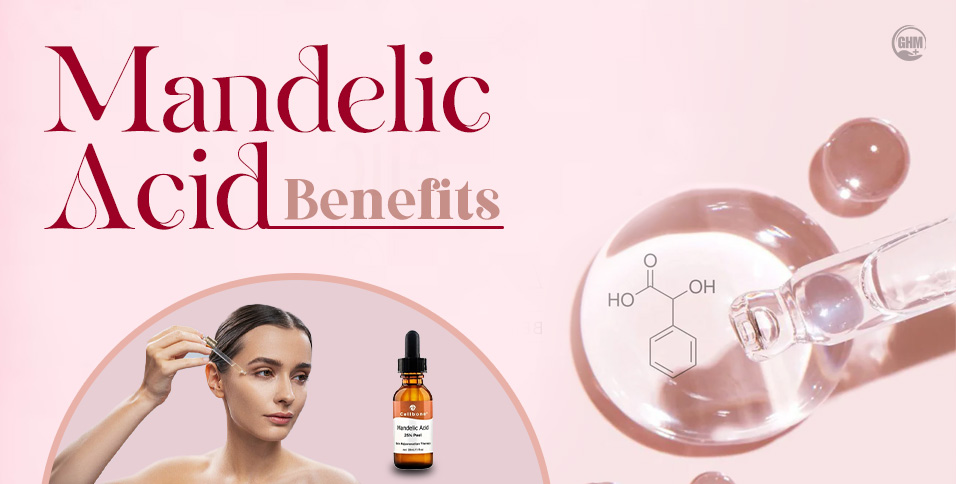
Mandelic acid is an alpha-hydroxy acid (AHA) naturally derived from bitter almonds. Like its famous cousins—glycolic and lactic acid—it acts as a chemical exfoliant to help you shed surface-level dead skin cells.
The primary difference lies in its physical structure. Mandelic acid has a significantly larger molecular size compared to other popular AHAs. Because of this, it penetrates the skin much more slowly and at a shallower depth. This slow-and-steady approach is exactly what makes it the gentlest option for those who find other acids in skincare too intense.
How Mandelic Acid Works On the Skin
This powerful ingredient, mandelic acid, works through a process called keratolysis. It breaks down the tiny bonds holding dead cells to the skin’s surface. By dissolving these bonds, it accelerates the natural cell turnover cycle, which typically takes about 28 days but slows down as we age.
When you use a chemical exfoliant like mandelic acid, you reveal the fresher, brighter skin underneath. Furthermore, by clearing out the “gunk” from your pores, it allows your other skincare products—like serums and moisturizers—to penetrate much more effectively.
Top Mandelic Acid Benefits For Every Skin Type
Using mandelic acid in the skincare routine will benefit you in various ways. Here are the top mandelic acid benefits you should know;
1. Gentle Exfoliation For Smoother Skin
The most important mandelic acid benefit is its ability to refine skin texture. It buffs away dullness and dry patches without the “stinging” sensation often associated with glycolic acid. This makes it a perfect “starter acid” for beginners.
2. Helps Treat Acne & Unclog Pores
Mandelic acid is unique among AHAs because it possesses antibacterial and anti-inflammatory properties. It regulates sebum production and targets the root causes of breakouts. In fact, one study found that a 45% mandelic acid peel was equally effective as a 30% salicylic acid peel for mild to moderate acne.
3. Reduces Hyperpigmentation & Dark Spots
If you struggle with melasma or post-inflammatory hyperpigmentation (acne scars), this ingredient is a star player. Research from 1999 indicates that mandelic acid can reduce melasma pigmentation by up to 50% in just four weeks. It speeds up the fading process by constantly renewing the pigmented layers of the skin.
4. Slows Down Skin Aging
In all the mandelic acid benefits, anti-aging is one of the most sought-after due to its ability to stimulate collagen and elastin production. These proteins are responsible for keeping your skin plump and youthful. A 2013 study showed that mandelic acid peels significantly improved skin elasticity and reduced the appearance of fine lines.
Mandelic Acid vs. Other AHAs
Choosing the right acid depends on your skin’s tolerance:
| Feature | Mandelic Acid | Lactic Acid | Glycolic Acid |
| Molecular Size | Largest | Medium | Smallest |
| Irritation Risk | Extremely Low | Moderate | High |
| Best For | Sensitive/Acne-prone | Dry Skin | Sun Damage/Aging |
While they all belong to the same family, their molecular weight determines how they interact with your skin barrier.
Mandelic Acid vs. Glycolic Acid
Glycolic acid is the most famous AHA, but it is also the most aggressive. It has a very small molecular structure, which allows it to penetrate deep into the skin. While this leads to fast results, it often causes redness, stinging, and “purging.” In contrast, mandelic acid is twice as large at the molecular level. It enters the skin slowly and evenly, making it a much safer choice for those with reactive skin or darker complexions prone to hyperpigmentation.
Mandelic Acid vs. Lactic Acid
Lactic acid is often considered “gentle,” but mandelic acid is even milder. Lactic acid is derived from milk, making it excellent for dry skin. However, mandelic acid has the added advantage of being oil-soluble. This means it can penetrate oily pores to treat acne, whereas lactic acid mostly stays on the surface. If you have sensitive skin that is also prone to breakouts, the benefits of mandelic acid will far outweigh those of lactic acid.
How to Use Mandelic Acid Safely
To maximize your mandelic acid benefits, follow these safety tips:
- Start Slow: Begin with a concentration of 5-10% used 2-3 times per week.
- Time it Right: Apply it in your PM routine after cleansing.
- Avoid “Overloading”: Do not use it in the same session as Retinol, Vitamin C, or other strong BHAs.
- Sun Protection: AHAs increase photosensitivity, so always apply an SPF during the day.
- Pairing: It works beautifully with Hyaluronic Acid or Niacinamide to maintain hydration.
Possible Side Effects of Mandelic Acid
While rare, some individuals may experience:
- Mild redness or itching.
- Dryness or peeling if overused.
- Increased sun sensitivity.
Always perform a patch test on a small area of skin before applying it to your entire face.
Final Takeway
The diverse range of mandelic acid benefits makes it a multitasking powerhouse for modern skincare. Whether you are battling adult acne, fading dark spots, or simply looking to refresh a dull complexion, this gentle AHA offers a safe and effective solution. Its unique large molecular structure ensures that you don’t have to trade skin comfort for visible results.
As skincare science evolves, we expect to see even more specialized formulations featuring this almond-derived acid. If you are ready to transform your skin, start incorporating a mild mandelic serum today.
Did you find this guide helpful? Share this article with a friend who is looking for a gentler way to glow!
Disclaimer: This content is for informational purposes only. Always consult a dermatologist before starting new skin treatments, especially if you have chronic conditions like rosacea or eczema.
Frequently Asked Questions
- Can I use mandelic acid every day?
Yes, lower concentrations (5-10%) are often suitable for daily use once your skin has built up a tolerance.
- Can I use mandelic acid if I have nut allergies?
Since mandelic acid is derived from bitter almonds, individuals with severe nut allergies should consult a doctor before use, though many refined cosmetic versions may be safe.
- Is it safe to use during pregnancy?
While many AHAs are considered safe topically, you should always consult your healthcare provider before introducing new active skin acids during pregnancy.