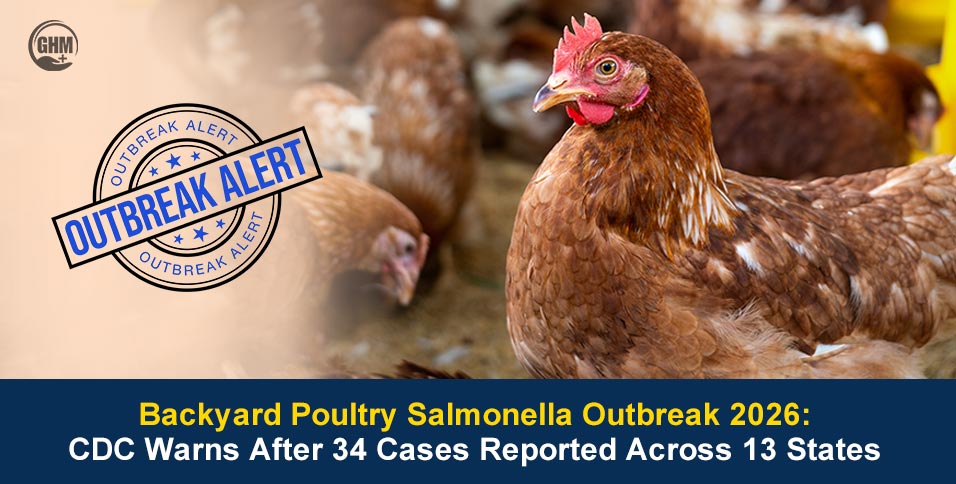
The Centers for Disease Control and Prevention (CDC) has prompted a new public health alert regarding a growing backyard poultry salmonella outbreak, confirming 34 illnesses across 13 states. Officials say this Salmonella infection has been linked to contact with backyard birds such as chickens, ducks, geese, and turkeys.
According to the CDC, 13 people have been hospitalized, though no deaths have been reported so far. Investigators are also monitoring signs of antibiotic-resistant Salmonella, which may make some infections harder to treat.
Health experts are urging poultry owners, families, and farm communities to follow strict hygiene measures and to stay alert.
What We Know About the Backyard Poultry Salmonella Outbreak?
The latest CDC update says patients became sick between late February and late March 2026. Salmonella cases in 2026 have been reported in states including Florida, Illinois, Indiana, Kentucky, Maryland, Maine, Michigan, Mississippi, New Hampshire, Ohio, Tennessee, Wisconsin, and West Virginia.
This Backyard Poultry Salmonella infection involves a strain known as Saintpaul Salmonella outbreak, named after the specific type of bacteria identified in lab testing.
The CDC notes that “the actual number of people infected may be much higher than reported because many mild cases go undiagnosed or unreported.”
How the Backyard Poultry Salmonella Outbreak Is Spreading
Backyard poultry ownership in the USA has grown in recent years. Many households keep birds for fresh eggs, sustainability, or as pets.
However, birds can carry Salmonella germs in their droppings, feathers, cages, feed trays, and nesting areas without appearing sick. This means people may become infected simply by touching birds or contaminated surfaces and then touching their mouth or food.
Investigators found that around 80% of interviewed patients had recent contact with backyard poultry before getting sick.
The backyard poultry salmonella outbreak can spread through:
- Handling chicks, ducks, or chickens
- Touching coops, cages, water bowls, or feeders
- Collecting contaminated eggs
- Bringing birds inside homes
- Failing to wash hands after contact
The CDC states that children are especially vulnerable because they often cuddle or closely handle young birds.
What Is Antibiotic-Resistant Salmonella?
Some samples linked to the backyard poultry salmonella outbreak show resistance to commonly used antibiotics. This does not mean every case is severe, but it can limit treatment options when patients need medical care.
Public health experts track antibiotic-resistant Salmonella carefully because it may lead to longer illness, hospitalization, or more complex treatment plans.
A CDC spokesperson noted that, “monitoring resistance patterns helps doctors choose the most effective medicines when severe infections occur.”
What Are The Symptoms of Salmonella Infection?
People exposed during the backyard poultry salmonella outbreak should watch for symptoms that usually begin within 6 hours to 6 days after infection.
Common Salmonella Symptoms
- Diarrhea
- Stomach cramps
- Nausea
- Vomiting
- Dehydration
Most healthy people recover within four to seven days with rest and fluids.
When to Seek Medical Help
Contact a healthcare provider if symptoms become severe, especially for:
- Children under 5
- Adults over 65
- Pregnant individuals
- People with weakened immune systems
In some cases, Salmonella may require hospital care and antibiotics.
Poultry Hygiene Safety Tips From CDC
The CDC says simple habits can reduce the risk of Salmonella infection during an outbreak.
Best Poultry Hygiene Safety Practices
- Wash hands with soap and water after touching birds or eggs
- Keep poultry outside the home
- Do not kiss or snuggle birds
- Use separate shoes for coop areas
- Supervise children around birds
- Clean equipment outdoors when possible
- Store eggs safely and cook thoroughly
Future Steps in the Salmonella Outbreak Investigation
The CDC and state health agencies continue tracing where birds were purchased and whether hatcheries or suppliers may be linked to the backyard poultry salmonella outbreak.
With 34 confirmed cases across 13 states, the CDC is asking the public to stay alert and practice prevention. Officials warn that more poultry-related Salmonella cases may be identified in the coming weeks because disease reporting often takes time.
For families who keep backyard flocks, this outbreak does not mean birds must be removed. Instead, experts say awareness, handwashing, and safe handling are essential.