When a family member, especially an older adult, forgets a familiar name, repeats the same question, or misplaces everyday items like keys or glasses, it is considered just a sign of aging. But for many caregivers and families, these moments can raise difficult questions about cognitive health and the possibility of a condition called dementia. Well, it is not a sudden occurrence; the condition is progressive, and can slowly appear in stages of dementia.
More than 55 million people worldwide live with dementia, and the families and healthcare providers increasingly rely on structured staging systems to understand symptom progression and plan appropriate care. The stages of dementia affect every person differently, but learning what to expect at each stage can reduce uncertainty and help caregivers respond with confidence, patience, and compassion.
This guide explains to you the 7 stages of dementia with their period of dementia progression. It also provides you with tips for supporting your loved one while preparing for future dementia care needs.
What Is Dementia?
Dementia is not a specific disease but a group of symptoms affecting mental tasks. It involves a decline in memory, language, and decision-making skills that interferes with daily life. While many people believe it is a normal part of aging, it actually stems from physical brain damage.
Different conditions can lead to dementia, with Alzheimer’s disease being the most common cause. Other major types of dementia include vascular dementia, Lewy body dementia, and frontotemporal dementia.
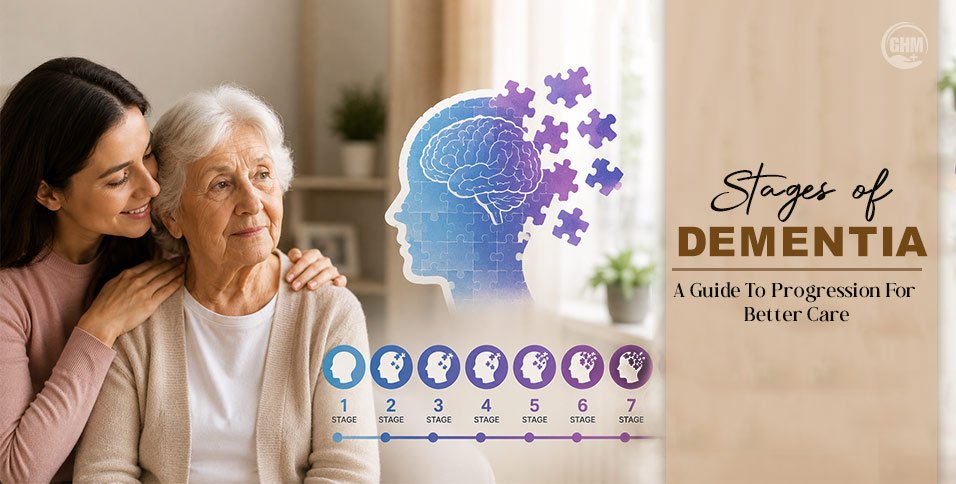
While every journey is unique, healthcare professionals often use the Global Deterioration Scale (GDS), a seven-stage framework that outlines how dementia symptoms typically progress from mild cognitive decline to severe impairment. This roadmap ensures that no one has to navigate this path of dementia stages without a guide.
Recognizing the stages of dementia allows families to anticipate changing needs. Doctors use these stages to determine which medications or treatments will work best at a given time. Furthermore, staging helps caregivers prepare emotionally and financially for the level of support required.
Have A Look At The 7 Stages of Dementia
For caregivers, knowing what lies ahead can ease uncertainty and support better planning for safety, finances, daily care, and long-term medical decisions.
The symptoms of dementia and the severity of the condition define the stages of dementia.
Stage 1: No Cognitive Decline
At this initial stage of dementia, the person functions perfectly and shows no signs of memory loss. Brain function remains normal, and the individual maintains complete independence in all daily tasks. A healthcare professional would not detect any cognitive impairment during a standard medical examination. This first stage may last for months or years before any visible symptoms present themselves.
Stage 2: Very Mild Cognitive Decline
In dementia’s Stage 2, very minor memory lapses begin to occur. Individuals may occasionally misplace their keys or forget a familiar name. These symptoms are often so subtle that they are mistaken for normal, age-related forgetfulness. Friends, family, and even medical professionals usually do not notice anything unusual during this phase. The person with dementia continues to live independently without any major disruptions to their lifestyle.
Stage 3: Mild Cognitive Decline
This phase of dementia represents early-stage dementia, where symptoms become noticeable to those close to the individual. People often struggle with finding the right words, organizing tasks, or remembering recent appointments. You might notice them getting distracted from daily routines or losing track of time. On average, this stage three of dementia lasts between 2-4 years. It is the ideal time to establish living well strategies for dementia, like writing to-do lists and planning for future care.
Stage 4: Moderate Cognitive Decline
At Stage 4, the patient suffers a moderate cognitive decline where memory problems worsen and become clear during medical assessments. In the fourth stage of dementia, the individual struggling with dementia may struggle with complex tasks like managing finances or traveling to new locations. They might forget details about their own life history or become socially withdrawn. Mood changes and a lack of motivation are common as the person realizes their abilities are declining. Most people receive a formal diagnosis during this two-year period.
Stage 5: Moderately Severe Cognitive Decline
From all the stages of dementia, the transition into middle-stage dementia begins here, as the person loses the ability to live safely without help. In severe cognitive decline, the dementia patient often experiences major confusion about where they are or what day it is. Assistance is usually required for basic tasks like choosing the right clothes for the weather. Despite these challenges, individuals usually remember their own names and the names of their closest family members. The 5th dementia stage typically lasts about 1.5 years.
Stage 6: Severe Cognitive Decline
In Stage 6, symptoms of dementia become more severe and wide-ranging. The individual needs help with nearly all basic tasks, including bathing, dressing, and toileting. Behavioral symptoms often intensify, leading to sleep disturbances or agitation.
The 6th stage frequently involves sundowning in dementia, where restlessness increases during the late afternoon or evening. Communication with the patient becomes very difficult as they begin to forget the names of primary caregivers. The 6th stage of dementia is often the longest, lasting roughly 2.5 years.
Stage 7: Very Severe Cognitive Decline
The 7th stage is the final level of dementia, called late-stage dementia, where the patient suffers from total loss of verbal and physical abilities. The final stage of dementia typically lasts between 1.5 to 2.5 years. Most individuals become bedbound and require full-time care for eating and moving. They face a high risk of complications like pneumonia, sepsis, or skin infections. While speech may disappear, the person in the 7th stage of dementia often remains aware of feelings and may respond positively to familiar music or touch.
How Quickly Does Dementia Progress?
The progression speed of dementia varies for every individual. On average, those with Alzheimer’s disease live eight to ten years after diagnosis, though some live much longer. Factors like age and overall heart health play a major role in the timeline.
| Dementia Type | Average Life Expectancy |
| Alzheimer’s Disease | 8–10 years |
| Vascular Dementia | ~5 years |
| Dementia with Lewy Bodies | ~6 years |
| Frontotemporal Dementia | 6–8 years |
How Dementia Is Diagnosed and Staged
No single test can confirm a diagnosis of dementia. Instead, doctors use a combination of tools to build an accurate picture.
Tests performed to diagnose dementia:
1. Medical History and Physical Exams
Doctors interview both the individual and their family members to identify when memory loss symptoms first appeared. They look for patterns in behavior, mood shifts, and changes in physical coordination.
2. Cognitive and Neuropsychological Assessments
To measure the extent of mild cognitive impairment, doctors use standardized mental tests. Tools like the Mini-Mental State Exam (MMSE) or the Montreal Cognitive Assessment (MoCA) evaluate memory, orientation, and language skills. These tests provide a baseline score, allowing the care team to track the stages of dementia over several years.
3. Brain Imaging and Neurological Scans
Modern technology allows doctors to look inside the brain to find physical evidence of decay. MRI (Magnetic Resonance Imaging) and CT scans often reveal any physical damage or blood vessel issues, or the shrinking of specific brain regions.
4. Blood Tests and Laboratory Work
While no single blood test can currently diagnose all forms of dementia, lab work is essential for the diagnosis. Doctors order blood tests to check for vitamin B12 deficiencies, thyroid malfunctions, or kidney issues. These conditions can cause reversible confusion that looks exactly like early-stage dementia. By ruling out these treatable causes, healthcare providers ensure the patient isn’t misdiagnosed.
Tips for Supporting Someone Through the Stages of Dementia
Caregiving of a dementia patient requires patience and a proactive approach. Use these actionable strategies to help your loved one through dementia:
- Maintain Routines: Keep daily schedules consistent to reduce confusion.
- Simplify Communication: Use short sentences and maintain eye contact.
- Prioritize Safety: Remove trip hazards and install grab bars as mobility declines.
- Encourage Engagement: Keep the brain active with puzzles or music.
- Practice Self-Care: You cannot provide quality care if you are burnt out.
Final Note
Understanding the 7 stages of dementia provides a roadmap for an otherwise unpredictable journey. While the dementia progression is inevitable, recognizing the symptoms early allows families to focus on the person in the present moment. The discoveries in modern treatments and supportive care can significantly improve daily life as well.
Focus on the present moment and seek professional help early to ensure a safe and comfortable journey with dementia and Alzheimer’s. By planning ahead, you can ensure your loved one lives with dignity and comfort.
If you found this guide helpful, please share it with other families and caregivers in your community and help them understand the stages of dementia.
Frequently Asked Questions
- What are the first signs of dementia?
Early signs often include forgetting recent events, getting lost in familiar places, or struggling to find the right words during a conversation.
- How long does each stage of dementia last?
In dementia, Stage 3 (mild) often lasts 2–4 years, while Stage 4 (moderate) may last about 2 years. The middle stages (5–6) are usually the longest, sometimes spanning up to 10 years.
- Can dementia progression be slowed down?
While no cure exists, medications like cholinesterase inhibitors can manage symptoms. Healthy lifestyle choices, such as regular exercise and managing blood pressure, also help maintain abilities longer.
- What is the difference between Alzheimer’s disease and dementia?
Dementia is the “umbrella” term for cognitive decline symptoms. Alzheimer’s is a specific disease and the most common cause of those symptoms.
- At what stage do dementia patients need full-time care?
Most dementia patients require full-time care by Stage 6 or 7, as they lose the ability to manage personal hygiene and basic physical functions.