There is a particular kind of moment that repeats itself in care facilities all across America, so often and so quietly that most people have long since stopped registering it as a problem. A patient is transported to a medical appointment, which she did not fully understand. The provider who evaluates her is competent, stretched thin, and largely unfamiliar with who she is as a person. A care plan is produced, travels back with her to her facility, and arrives fragmented and unclear. The staff, skilled and well-meaning, do what they have always done: fill in the gaps that no one officially owns and no one has fully designed around.
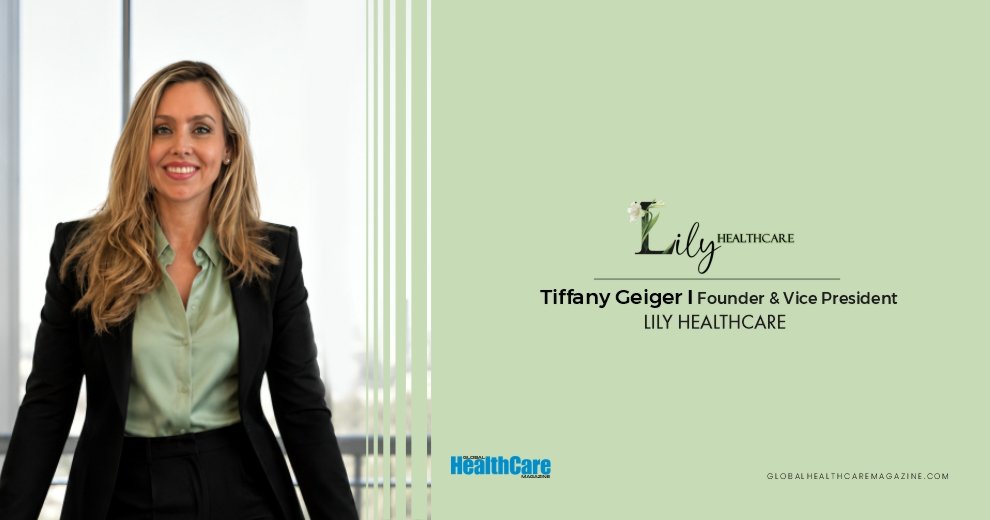
Tiffany Geiger, Nurse Practitioner, saw this moment not once, not occasionally, but as a pattern so persistent it eventually demanded more than patience. She had come up through healthcare the long way, working bedside across assisted living, memory care, hospital, and rehabilitation settings. That proximity gave her something textbooks rarely do: an unfiltered view of how care is actually experienced, not in theory, but in real rooms, with real people who were confused, overwhelmed, and too often passed between providers who did not truly know them.
“It wasn’t a people problem,” she says, with the clarity of someone who has spent years arriving at that sentence. “It was a system design problem.”
That distinction is where her story begins, and where the work of rebuilding it started.
A System Built to Fragment
Tiffany’s husband and physician, Tracy Geiger, M.D., was observing the same dysfunction from a different clinical vantage point. What they were each witnessing, separately and then together, was not a matter of individual shortcoming. The nurses were dedicated. The providers cared. But the architecture of the system itself was arranged in a way that made fragmentation nearly inevitable.
Patients were routinely evaluated by clinicians unfamiliar with their histories. Families left appointments carrying care plans they had not been adequately prepared to interpret. And facility staff found themselves, day after day, compensating for the space between what the system was built to deliver and what patients and families genuinely needed.
The care, in other words, was largely reactive. Problems were addressed after they emerged rather than anticipated before they did. Support arrived late, sometimes far too late, and the people most affected had little guidance in navigating decisions that were, by any measure, among the most consequential of their lives.
“We didn’t want to continue working around inefficiencies,” Tiffany says. “We wanted to redesign the model itself.”
That decision, to rebuild rather than adapt, was the beginning of everything.
What Lily Grew to Become
The organizations they built are: Lily Healthcare and its three core entities: Lily Medical Group, Lily Hospice, and Lily Palliative, which are all currently rooted in Wisconsin, and all family-owned. That last element is not a casual footnote. It is a deliberate design choice, one that shapes accountability and culture in ways a corporate structure cannot easily replicate. When the people setting the standards are also the people responsible for what the patient experiences, something fundamentally different becomes possible.
The founding principle that runs through Lily Healthcare and all its entities is deceptively simple. Care should come to the patient, both physically and relationally. Rather than asking seniors and their families to navigate a system arranged around institutional convenience, the model brings care to them, with consistent providers who know them and relationships that follow them across the full arc of their care.
This shift in design, modest in description and demanding in practice, has allowed the team to deliver more timely care, build stronger relationships with patients and their families, and create a more cohesive experience during some of the most significant moments a person will ever face.
From a single-provider model, Lily Healthcare and its affiliated organizations have grown to serve hundreds of facilities across Wisconsin. Tiffany is careful and consistent about how she frames that number. It is not the story. It is the evidence of one.
What Hospice Really Means
Ask most families what they picture when they hear the word “hospice,” and the answer will almost always arrive carrying the same weight. Finality. Surrender. The moment the system runs out of answers.
Tiffany has met this misunderstanding many times, and she approaches it the same way every time: with patience, with honesty, and with the conviction that clarity is itself an act of care.
“Hospice is not about the end of care,” she says. “It’s about changing the goal of care.”
The shift is from extending life at all costs to improving the quality of the life that remains, with an emphasis on comfort, dignity, clarity, and presence. It is not a reduced form of care. It is a different form, designed around what a person genuinely needs in the final chapter of their life.
The challenge, she has found, is almost always a matter of timing. Most families encounter hospice for the first time in a moment of crisis. Fear is high. Decisions feel urgent. And what should feel like an introduction to support can become, in the wrong hands, just another source of confusion and grief. The Tiffany-led approach is deliberate: slow the moment down.
Her team spends time explaining hospice not only in clinical terms but in human ones. What will the patient feel? What should the family expect? How will the care team show up through all of it?
When families are given that space, that clarity, and that honesty, something measurable happens. The fear does not vanish, but it becomes workable. What first felt like a loss of control begins to feel, instead, like structure, like support, and in many cases, like peace.
Presence as a Practice
If there is a single word that defines the culture Tiffany and Dr. Tracy Geiger have built, it is presence. Not as a sentiment, but as a working standard, one that is trained for, measured against, and reinforced at every level of the organization.
One of the greatest failures in senior care, she argues, is fragmentation. Every element of what they have built is a direct answer to that failure.
To give presence an operational shape, they created the Geiger Presence-to-Experience Model™. The framework defines how care is delivered across every touchpoint, emphasizing consistent provider presence, proactive communication, and relationships that accompany the patient across the full continuum, from routine care all the way through end-of-life.
Alongside it sits The Grandpa Standard™: the expectation that every patient is treated with the same level of dignity, attention, and respect that any member of the care team would demand for their own family.
What is worth pausing on here is that neither of these frameworks is decorative. They are not aspirational language on a lobby wall. They are executable, built into how the organization hires, trains, leads, and measures itself.
At the team level, that culture is actively reinforced through the Lily Blooms program, which recognizes team members who consistently go above and beyond in how they show up for patients and families during their most vulnerable moments. The guiding principle behind it is both simple and strategic: “What you recognize is what you scale.”
The Growth Test
There came a point, during a period of rapid expansion, when the organizations faced a question that every scaling company eventually has to answer honestly: would the culture survive the growth?
The pressure was recognizable and real. Expanding meant seeing more patients, covering more ground, and moving faster. And with that momentum came a risk Tiffany saw clearly: if volume began to displace presence, Lily Healthcare would become indistinguishable from the very system it had been built to improve.
“We had to decide whether growth would shape our culture, or whether our culture would shape our growth,” she reflects.
They chose the latter. Rather than loosening expectations to accommodate speed, they tightened them. Structured communication standards were put in place. Training around the care model was formalized. The Lily Blooms recognition program was built not just as a morale initiative but as a cultural enforcement mechanism, making visible the behaviors that defined who they were.
The result was growth that was, at times, slower than it might have been. But it was growth with intention, and that distinction, she would argue, is everything.
What Victory Actually Looks Like
There is the kind of milestone that reads well on a growth chart, and then there is the kind that lives in a family’s memory of the moment someone finally helped them understand what was happening to their loved one. Tiffany measures both. But she is most animated by the second.
The expansion from a single-provider model to serving hundreds of facilities across Wisconsin is meaningful, and she acknowledges it honestly. It reflects the scale of the unmet need that Lily Healthcare, Lily Medical Group, Lily Hospice, and Lily Palliative Care were created to address, and it reflects the trust communities across the state have placed in them.
But the outcomes that signal real impact are different in kind. Fewer unnecessary hospitalizations. Stronger, more collaborative relationships with facilities. Families who feel informed, supported, and no longer alone in navigating decisions that once felt impossible. Patients receive care that is consistent, coordinated, and delivered with dignity.
“Growth is not the goal,” Tiffany says. “It’s the byproduct of building a model that works better for patients, families, and the systems that support them.”
Scaling the Standard
The next chapter for Lily Healthcare and its affiliated organizations is articulated with a focused, clear-eyed ambition. Tiffany describes a long-term vision of building a nationally influential organization through strategic growth, acquisitions, and operational integration across the continuum of care. That vision includes ambitious long-term growth goals, including building a nine-figure organization capable of influencing care delivery at scale.
What is notable about this goal is not the number itself, but how consistently she positions it. Scale, in her telling, is never the destination. It is the vehicle for something larger.
The destination is a different standard, across the industry, for how aging and end-of-life care are delivered and experienced. Today’s system, she observes, is largely reactive, fragmented, and transactional. The future she and Dr. Tracy Geiger are working toward is one that is proactive, integrated, and deeply relational.
The aim is to demonstrate, at scale, that it is possible to grow without losing presence, to integrate care without losing humanity, and to deliver strong outcomes while elevating the experience of care itself.
“If we do that well,” she says, “the impact will extend far beyond our footprint.”
The Thread That Runs Through Everything
Outside of her clinical and organizational work, Tiffany is drawn to interior design, to the particular craft of transforming a space into something that feels both elevated and genuinely functional. She spends time outdoors, and she prioritizes, with the same intentionality she brings to everything else, time with Dr. Tracy Geiger and their children. She is especially drawn to Disney for the same reason she is drawn to healthcare design and interior design: a belief that experiences do not happen by accident. Thoughtful environments, consistency, emotional connection, and attention to detail all shape how people feel, remember, and connect. This is truly what creates the magic of experience.
She has come to think about balance not as an equation to be solved but as a practice of deliberate attention. Presence, she says, is not the same thing as proximity. When she is at work, she is fully engaged in building and leading. When she is with her family, she makes the same effort to show up completely in that role.
When she describes these parts of her life together, a pattern emerges that she herself has identified. Whether she is reshaping a room at home or redesigning how a healthcare organization serves its patients, the impulse beneath it is the same: creating environments that shape how people feel, experience, and connect.
Her message to nurses and nurse practitioners who aspire to step into ownership and leadership is delivered in the same unhesitating register that defines everything else she does.
“Don’t underestimate the value of your perspective,” she says.
Clinicians, she argues, sit at the precise intersection of patient experience and system reality. They see what works, and more importantly, what does not. That insight is not merely clinical. It is foundational to leadership. She tells aspiring owners and leaders not to wait for permission, to start small, to stay close to the problem, and to focus on creating something that genuinely improves the experience of care.
“The ones who step forward won’t just participate in the system,” she says. “They’ll redefine it.”
The Belief at the Center of Everything
At the core of everything Tiffany has built, across multiple organizations, across hundreds of facilities, across years of bedside work and boardroom decisions, is a belief simple enough to say in a sentence and significant enough to organize a life’s work around.
“Aging deserves better.”
Better than fragmented care. Better than rushed interactions. Better than the quiet indignity of feeling like a number in a system built more around efficiency than around people.
She built the Geiger Presence-to-Experience Model™ and The Grandpa Standard™ not as abstract ideals but as executable commitments, the operational answer to a belief she has carried since her earliest days at the bedside.
Because in the end, she says, people may not remember every clinical detail. But they will always remember how they were treated, how they were spoken to, and whether they felt seen. That is the standard. And Tiffany is building an organization, and she hopes to create an industry to match it.
Quotes
Read More: The Most Visionary Nurse Practitioners & Healthcare Leaders of 2026