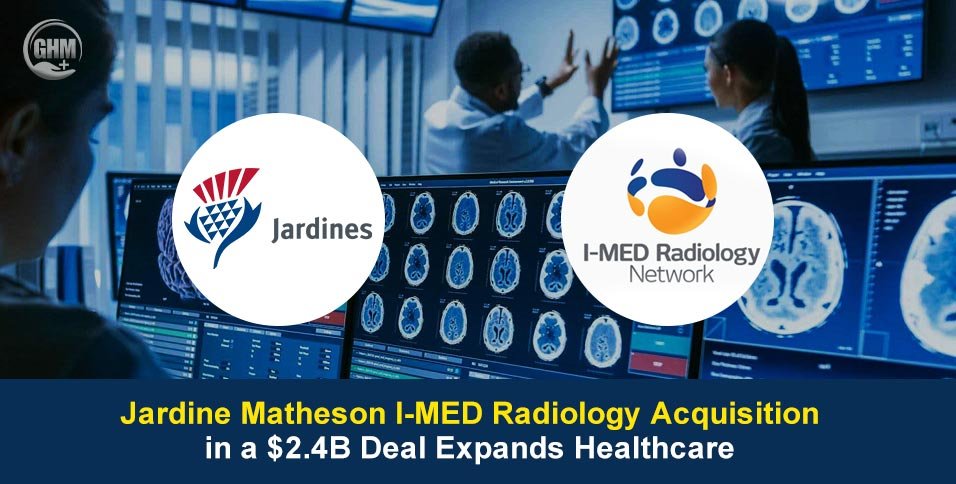
Hong Kong-based Jardine Matheson announced that it will acquire a 100% stake in Australia’s I-MED Radiology Network for an enterprise value of AUD 3.4 billion (US$2.4 billion). The deal also includes I-MED’s minority interest in Harrison.ai, a company known for developing AI-powered diagnostic imaging tools. The Jardine Matheson I-MED Radiology acquisition marks one of the biggest healthcare mergers and acquisitions in the Asia-Pacific region this year.
According to the company, the I-MED acquisition is expected to close later in 2026, pending regulatory approvals.
The transaction highlights the rising investments in healthcare diagnostics, digital health infrastructure, and AI-enabled medical technologies as healthcare demand rises globally.
Jardine Matheson Healthcare Expansion Targets Diagnostic Imaging Growth
In its official announcement, Jardine Matheson described I-MED as a market-leading business with strong structural growth prospects and defensive industry characteristics. The company said the investment aligns with its strategy of owning scalable businesses across Asia-Pacific markets.
The Jardine Matheson I-MED Radiology acquisition will be funded through a combination of existing cash reserves and debt financing. Jardines also stated that the transaction is expected to become earnings accretive after the first full year following completion.
Lincoln Pan, Jardines’ CEO, said the company sees significant opportunities for expansion. “I-MED is already a market leader in radiology today, and we expect the business will expand further in I-MED’s core markets as well as new markets,” Pan said.
Why Acquisition of Australia’s I-MED Radiology is So Significant
Acquiring the Australian company I-MED Radiology gives Jardines access to one of the region’s largest diagnostic imaging networks.
I-MED currently operates 215 imaging clinics across Australia and New Zealand and performs more than 7 million patient procedures every year. I-MED Radiology provides services including MRI scans, CT scans, PET imaging, Ultrasound, X-ray diagnostics, and Nuclear medicine.
I-MEDI also has a major teleradiology business. Teleradiology allows radiologists to remotely interpret medical images, helping hospitals and clinics provide faster diagnoses in areas where specialist doctors may not be available. I-MED’s teleradiology operations currently support healthcare providers in Australia, New Zealand, and the United States. The service has become increasingly important as healthcare systems face workforce shortages and rising demand for emergency imaging services.
Jardine Matheson and I-MED Deal Fouses On AI Imaging
One of the most important aspects of the Jardine Matheson and I-MED Radiology deal is its strong focus on artificial intelligence.
I-MED has invested heavily in AI-powered diagnostic imaging tools and proprietary technologies designed to improve workflow efficiency and support faster diagnoses. The acquisition also includes the company’s minority stake in Harrison.ai, which develops AI solutions for interpreting CT brain and chest scans.
The Jardine Matheson I-MED Radiology acquisition comes when healthcare companies worldwide are increasingly adopting AI technologies to reduce reporting times, improve image analysis accuracy, and support overstretched healthcare professionals.
Dr Shrey Viranna, CEO of I-MED, said AI integration will remain a major priority for the company. “This means continuing to deliver high-quality, expert diagnostic services for the benefit of patients while also enhancing our service offering, implementing AI solutions and exploring international growth opportunities,” Viranna said.
Healthcare Mergers and Acquisitions Continue to Rise
The Jardine Matheson I-MED Radiology acquisition shows the momentum in global healthcare mergers and acquisitions, especially in diagnostic imaging, digital health, and healthcare technology sectors. Recently, Indian Drugmaker Sun Pharma acquired US-based Organon for $11.75 Billion.
Private equity firms and institutional investors are increasingly targeting healthcare assets that generate stable long-term demand. I-MED was previously owned by investment funds advised by Permira, which helped expand the company’s AI and imaging capabilities over the past seven years. Today, it is a scaled business with AI and technology integration.
Financially, the Jardine Matheson I-MED Radiology deal values I-MED at approximately 11.5 times forecast adjusted EBITDA for the year ending June 2026, excluding the value of the Harrison.ai stake.
Conclusion
As healthcare providers increasingly rely on AI-powered imaging, remote diagnostics, and preventative screening technologies, investors are positioning themselves in sectors expected to see sustained long-term demand, similar to the Jardine Matheson I-MED Radiology acquisition.
The diagnostic imaging demand is also growing due to aging populations, rising chronic disease rates, and greater emphasis on preventative healthcare.
With its extensive imaging network, growing teleradiology services, and AI-focused capabilities, I-MED is expected to play a larger role in shaping the future of diagnostic healthcare across Australia, New Zealand, and potentially wider international markets.