
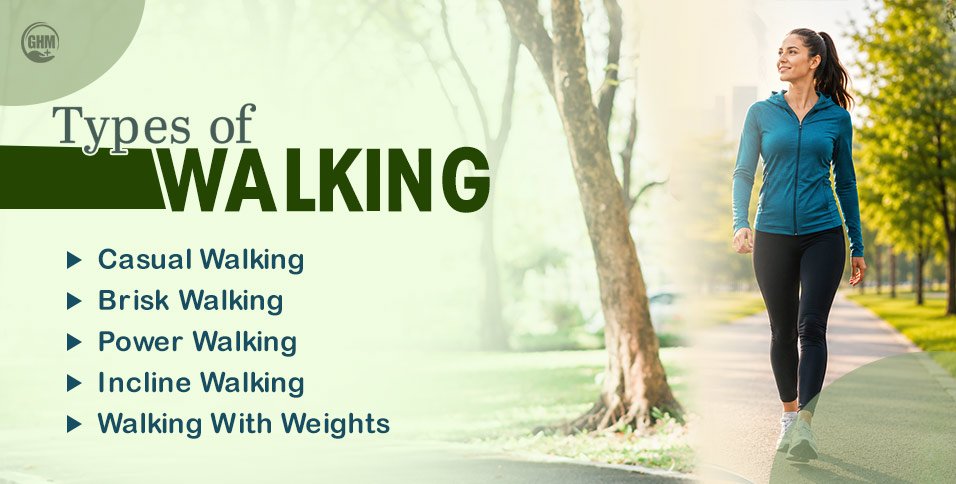
You already know walking is one of the easiest workouts there is — no equipment, no gym membership, just a decent pair of shoes. What most people don’t realize is that a 20-minute stroll and a 20-minute power walk can produce almost opposite results in your body. Once you know the difference, you can use it to your advantage. For that, you’ll have to know the different types of walking that can fit your goals, whether that’s shedding weight, protecting your heart, calming your mind, or simply staying steady on your feet as you age.
In this guide, we’ll walk through 12 types of walking, the method and benefits of walking so you can pick your perfect pace and get moving with purpose.
12 Types of Walking Exercises With Their Benefits To Your Health
1. Casual Walking
Casual walking is your everyday, unhurried pace, the kind you’d use strolling through a park or walking the dog. There’s no need to push your heart rate; the goal is simply to keep moving. Despite its low intensity, it still improves blood circulation, eases stress, and is one of the simplest ways to add more steps to your day.
Best for: Seniors, beginners, and recovery days after harder workouts.
2. Brisk Walking
Brisk walking means picking up the pace, which should be roughly 4–6 km/h, fast enough that you can talk, but not sing. According to a Healthline report, people who walked briskly for at least 15 minutes a day had close to a 20% lower risk of death compared to those who mostly walked slowly. Brisk walking exercise strengthens your heart, burns more calories than a casual stroll, and builds stamina. It can be a great moderate activity with just 150 minutes a week.
Best for: Anyone wanting a simple daily fitness habit.
3. Power Walking
Power walking takes brisk walking up a notch with exaggerated arm swings and a more engaged core. It’s a way to work harder without breaking into a jog. Keep good posture, chest up, shoulders relaxed, and lengthen your strides to get good results from power walking. The payoff is a higher calorie burn, stronger muscle activation, and better posture over time.
Best for: People who want a higher-intensity workout without the joint impact of running.
4. Nordic Walking
Nordic walking is a fitness technique that uses specially designed poles to engage your arms, shoulders, and back along with your legs and turns a simple walk into a full-body workout.
Nordic walking is great for calorie burn and improved balance with less joint impact. The walking sticks distribute effort and reduce load on the knees and hips.
Best for: Older adults, people managing joint issues, and anyone chasing a fuller-body workout.
5. Interval Walking (Japanese Interval Walking)
This Japanese interval walking method alternates short bursts of fast walking with slower recovery periods. For example, a 3-minute fast walk followed by a 2-minute slow walk, repeated for 30 minutes. Unlike steady walking, a 30-minute session of Japanese walking burns roughly 200–300 calories. Interval Walking improves cardiovascular fitness, boosts metabolism, leg strength, and blood pressure.
Best for: People focused on weight loss who want variety in their routine.
6. Incline Walking
Incline walking means walking uphill, on a hilly route, an inclined treadmill, or stairs. The added resistance makes your muscles work harder with every step. Incline walking exercise strengthens the glutes, activates the calves, increases calorie burn, and improves cardiovascular endurance.
Best for: Fat loss and lower-body strengthening.
7. Hiking
Hiking takes walking off the pavement and onto natural, often uneven terrain, usually for longer stretches of time. Because the ground constantly shifts, hiking builds endurance, strengthens leg muscles more thoroughly than pavement walking, and improves balance. Hiking can also benefit mental health through exposure to nature, becoming more than a workout for many people.
Best for: People wanting a longer, more immersive workout that doubles as a nature escape.
8. Trail Walking
Trail walking is a fitness technique that covers forest paths, park trails, and nature routes, but is generally shorter and less strenuous than hiking, making it more approachable for regular use. The key difference is intensity and duration. Trail walking can lower stress, improve coordination through varied terrain, and reconnect you with nature.
Best for: Anyone wanting the calming benefits of nature without a full-day hike.
9. Race Walking
Race walking is a competitive, technical style where one foot must always stay on the ground, and the leading leg must straighten as it strikes. Beginners should learn proper technique ideally from a coach or verified tutorial before attempting race walking— since poor form can strain the hips and knees. If done correctly, it burns a high number of calories, strengthens cardio conditioning, improves speed, and promotes greater endurance.
Best for: individuals seeking a rigorous, low-impact cardio workout
10. Backward Walking (Reverse Walking)
Walking backward, done safely and slowly, activates the muscles your body doesn’t normally use in forward motion. It should be done on a flat, open, obstacle-free surface. Walk slowly with short steps, glancing over your shoulder occasionally.
Reverse Walking can improve balance and coordination, work different muscle groups, and is sometimes used for knee rehabilitation under a professional’s guidance.
11. Mindful Walking
Mindful walking, sometimes called silent walking, means walking without any distractions like a phone, music, or a podcast just you, your breathing, and your surroundings. The goal is full attention on each step, rather than letting your mind wander or stay plugged into a screen.
Regular mindful walks are linked to psychological benefits such as meaningful stress reduction, improved mental clarity, and a better mood, largely by strengthening the mind-body connection.
Best for: Anyone prioritizing mental wellness alongside physical movement.
13. Walking with Weights
Walking with weights, usually light hand weights or a weighted vest, adds resistance to a regular walk. However, heavy ankle or wrist weights are best avoided unless a professional recommends them, since they can strain joints and alter your gait. Done with the right load, this style of walking with weights builds muscular endurance, increases calorie burn, and can support bone strength. Start light, keep form strict, and avoid overloading your joints.
How to Choose the Right Walking Style
The easiest way to choose is to start with your goal, then match it to a walking style:
| Goal | Best Walking Type |
| Weight loss | Interval, Power, Incline |
| Heart health | Brisk, Nordic |
| Mental wellness | Mindful, Trail |
| Beginners | Casual, Brisk |
| Seniors | Nordic, Casual |
| Endurance | Hiking, Race Walking |
| Full-body workout | Nordic |
| Better balance | Backward, Trail |
These pairings work because each style either raises intensity where it’s needed (like Interval and Power walking for weight loss) or reduces strain where it matters (like Nordic and Casual walking for seniors managing joint sensitivity).
Tips to Make Every Walk More Effective
Whichever types of walking you choose, a few habits make every session count:
- Wear supportive, well-fitted footwear to protect your joints.
- Maintain an upright posture with your shoulders relaxed.
- Let your arms swing naturally instead of holding them stiffly.
- Stay hydrated, especially on longer or more intense walks.
- Warm up for a few minutes before speeding up, and cool down afterward.
- Increase your pace or distance gradually rather than all at once.
- Track your steps or time instead of obsessing over distance alone.
- Prioritize consistency over speed. A daily 20-minute walk beats an occasional hour-long one.
Conclusion
Walking is one of the most adaptable forms of exercise, as it bends to fit your fitness level, your schedule, and your goals. The same basic movement can be gentle enough for a recovery day or intense enough to replace a cardio workout.
There’s no single “best” type of walking. Start with a walking type that matches where you are today, whether that’s a casual stroll or a brisk daily walk, and let yourself explore the different types of walking as your fitness improves. One step at a time.
Frequently Asked Questions
- How many steps a day should I aim for?
While 10,000 steps a day is a popular benchmark for many adults. The right number depends on your current activity level and goals.
- Can walking alone help me lose weight?
Yes, just walking can help you lose weight, especially when combined with a calorie-conscious diet. Types of walking, like interval, power, and incline walking, burn more calories per session, but consistency matters more than any single walk.
- Is it better to walk in the morning or evening?
Both have benefits. Morning walks can boost alertness and metabolism for the day ahead, while evening walks after eating may aid digestion and help you unwind before bed. Choose whichever time you’re most likely to stick with.