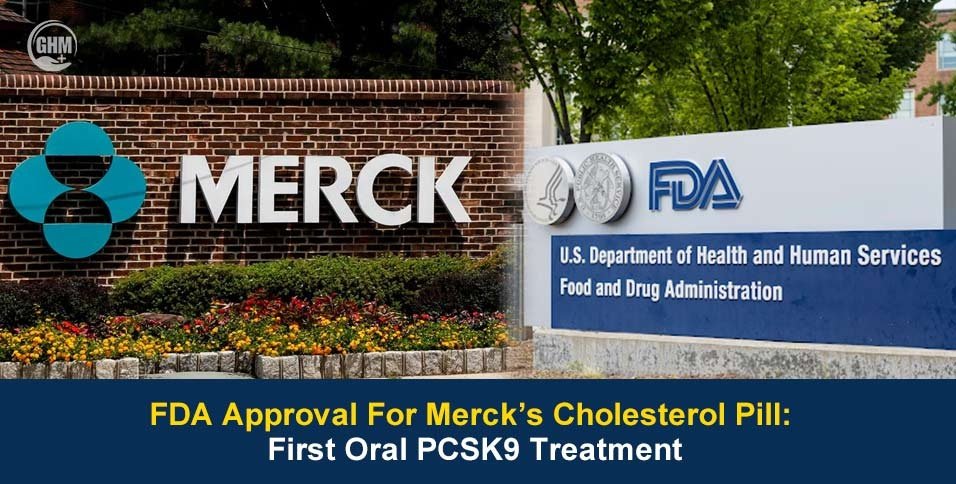
The U.S. Food and Drug Administration (FDA) has approved Merck’s cholesterol pill, Lipfendra (enlicitide). Lipfendra is the first-ever FDA-approved oral PCSK9 inhibitor. The medication is approved for adults with hypercholesterolemia, a condition causing high levels of low-density lipoprotein (LDL) cholesterol in the blood.
FDA approval for Merck’s cholesterol pill is a milestone for adults living with high LDL cholesterol. With an oral treatment option, Lipfendra provides a powerful alternative that could make the patient’s life easier.
Significance of FDA Approval for Merck’s Cholesterol Pill
Securing an FDA approval for Merck’s cholesterol pill is a historic shift in lipid management. For over a decade, utilizing the highly effective PCSK9 class required biweekly or monthly biological injections, such as Repatha or Praluent. Lipfendra changes the landscape entirely as the first oral PCSK9 inhibitor available in the United States.
This transition of cholesterol treatment from an injection to a daily pill addresses a massive gap in preventive cardiovascular care.
The availability of an FDA-approved cholesterol pill is expected to improve patient acceptance and long-term treatment adherence.
How Does Merck’s New Cholesterol Pill Work?
What is Merck’s Lipfendra Pill?
Merck’s new cholesterol pill, Lipfendra, acts as a novel macrocyclic peptide that binds directly to the PCSK9 protein. By blocking this protein, the drug stops it from destroying LDL receptors, allowing the liver to capture and remove bad cholesterol from the bloodstream efficiently.
Unlike its injectable version, which is a large-molecule biologic, Merck’s new cholesterol pill is built using macrocyclic peptide technology, enabling it to survive the digestive tract and be absorbed orally.
How to Take the New Cholesterol Pill?
- However, patients must follow a precise dosing routine. Lipfendra cholesterol pill requires an eight-hour fast before taking the pill, followed by a 30-minute wait before consuming food.
- It targets the biological mechanisms of cholesterol regulation directly from the gut.
Clinical Trial Supporting FDA Cholesterol Pill Approval
The robust data gathered during Merck’s Phase 3 CORALreef clinical program resulted in positive clinical evidence for the FDA approval for Merck’s cholesterol pill.
The Lipfendra drug was evaluated across two core late-stage trials:
- CORALreef Lipids Trial: Lipfendra achieved a placebo-adjusted LDL cholesterol reduction of 56% at week 24.
- CORALreef HeFH Trial: In patients with inherited high cholesterol, the drug demonstrated a 59% reduction in LDL levels compared to the placebo arm.
Beyond clearing bad cholesterol, the trials confirmed significant reductions in other harmful lipid markers, including non-high-density lipoprotein cholesterol (non-HDL-C) and apolipoprotein B (ApoB).
Merck is currently conducting an ongoing cardiovascular outcomes trial to definitively determine if Lipfendra reduces long-term cardiovascular morbidity and mortality.
Who Could Benefit From Merck’s New Cholesterol Pill?
Adults diagnosed with hypercholesterolemia, including individuals with inherited heterozygous familial hypercholesterolemia (HeFH), can take Lipfendra as prescribed by their healthcare providers.
The FDA-approved cholesterol pill Lipfendra is poised to expand treatment options for a wide patient demographic. While the daily oral convenience and room-temperature stability give Lipfendra a distinct competitive advantage, its strict fasting schedule remains an important differentiator that doctors must discuss when personalizing patient care.
According to Merck Executive Vice President Brian Foard, the primary commercial focus will include patients already taking maximum doses of statins who are still failing to hit their target lipid goals. “Seventy percent of those patients treated with those therapies are still not achieving guideline recommended goals. We believe this is the opportunity,” Foard shared.
Merck’s new cholesterol pill also provides an essential alternative for primary care individuals who are deeply hesitant to administer self-injections.
The Outlook
With cardiovascular disease remaining the leading cause of death globally, FDA approval for Merck’s cholesterol pill Lipfendra broadens primary care accessibility and expands frontline lipid-management options. By combining the high efficacy of PCSK9 inhibition with the accessibility of a daily pill, Lipfendra offers a practical solution to traditional treatment barriers. While long-term cardiovascular outcome trials continue, this newly approved therapeutic stands as a vital addition to lifestyle modifications and diet in managing high cholesterol.