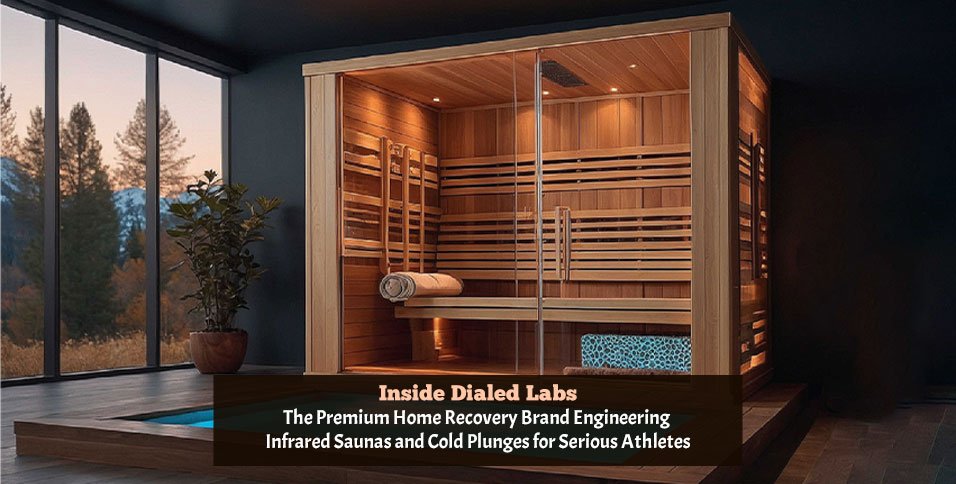
If you take recovery seriously, the brand behind your equipment matters. The Dialed Labs infrared sauna brand is built around one core premise – serious athletes deserve recovery technology that matches the intensity of their training. From infrared saunas engineered for consistent heat output to cold plunge systems that maintain precise temperatures, every product in this lineup is designed with performance as the primary goal, not aesthetics.
Recovery science has advanced significantly in recent years. What once required access to a professional training facility – contrast therapy suites, infrared rooms, cold immersion tanks – can now be brought into your home. However, not all home recovery systems are built with the same standards, and that gap in quality is exactly what separates brands that understand recovery science from those that simply sell wellness products.
Engineering Quality as a Non-Negotiable Foundation
Most wellness brands start with aesthetics and work backward to functionality. A recovery-first engineering approach does the opposite – the build quality comes first, and the product earns its appearance through construction integrity. When you use recovery tools daily, that difference becomes apparent quickly. Panels that degrade, insulation that thins over time, and electrical systems that underperform all show up in how your body responds to sessions.
Infrared saunas demand precision in panel consistency, insulation quality, and long-term electrical reliability. Budget options often lose heat efficiency within the first year, producing uneven infrared distribution across the cabin and forcing longer pre-heat times that reduce actual session time. Premium construction addresses these failure points before they develop, and that standard is reflected in the products a serious recovery brand puts to market.
What Infrared Therapy Does for Your Body
When you step into an infrared sauna, the heat works differently from traditional steam or dry heat environments. Rather than simply warming the surrounding air, infrared wavelengths may penetrate deeper into muscle tissue and support circulation at a cellular level. Many athletes report a meaningful difference in muscle soreness and joint stiffness after consistent infrared sauna sessions – particularly during high-volume training periods when recovery time is compressed.
The thermoregulatory response your body goes through during an infrared session activates a cascade of physiological processes. Your core temperature rises, cardiovascular output increases, and your body works to regulate itself – all while you remain stationary. For post-workout recovery, sleep quality, and general stress regulation, infrared therapy is one of the most studied passive recovery tools available to athletes training at any level.
Cold Plunge Technology Built for Consistent Performance
A cold plunge is only effective when it holds the right temperature consistently from session to session. DIY setups using ice or unregulated water chillers typically fail this test – temperatures fluctuate unpredictably, maintenance becomes a constant burden, and the experience shifts from restorative to frustrating. Properly engineered cold plunge systems maintain water temperature within a tight operational range so every session delivers the same precise cold stimulus.
Cold water immersion triggers vasoconstriction and activates the vagus nerve, which plays a central role in nervous system regulation and stress resilience. Athletes who cold plunge consistently report improvements in focus, mood regulation, and perceived recovery speed between training sessions. The performance gap between a properly engineered plunge system and a DIY alternative shows up clearly in how your body adapts over weeks and months of regular use.
Contrast Therapy as a Full Recovery Protocol
Combining infrared sauna sessions with cold plunge immersion creates one of the most effective recovery protocols available outside a professional sports facility. This contrast therapy approach – alternating between heat exposure and cold immersion – produces a pumping effect on the vascular system. Blood cycles rapidly between dilated vessels during heat and constricted vessels during cold, flushing metabolic waste and delivering oxygenated blood to recovering muscle tissue.
A standard contrast therapy session might involve 15 to 20 minutes in the infrared sauna followed by 3 to 5 minutes in the cold plunge, repeated for two or three cycles. Athletes use this protocol after heavy training blocks, competition days, or during any period when recovery turnaround time is critical. The physiological response is well-documented, and most people notice the cumulative difference in how their body feels within the first two weeks of consistent practice.
Who a Premium Home Recovery System Is Designed For
You do not need to be a professional athlete to benefit from a proper home recovery setup. If you train consistently – whether through weightlifting, running, cycling, team sport, or high-intensity interval training – your body accumulates fatigue that simple rest cannot always resolve efficiently on its own. The quality of your recovery tools matters as much as your training program when it comes to sustaining long-term performance output without injury.
Premium home recovery systems are built for people who treat their physical performance with the same intention they bring to their training sessions. These are not lifestyle accessories or wellness decorations. They are performance tools designed for frequent, serious, long-term daily use. For anyone ready to stop compromising on recovery quality, the difference a premium system makes becomes clear from the very first session.
Making the Financial Case for Home Recovery Equipment
Home recovery setups have shifted from a luxury concept to a clear performance investment. When you calculate the cost of gym memberships, spa visits, and recovery-focused appointments over a full year, a high-quality home system typically reaches cost parity within the first year or two of consistent use. Beyond the financial case, home access means using your equipment whenever your schedule demands it – not only when a facility is open.
Having your recovery tools available at home also removes the psychological friction that keeps most people from recovering consistently. When the equipment is in your space, you use it more often. As in training, consistency is what drives long-term results in recovery – and reducing the barriers to regular use produces a measurable difference in adaptation, performance, and overall wellbeing over time.
For athletes serious about long-term performance, Dialed Labs offers a lineup of infrared saunas and cold plunge systems built to professional standards, engineered for daily home use, and backed by genuine expertise in recovery science. The product lineup reflects a commitment to quality materials, durable construction, and a complete recovery ecosystem designed to support your training for years – not just through the first season.
Frequently Asked Questions
What is an infrared sauna and how does it differ from a traditional sauna?
An infrared sauna uses infrared light panels to heat your body directly rather than heating the air around you, as a steam or dry sauna does. This approach allows for lower ambient temperatures while still producing a meaningful thermoregulatory response in the body. Many people find infrared sessions more comfortable for longer durations compared to the intense heat of a traditional sauna environment.
How long should a typical infrared sauna session last?
Most practitioners recommend starting with 15 to 20 minutes per session and gradually working up to 30 to 45 minutes as your body adapts. Proper hydration before and after each session is important for both comfort and performance. Beginners often find lower temperatures and shorter durations more manageable while building their initial tolerance.
Can I combine a cold plunge and infrared sauna in the same session?
Yes – alternating between infrared sauna heat and cold plunge immersion is the basis of contrast therapy, one of the most widely used recovery protocols among serious athletes. A common format involves 15 to 20 minutes in the sauna followed by 3 to 5 minutes in the cold plunge, repeated for two to three cycles. Most users notice meaningful recovery benefits the day following a well-executed contrast session.
What temperature should a cold plunge be set to for optimal recovery?
Cold plunge temperatures for performance recovery are typically maintained between 50 and 59 degrees Fahrenheit. Some advanced users prefer ranges in the mid-40s, while beginners often find starting closer to 55 to 60 degrees more manageable. Consistent, precise temperature delivery from a quality chilling system matters more than chasing extreme cold.
How often should I use an infrared sauna to see recovery results?
Most recovery-focused athletes use infrared sauna sessions three to five times per week, with daily use being common for those with established routines. The right frequency depends on your training volume, recovery goals, and personal schedule. Consistent use over weeks and months produces the most noticeable improvements in soreness, sleep quality, and training readiness.