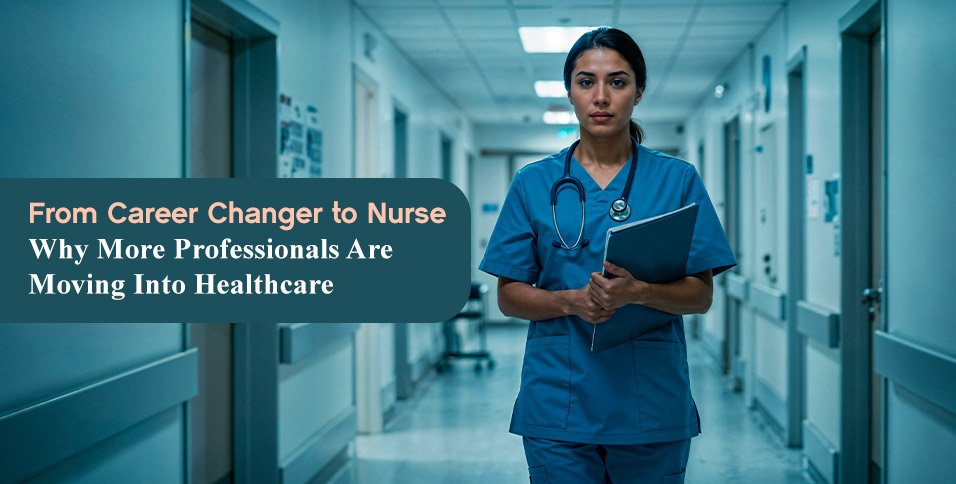
Changing careers is a big decision, but it has become more common than ever. Many people reach a point where their current job no longer feels meaningful, stable, or aligned with the life they want. Some feel burned out. Others want work that gives them a stronger sense of purpose. For many professionals, that search leads them to healthcare—and especially to nursing.
Nursing is one of the few careers that combines practical job opportunities with deeply personal work. It allows people to care for others, solve problems, keep learning, and build a career with many possible directions. That is why professionals from business, education, hospitality, the military, public service, and other fields are starting to consider nursing as a second career.
This shift can also be good for healthcare. People who come into nursing from other industries often bring valuable life and work experience with them. They may already know how to communicate under pressure, lead a team, stay organized, or support people through difficult situations. Those qualities can make a real difference in patient care.
Why Professionals Are Choosing Nursing as a Second Career
People are drawn to nursing for different reasons. Some want a career that feels more meaningful. Some are looking for better long-term stability. Others want to do work that directly helps people every day.
Nursing appeals to career changers because it offers both purpose and flexibility. A nurse can start in bedside care and later move into areas such as public health, case management, leadership, education, research, informatics, or advanced practice. That range of options makes nursing attractive to people who want a career that can grow and change with them.
Another reason nursing stands out is that some career changers may not have to start from zero. People who already have a bachelor’s degree or previous college credits may qualify for programs created for students who are new to nursing but already have a college background. For example, some accelerated nursing programs in Texas help eligible students move into nursing through a more direct path than a traditional four-year degree.
For adults balancing family, finances, and career goals, this kind of option can be appealing. It may allow them to enter the nursing field sooner while still receiving the education and clinical training they need. Still, accelerated does not mean simple. These programs are often demanding and require focus, discipline, and strong time management. For the right student, though, they can be a practical way to make a serious career change.
The Skills Career Changers Bring to Nursing
One of the strengths of second-career nurses is that they do not come in empty-handed. Even if they are new to clinical care, they often have years of experience working with people, solving problems, managing stress, and handling responsibility.
A former teacher, for example, may already know how to explain complicated information in a clear and patient way. That skill is useful when helping patients understand medications, treatment plans, or discharge instructions. Someone with a business background may bring strong organization and leadership skills. A military veteran may be comfortable making decisions in high-pressure situations. A person from hospitality may be especially good at listening, staying calm, and making people feel cared for.
These skills matter in nursing. Nurses need clinical knowledge, but they also need empathy, patience, communication, and good judgment. They work with patients and families during stressful, emotional, and sometimes frightening moments. A nurse who can listen well, explain clearly, and stay steady under pressure can have a major impact.
Career changers often bring a broader view of people and work. They have seen different industries, different personalities, and different kinds of challenges. That perspective can help them connect with patients and work well with healthcare teams.
Why Healthcare Needs More Paths Into Nursing
Healthcare systems continue to need qualified nurses in hospitals, clinics, long-term care facilities, community health settings, and specialty practices. As patient needs become more complex and populations continue to age, the demand for skilled nurses remains strong.
Traditional nursing programs are still important, but they are not the only way into the profession. If healthcare wants to attract talented adults from other fields, there need to be pathways that recognize previous education and experience while still providing strong nursing preparation.
Accelerated and second-degree nursing programs can help meet that need. They allow students who have already completed college-level work to focus more directly on nursing courses, skills labs, simulation, and clinical practice. This can help motivated students enter the field more efficiently.
At the same time, quality matters. Nursing is a serious profession with real responsibility. No program should focus on speed at the expense of preparation. Students still need a strong foundation in nursing theory, hands-on training, supervised clinical experience, and preparation for licensure. The goal should not be to rush people into nursing, but to prepare capable students in a focused and effective way.
What Career Changers Should Think About First
Nursing can be rewarding, but it is not an easy path. Before making the move, career changers should take time to understand what the profession really involves.
Nurses often work long shifts. They care for people who are in pain, afraid, confused, or facing serious health problems. They manage competing priorities and make decisions that affect patient safety. The work can be physically tiring and emotionally heavy.
That does not mean it is not worth it. Many nurses find the work deeply meaningful. But it is important to go in with a clear picture of both the rewards and the challenges.
Anyone considering nursing should think carefully about their schedule, finances, support system, and learning style. It may also help to talk with current nurses, volunteer in a healthcare setting, or shadow someone in the field. Real-world exposure can help a person decide whether nursing is truly the right fit.
It is also important to compare nursing programs carefully. Prospective students should look at admission requirements, prerequisite courses, accreditation, clinical placement support, faculty experience, student services, and licensure preparation. A flexible format can be helpful, especially for adult learners, but flexibility should come with structure and support.
Career changers should also think about where nursing could take them in the long run. Some nurses love fast-paced environments such as emergency departments or intensive care units. Others prefer pediatrics, mental health, oncology, labor and delivery, community health, or primary care. Knowing that there are many possible paths can help students stay motivated during the hard parts of nursing school.
A Career With Purpose and Room to Grow
The move from another profession into nursing says a lot about what people want from work today. Many adults are no longer looking only for a paycheck. They want work that matters. They want to feel useful. They want a career that challenges them and gives them room to grow.
Nursing can offer that. It is a profession built on science, skill, compassion, and trust. For career changers, it can be a fresh start and a chance to do work that has a direct impact on people’s lives.
The path takes effort. It requires study, clinical training, resilience, and commitment. But for those who are ready, nursing can become more than a second career. It can become a new professional identity—one centered on care, service, and making a difference every day.