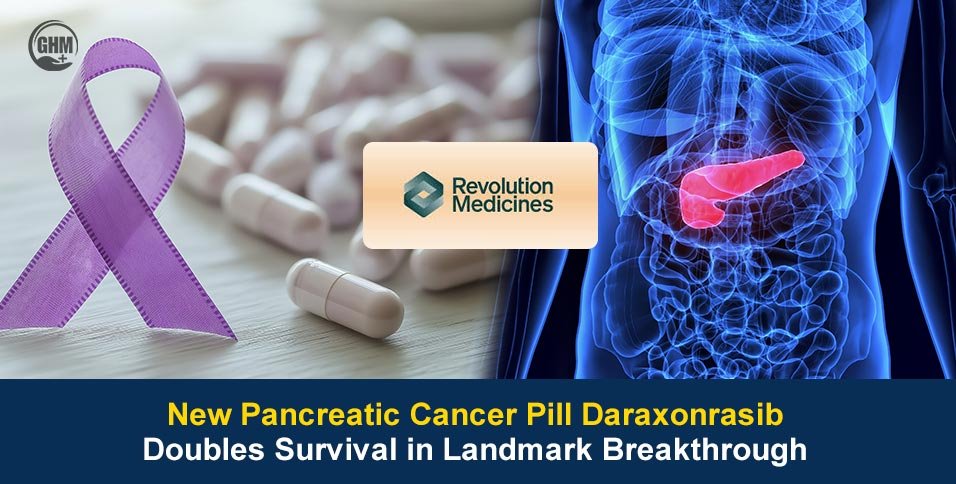
The new pancreatic cancer pill Daraxonrasib by Revolution Medicines has delivered one of the most significant advances in pancreatic cancer treatment in decades, according to results presented at the American Society of Clinical Oncology (ASCO) Annual Meeting 2026.
Researchers reported that the once-daily oral therapy nearly doubled survival for patients with advanced pancreatic cancer whose disease had progressed after chemotherapy. The findings have generated optimism among oncologists, patient advocates, and healthcare leaders, who say the treatment could reshape the future of care for one of the deadliest forms of cancer.
Johnson and Johnson also presented a prostate cancer drug study at the ASCO 2026 Annual Meeting, showing breakthrough results for high-risk patients.
The breakthrough results from the ASCO 2026 pancreatic cancer study position the new pancreatic cancer pill Daraxonrasib as a potential new standard of care for previously treated metastatic pancreatic cancer.
What Is the New Pancreatic Cancer Pill Daraxonrasib?
Published in the New England Journal of Medicine, the Daraxonrasib pill for pancreatic cancer is the first drug in a new class known as RAS(ON) inhibitors. These medicines target mutations in the RAS gene family, including KRAS mutations that drive the growth of most pancreatic cancers.
Experts estimate that RAS mutations are involved in up to 90% of pancreatic cancer cases. For decades, these mutations were considered extremely difficult to target with medicines. The new pancreatic cancer pill Daraxonrasib is designed to block these cancer-driving proteins, slowing tumor growth and helping patients live longer.
The promising trial results have accelerated regulatory interest. The Daraxonrasib FDA review is expected to move quickly after the agency granted expanded access to eligible pancreatic cancer patients earlier this year. Expanded access allows certain patients to receive investigational treatments before formal approval.
If approved, the new pancreatic cancer pill Daraxonrasib could become available to a broader patient population in the near future. The growing demand for access reflects increasing confidence among clinicians that the therapy represents a genuine advance in treatment.
What Did The Pancreatic Cancer Drug Trial Find?
The pivotal pancreatic cancer drug study enrolled approximately 500 patients with metastatic pancreatic cancer whose disease had stopped responding to previous treatment.
Patients were randomly assigned to receive either the new pancreatic cancer pill Daraxonrasib or standard chemotherapy.
The results were striking:
- Median overall survival reached 13.2 months with Daraxonrasib
- Median overall survival was 6.7 months with chemotherapy
- The risk of death was reduced by 60%
- Tumor response rate reached 31.6% compared with 11.2% for chemotherapy
- Disease control lasted significantly longer than with existing treatment options
The findings led many experts to describe the targeted oral therapy as a major milestone in pancreatic cancer research.
Dr. Rachna Shroff of the University of Arizona Cancer Center called the results unprecedented for patients whose cancer had already progressed after chemotherapy.
“This is a level of survival improvement we have not previously seen in this setting,” she said during discussions surrounding the study.
How New Drug Daraxonrasib Improves Quality of Life
Beyond extending survival, the new pancreatic cancer pill Daraxonrasib also improved patients’ quality of life.
Researchers reported that many patients experienced less pain, reduced reliance on narcotic medications, and greater ability to participate in everyday activities. According to investigators, some patients returned to hobbies and travel after beginning treatment.
Dr. Shubham Pant of MD Anderson Cancer Center noted that several patients who had previously given up activities due to cancer-related pain were able to resume them after treatment.
The new pancreatic cancer drug study also showed that patients receiving the new pancreatic cancer pill by RevMed remained on therapy longer than those receiving chemotherapy, suggesting durable benefits for many participants.
Safety and Side Effects of Revolution’s Pancreatic Cancer Drug
Like all cancer therapies, the new pancreatic cancer pill Daraxonrasib carries side effects.
The most common treatment-related issues included:
- Rash
- Mouth sores (stomatitis)
- Nausea
- Diarrhea
While rash occurred frequently, researchers said most cases were manageable with supportive treatments such as antibiotics and topical medications.
Importantly, only 1.2% of patients stopped taking Daraxonrasib because of side effects, compared with 11.2% of patients receiving chemotherapy.
Researchers also reported fewer severe adverse events overall compared with standard treatment.
What Comes Next In The Pancreatic Cancer Study?
Researchers are already studying Revolution’s pancreatic cancer drug in earlier stages of disease and in combination with other therapies.
Future studies will evaluate whether the new treatment for metastatic pancreatic cancer can:
- Improve outcomes when used as a first-line therapy
- Help shrink tumors before surgery
- Extend survival even further when combined with other targeted medicines
- Benefit additional cancer types driven by RAS mutations
Conclusion
Pancreatic cancer remains one of the world’s most lethal cancers, with most patients diagnosed after the disease has already spread. The breakthrough pancreatic cancer drug offers something that has been rare in this field: a substantial survival benefit combined with improved quality of life.
While additional research and regulatory review remain underway, the new pancreatic cancer pill Daraxonrasib has already emerged as one of the most closely watched developments in oncology this year. For patients and families facing advanced pancreatic cancer, the results provide a level of hope that has long been missing from this challenging disease area.