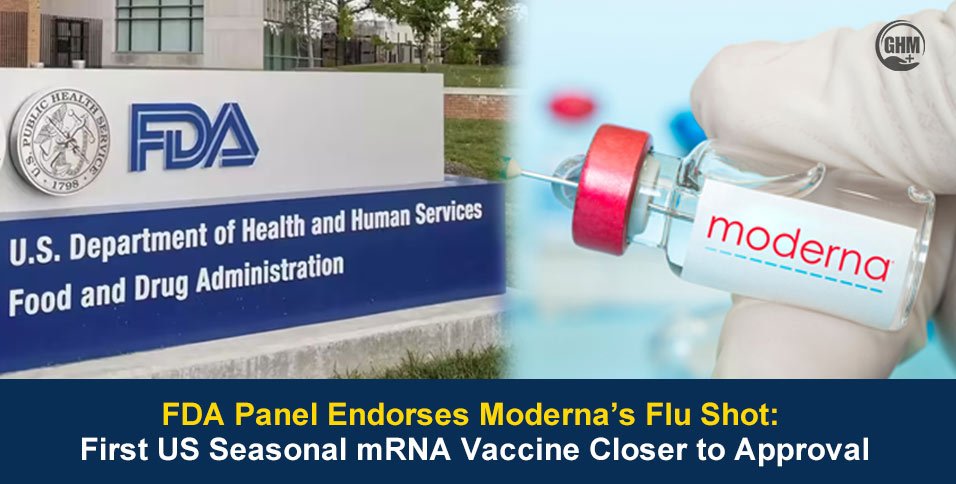
During the latest Vaccines and Related Biological Products Advisory Committee (VRBPAC) meeting, the FDA panel recommended Moderna’s flu shot, mRNA-1010, for older adults in a unanimous vote. Advisers to the U.S. Food and Drug Administration (FDA) concluded that the vaccine’s benefits outweigh its risks for adults aged 50 years and older.
While the FDA panel endorses Moderna’s flu shot, it is not a final approval. The FDA expected to make its final decision by August 5. However, it will significantly strengthen the chances of approval of the Moderna influenza vaccine.
If approved, mFlusiva (mRNA-1010) vaccine would become the first mRNA flu vaccine licensed for seasonal influenza in the United States. It will mark a major milestone for Moderna’s mRNA flu vaccine and the future of seasonal influenza prevention.
How Did The FDA Advisory Committee Support Moderna’s Flu Shot?
During the meeting, the FDA advisory committee members voted unanimously in two separate decisions, recommending the Moderna flu shot.
The committee supported the vaccine for:
- Adults aged 50–64 years
- Adults aged 65 years and older
The FDA advisory panel reviewed extensive clinical evidence on Moderna’s mRNA vaccine effectiveness, immune response, and safety before reaching its recommendation. Although the
FDA is not legally required to follow advisory committee recommendations, but it often considers their scientific assessments during the final review process.
Why Does Moderna’s mRNA Flu Vaccine Stand Out?
Unlike traditional influenza vaccines that are commonly produced using egg-based manufacturing, Moderna’s mRNA flu vaccine uses messenger RNA (mRNA) technology.
Instead of introducing weakened virus particles, the mRNA-1010 vaccine delivers genetic instructions that help the body’s cells produce a harmless viral protein, allowing the immune system to recognize and respond to future influenza infections.
During the FDA mRNA flu vaccine review, the experts noted that this approach may shorten vaccine manufacturing timelines and reduce problems associated with egg adaptation, where viruses can change during production. Faster manufacturing could also improve how closely seasonal vaccines match circulating influenza strains.
Committee member and pediatric infectious disease specialist Flor Muñoz-Rivas said that, “having an mRNA influenza vaccine available could strengthen preparedness for emerging flu strains and future influenza pandemics because the technology allows greater flexibility in vaccine production.”
What Are The Clinical Trial Results of Moderna Influenza Vaccine?
The FDA panel endorses Moderna’s flu shot after reviewing data from Moderna’s Phase 3 clinical development program.
According to Moderna, the mRNA-1010 vaccine demonstrated:
- Higher relative vaccine efficacy than a licensed standard-dose influenza vaccine in adults aged 50–64 years.
- A strong immune response compared with a high-dose influenza vaccine in adults aged 65 years and older.
- No meaningful differences in serious adverse events between study groups.
The most commonly reported side effects of mRNA-1010 included:
- Injection-site pain
- Fatigue
- Headache
- Muscle pain (myalgia)
During the FDA advisory meeting, committee member Adam Berger, Ph.D., said the available evidence “largely supports the safety and effectiveness” of the vaccine while acknowledging that additional long-term data would continue to strengthen the evidence base.
Why Was mRNA Vaccine Review Application Rejected Earlier?
The road to Moderna’s mRNA flu shot recommendation was not straightforward. Earlier this year, the FDA initially declined to accept Moderna’s application because regulators questioned the choice of comparator vaccine used during the clinical trial in older adults.
Following discussions with the agency, Moderna proposed a revised regulatory strategy that includes traditional approval for adults aged 50–64 years and an accelerated approval pathway for adults aged 65 years and older, supported by a post-approval confirmatory study.
As the FDA panel endorses Moderna’s flu shot for older adults, those earlier concerns have been sufficiently addressed for the advisory committee to support the application.
What Does This Mean for Moderna and the Vaccine Market?
If the FDA grants approval, Moderna’s Influenza vaccine will represent a significant expansion of the company’s mRNA platform beyond its COVID-19 and respiratory syncytial virus (RSV) vaccines.
The mRNA-1010 flu vaccine would compete with established influenza products already marketed by Sanofi, GSK, CSL Seqirus, and AstraZeneca.
Industry analysts also believe a successful Moderna influenza vaccine approval could strengthen confidence in the company’s future combination COVID-19 and influenza vaccine program.
However, some analysts note that commercial sales may build gradually because much of the U.S. flu vaccine purchasing for the 2026 season has already been finalized.
Looking Ahead
As the FDA panel endorses Moderna’s flu shot, it marks an important step toward introducing the first seasonal mRNA influenza vaccine in the United States.
While the FDA’s final decision is expected by August 5, the unanimous advisory committee vote shows growing confidence in the vaccine’s safety, effectiveness, and potential public health benefits.
If successful, the Moderna mFlusiva Flu Vaccine approval could expand influenza prevention options and demonstrate how mRNA technology continues to evolve beyond the COVID-19 pandemic.