Smartphones have become an inevitable part of our lives. We spend hours and hours staring at this tiny screen, and in this time we use multiple apps simultaneously. While most of them can be stressful, there are a few self care apps that can be quite useful. Self care apps have quietly become one of the simplest ways people manage stress, sleep, and mood without adding another item to an already packed to-do list.
More than 1 billion people worldwide are currently living with a mental health condition, according to the World Health Organization, and traditional therapy is not accessible to all of them. The self care apps fill this gap, and many people choose them as a starting point for their therapy.
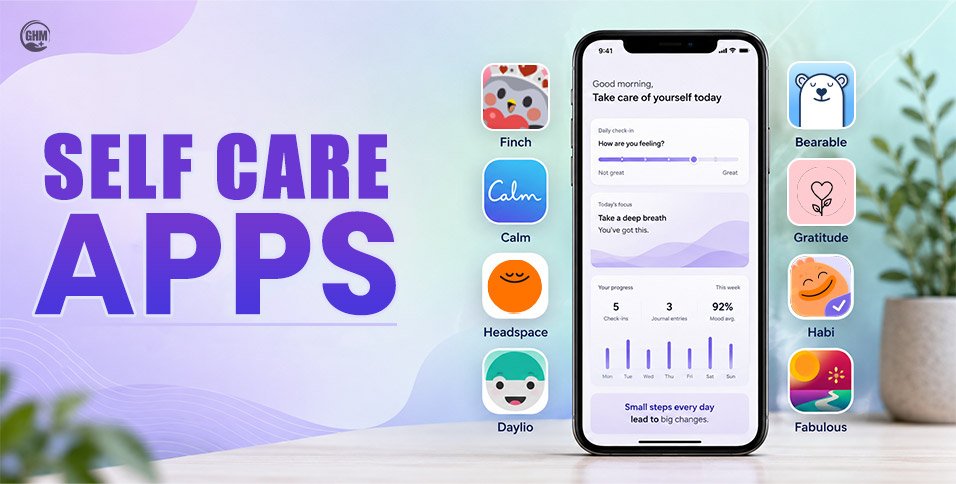
In this guide, you’ll find 8 of the best self care apps for 2026, explaining how they’re good at sleep, mood tracking, journaling, habits, and more so you can choose the type of relaxation and therapy you need.
What Are Self Care Apps?
A self-care app is a mobile tool designed to help you build small, consistent habits that support your mental and emotional well-being. These are also self improvement apps that help in things like checking in on your mood, practicing a breathing exercise, or writing down three things you’re grateful for.
Most features of self care apps share a similar toolkit:
- Habit reminders that nudge you at the right time of day
- Mood tracking to spot emotional patterns over weeks or months
- Journaling prompts to process thoughts without a blank page
- Sleep tools like wind-down sounds or bedtime stories
- Breathing exercises for in-the-moment calm
- Gratitude prompts to build a more positive outlook
However, these digital wellness apps are a complement to professional care, not a replacement for it. If you’re managing a diagnosed condition, a self-care app can support the work you’re doing with a therapist or doctor; it shouldn’t be the only support you rely on.
A 2026 U.S. survey found that about 3 in 10 adults have used a self-guided digital tool for their mental health or well-being — a figure that climbs to nearly half among adults aged 18–44. Among people who tried these tools, nearly all described the experience as helpful.
8 Best Self Care Apps to Improve Your Well-Being
1. Finch: Best for Gentle Daily Motivation
The Finch self-care app gives you a virtual pet that grows happier as you complete small self-care tasks. It provides daily motivation with a mood check-in, a short journal entry, and a breathing exercise. In Finch, there’s no streak-shaming or guilt trip if you miss a day, which makes it a good starting point if past habit apps have felt punishing. It’s the best self-care app for beginners and anyone who struggles to stay consistent with typical wellness apps.
2. Calm: Best for Better Sleep and Relaxation
Calm self-care app is built around Sleep Stories, guided meditations, relaxing soundscapes, and breathing exercises for stress management. The free version of Calm gives you a taste of the library, but most of the sleep and meditation content sits behind a premium subscription. It’s a strong pick if getting better sleep is your main goal.
3. Headspace: Best for Learning Meditation
Headspace self-care app leans into structured, course-style meditation. It is helpful if you’ve never meditated before and want a teacher-like experience rather than an open-ended app. Headspace also offers SOS sessions for acute stress, mindfulness lessons, and, for eligible users, integration with therapy services. Student pricing is available, making it one of the more accessible options for people learning meditation from scratch.
4. Daylio: Best For Mood Tracking and Micro Journaling
Daylio is the best app for journaling for people who want the benefits of a mood journal without the pressure of writing full entries. It taps your mood and your activities, and over time, it builds visual reports that reveal patterns — like noticing your mood consistently dips on days you skip exercise.
5. Bearable: Best for Symptom and Wellness Tracking
Bearable self-care app goes a step further than mood tracking. It collects your medication log, symptoms, and sleep at the same time, then correlates them to show what’s actually affecting how you feel. Bearable can generate PDF reports, which makes it especially useful for people managing chronic health conditions who want data to bring to a doctor’s appointment.
If you’re exploring symptom tracking for a specific condition, this guide to PCOS self-care offers a helpful complementary read.
6. Gratitude: Best for Building A Positive Mindset
Gratitude self-care app centers on a daily gratitude journal, guided affirmations, and vision boards, drawing on positive psychology principles. The app Gratitude is less about tracking problems and more about actively building a habit of noticing what’s going well. Just like its name, it fosters positive gratitude toward situations that lasts over weeks and months.
7. Habi: Best For Habit-Based Care
Habi combines habit tracking with a focus timer, ambient sounds, and screen-time blocking, all wrapped in a privacy-first design. Habi is the best self-care app for people who want to build long-term routines, but actually restructure their day around healthier habits.
8. Fabulous: Best for Creating Healthy Daily Routines
Fabulous uses science-based coaching to help you build morning and evening routines, paired with wellness challenges that keep things from feeling stale. If your self-care struggle is less about motivation and more about not knowing where to start, Fabulous’s structured coaching style can help.
The Best Self Care Apps: A Quick Comparison Table
| App | Best For | Key Features | FreeVersion | Platforms |
| Finch | Gentle dailymotivation | Virtual pet, moodcheck-ins, journaling | Available | iOS,Android |
| Calm | Sleep &relaxation | Sleep Stories, meditation, soundscapes | Limited | iOS, Android, Web |
| Headspace | Learningmeditation | Guided courses, SOS sessions | Limited | iOS, Android, Web |
| Daylio | Moodtracking | One-tap logging, visual reports | Available | iOS, Android |
| Bearable | Symptomtracking | Mood, meds, symptom correlation | Available | iOS, Android |
| Gratitude | Positivemindset | Gratitude journal, affirmations | Limited | iOS, Android |
| Habi | Habitbuilding | Habit tracker, focus timer | Available | iOS, Android |
| Fabulous | Dailyroutines | Coaching, challenges | Limited | iOS, Android |
Tips to Get the Most Out of Self Care Apps
- Start with one habit. Trying to journal, meditate, and track mood all in week one is how most people quit by week two.
- Enable only helpful reminders. A notification that feels naggy defeats the purpose. Turn off anything that adds stress instead of reducing it.
- Use the app consistently, not perfectly. A five-minute check-in most days beats a perfect routine you abandon after a week.
- Review your progress weekly. This is where mood tracker apps and healthy habit apps actually pay off. The patterns show up over time, not in a single entry.
- Combine digital tools with offline self-care. A walk outside or a real conversation with a friend is still more impactful; the app is a supplement, not a substitute.
- Don’t rely solely on apps for serious concerns. If you’re dealing with a mental health crisis or a diagnosed condition, a licensed professional should be part of your care plan.
The End Note
Self-care doesn’t look the same for everyone, and neither do the right self care apps. Some people need better sleep, some need a way to name what they’re feeling, and others just need a nudge to breathe for sixty seconds before a hard meeting. Whatever the goal, there’s likely a self-care app on this list built for exactly that.
Rather than downloading all eleven, pick the one that matches what you’re struggling with most right now, and give it a few consistent weeks before deciding if it’s a fit. The benefit of self-care apps comes from steady, small use, not from how many features are packed into the app.
This article is for general informational purposes and isn’t a substitute for professional medical or mental health advice. If you’re struggling, consider speaking with a licensed therapist or doctor.
Frequently Asked Questions
- What is practicing self-care?
Any intentional action you take to care for your physical, mental, and emotional health is a self-care practice. These practices help reduce stress, prevent burnout, and boost overall well-being.
- How to do self-care as a mom?
Self-care for a mom is eating healthy, exercising, getting a full night’s sleep, and finding ways to focus on yourself. All of these practices are important for maintaining your mental and physical health.
- How do I take care of myself with PCOS?
Effective PCOS self-care requires holistic lifestyle adjustments targeting insulin resistance, hormone balance, and stress.