Every year, we’re getting another breakthrough in cancer treatment, from cancer jab (amivantamab), to discovering how melanoma cells can be resistant to immunotherapy. All these important discoveries are the result of constant research and expertise, along with testing and collective efforts to eradicate this disease as much as possible.
Therefore, more people survive cancer and live longer following the diagnosis and treatment. And while this is an amazing conclusion, we find that the cancer survival rates vary across countries due to the disparities in accessing healthcare services, as explained by the World Cancer Research Fund. In addition, survival rates also depend on the type of cancer the patient is diagnosed with and the stage at which they find out about the disease, as some types of cancer are more difficult to treat than others, such as lung cancer.
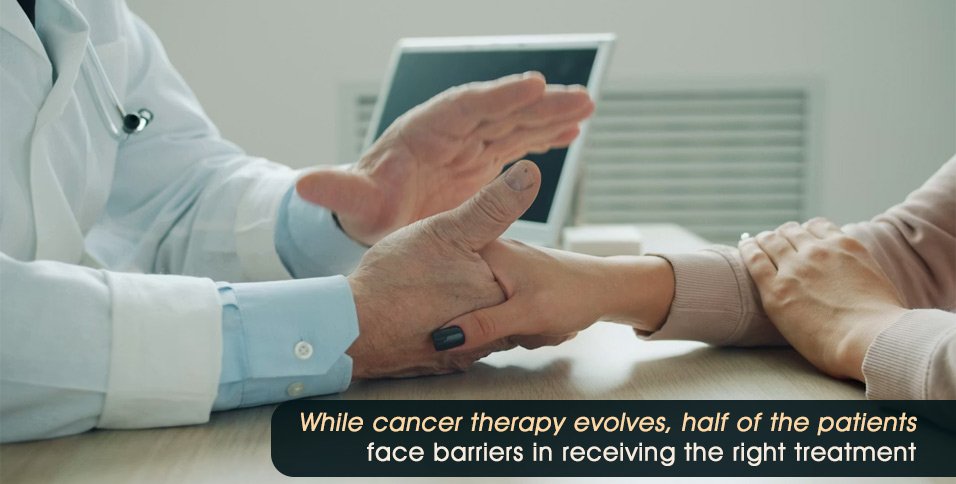
So, we’re in the middle of an intricate problem, as despite the fact that we can access more advanced treatments, many patients still struggle to receive them. Here are some of the reasons why.
Healthcare providers are missing some warning signs
No one says cancer is easy to spot, even if doctors can now use complex medical machinery to detect it, such as the PET scan (positron emission tomography). Moreover, finding out about the disease in its early stages depends on the patient’s medical visits and the type of cancer they might have, since many have common symptoms with regular illnesses.
Still, healthcare providers can err during the testing process, when they perform the diagnostic imaging or collect cell samples necessary for the biopsy. The problem lies in the subjectivity of cancer diagnosis when reviewing cell samples, which is why any patient should consult the opinion of two or more specialists. Unfortunately, the time pressure and financial difficulties make them follow the opinion of the first doctor, which can be wrong, leading to misdiagnosis. Depending on the situation, this makes the case of medical negligence, which includes wrong, missed, or delayed diagnosis, which you can prove with the help of a cancer claim solicitor.
Health insurers lack the proper coverage for treatments
No one is ready to face a cancer diagnosis, both from a psychological and financial perspective. However, the latter could be solved with the help of insurance companies, which often fail to provide proper coverage. This can happen when the specialist analysing a patient’s situation is not the one who treats them, but rather a doctor who works with the company, so they might come up with a reasoning of policy exclusions, experimental treatments, or a wrong classification of urgency in screenings.
So, unfortunately, some of these companies prioritize cost-saving strategies, and the result often includes giving up on treatment or struggling financially for years, which burdens the entire family, not only the diagnosed person. This financial strain can add to the patient’s stress, so they’re more likely to respond inefficiently to immunotherapy, because the body’s immune strength is hindered.
Younger generations challenge medicine with more aggressive diseases
The National Cancer Institute tells us that there’s a decreasing incidence of certain cancers in Generation X, such as lung and cervical cancer in women, and lung and liver cancer in men. Unfortunately, there’s a significant increase in thyroid cancer in women and kidney cancer in men. But that’s not all, since Millennials are also expected to develop more aggressive forms of cancer, we’re also finding out that young people can have the highest risk of developing cancer while they’re still healthy, so early-stage detection becomes increasingly difficult. For example, colorectal cancer is on the rise among people younger than 50.
So, how can the medical industry prepare for the fastest ageing population and those most likely to develop a disease while young? Since offering an accurate diagnosis in the early stages is difficult, the system must change and focus on preventive guidelines, including free or more affordable screenings and investing in educating people, so they can adapt their lifestyles towards a healthier approach.
Can cancer be prevented?
We’re still learning more about how cancer behaves in different bodies, but we can say for sure that some lifestyle habits can be eliminated to prevent developing cancer, or at least make it easier to treat. Unfortunately, cancer can develop in healthy bodies as well, but if you are doing the following, you might increase your chances of developing this disease:
- Smoking tobacco cigarettes can contribute to lung, mouth, or pancreatic cancer;
- Eating fast food and processed meals increases risks;
- Being overweight and doing no physical activity can contribute to pancreas, liver, and colon cancer;
- Sun exposure also leads to common kinds of cancer;
So, the general piece of advice is to eat healthy, maintain a normal weight for your height or age, and avoid smoking. With these tips, your body might be stronger in fighting diseases.
What are some of the most recent cancer treatments?
For those who are discouraged, know there are plenty of new approaches and procedures for cancer treatments that improve the process of getting better from the diagnosing stage to fighting abnormal cells. Biomarker testing is one of them, and it helps your healthcare practitioner understand what type of treatment is suitable by looking into your patterns of genes and proteins.
Chemotherapy is the most common treatment that can slow down or eliminate cancer cells, but there’s also hormone therapy for breast and prostate cancer. Immunotherapy is a slightly new strategy that strengthens your body’s immune system to fight the cancer cells, along with targeted therapy, through which cancer cells are targeted with precision in terms of changes, so they’re stopped from growing or dividing.
Final considerations
Curing cancer proved to be an enormous challenge for the healthcare industry, but experts were able to develop several types of treatments throughout the decades, so the number of fatal cases decreased, and life expectancy after diagnosis has increased. However, there’s a worrying trend among people being diagnosed with cancer, since many cannot access the care they need, whether due to the lack of funding from insurance companies or from the fact that they’re developing cancer while young and healthy, so early diagnosis is close to impossible.