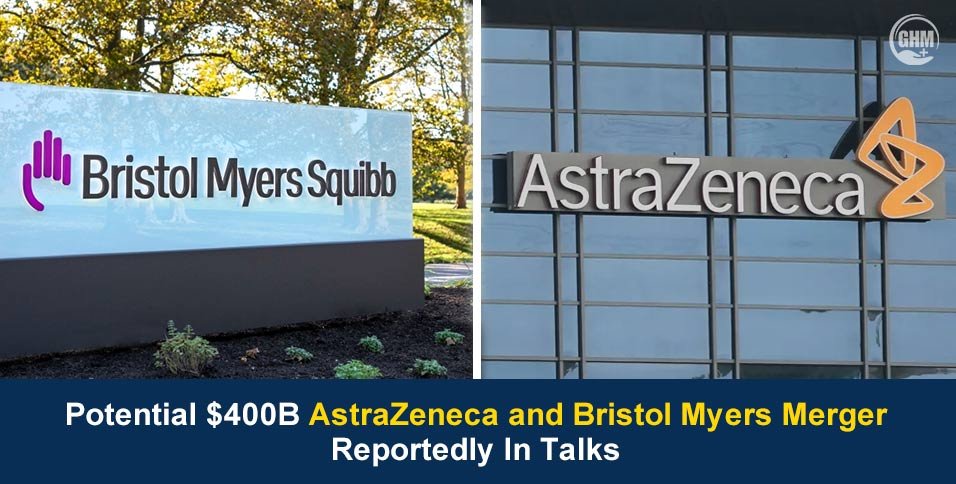
The AstraZeneca and Bristol Myers merger is reportedly under discussion, according to Reuters. The Pharma leaders held preliminary discussions about a potential combination valued at nearly $400 billion.
According to reports, AstraZeneca and Bristol Myers Squibb discussed a possible combination, with the Financial Times first reporting the talks. The companies have not confirmed that a transaction is being pursued.
If completed, the AstraZeneca and Bristol Myers merger would create one of the world’s largest pharmaceutical companies and would be among the biggest pharma mergers in history. However, no agreement has been announced.
The Importance of AstraZeneca Bristol Myers Deal
For both AstraZeneca and Bristol Myers Squibb, Cancer medicines are central treatments, creating a potentially powerful combined oncology portfolio.
AstraZeneca reported strong demand for cancer and rare-disease medicines in its latest quarterly results. Cancer treatments generated about $25 billion in 2025 sales, representing nearly half of its total, while cardiovascular, renal and metabolism products contributed approximately $12 billion.
Bristol Myers Squibb also has substantial oncology exposure. Oncology drugs accounted for more than 40% of its sales during the first six months of 2026. Its portfolio includes major medicines such as the cancer immunotherapy Opdivo and blood thinner Eliquis.
The companies have also been pursuing innovation and strategic partnerships. For example, Bristol Myers Squibb recently expanded its technology collaboration with Nvidia, while AstraZeneca has continued advancing its cardiovascular pipeline, including its Wainua-related research.
The AstraZeneca Bristol Myers deal would bring together two major pharmaceutical businesses with significant exposure to cancer treatments, making the potential transaction strategically important but also likely to attract close regulatory attention.
AstraZeneca Acquisition Could Face U.S. Antitrust Review
The biggest challenge for an AstraZeneca and Bristol Myers merger could be regulatory approval, particularly in the United States.
Because both companies have competing cancer immunotherapies, regulators could examine whether the combination would reduce competition or limit future innovation. The significant overlaps in existing drugs or late-stage pipeline programs could require meaningful divestitures.
The potential Bristol Myers Squibb merger would also be assessed against a broader backdrop of increased scrutiny of large pharmaceutical transactions. The major pharma deals have become less common in recent years because of antitrust concerns and pressure to keep drug prices under control.
Bristol Myers Squibb Merger Comes Amid Patent Pressure
Bristol Myers Squibb has also been making smaller deals to strengthen its drug pipeline as some older medicines face declining sales and generic competition.
The company acquired Celgene for about $80 billion in 2019, gaining Revlimid, a major blood cancer treatment. Revlimid has since lost patent protection, while leading products Opdivo and Eliquis could face patent-related pressure by 2028.
At the same time, Bristol Myers Squibb has newer assets, including experimental blood thinner milvexian, anemia treatment Reblozyl and heart medicine Camzyos.
What Happens Next With the AstraZeneca and Bristol Myers Merger?
For now, the AstraZeneca and Bristol Myers merger remains a reported possibility rather than a confirmed deal. Any agreement would likely face extensive negotiations, shareholder considerations and regulatory review.
The potential transaction is particularly notable because it would represent a rare large-scale consolidation among major pharmaceutical companies. The key questions will be whether the companies move beyond preliminary discussions and how regulators respond to the significant overlap in their oncology businesses.
Until either company confirms a transaction, the reported $400 billion pharma deal should be viewed as an early-stage development rather than a completed merger.